



A Few Of My Favorite Things
Hi everyone, and thanks for joining me for this episode of Val Talks Pets. On this episode, I was thinking I would share with you a few of my favorite […]
 play_arrow
Diabetes in Cats: Symptoms, Insulin, Diet & Care Val Cairney

Hi everyone and thanks for joining me on this episode of Val Talk’s Pets. In the last episode I opened 2026 with a discussion about diabetes in pets beginning with dogs. On this episode we’ll look at how to Manage Diabetes in Cats: Symptoms, Food Choices, Insulin, and Natural Support
As I said in the last episode, I was tempted into this topic by the amount of people that come looking for alternatives to feed their diabetic pet and some are also looking for ways to support a diabetic pet in tandem with their medicine. Truthfully we hear about more cats with diabetes than dogs.
As in humans and dogs there are two types of diabetes that a cat may have.
Diabetes mellitus can be Type 1 which is insulin-deficient where “the pancreas is unable to produce the level of insulin the body needs.” (petmd.com). A cat with Type 1 diabetes will need daily insulin injections and a low carb diet. Cats with Type 1 diabetes will exhibit symptoms of increased thirst and urination, weight loss and lethargy. A cat diagnosed with Type 1 diabetes may expect to see about a three year lifespan.

Some cats can actually enter a diabetic remission where they can maintain blood sugar levels without insulin injections. This would depend on early detection and early aggressive treatment.
In terms of food the standard for a cat with Type 1 diabetes would be high-protein, low-carbohydrate and moderate-to-low fat. There are prescription diet foods available through the vet for this purpose, but as we saw when discussing diet with dogs and diabetes, there are actually alternative foods that can be tried. Raw is definitely an option and there are many types of canned foods that with a little label reading can fit the criteria of high protein, low carb and fats.
Type 1 diabetes is rather rare in cats. Cats unlike dogs are more prone to Type II diabetes where dogs are more prone to Type 1 diabetes.
Let’s take a look at Type II diabetes, the most common found in cats. In this case the cat has become insulin resistant and has decreased insulin production, leading to high blood sugar. The increase in glucose or blood sugar is energy the cells can’t use and this causes symptoms like increased thirst and urination, weight loss despite eating well and all of this is often linked to obesity, inactivity and age.
Despite being Type 2 diabetes, a cat would still need insulin injections regularly to manage their blood sugar. They will also need a diet of high-protein, low-carb. This combination of insulin and diet helps the pancreas to rest and could possibly lead to remission.
There are oral medications that some cats are given like glipizide or Bexacat which are used for specific cases. It is interesting however, that in cats with diabetes, whether it is Type 1 or Type 2, insulin will most likely be injected.
However, cats with Type 2 can go into remission. This means they would no longer need insulin. To achieve remission strict management is required. This means that diabetes has to be caught early and diet becomes a focus.

Low-carbohydrate food is a must often in the wet food form and insulin therapy begins to reduce the high blood sugar’s toxic effects on the pancreas, allowing insulin production to recover. With Type 2 the underlying cause is often insulin resistant, which means treatment will help the body’s own insulin-producing cells called beta cells to recover. The cat would need to have normal glucose levels for at least four weeks without insulin or other medications.
Cats diagnosed with Type 2 diabetes are often overweight or obese. Diet and weight loss becomes paramount here. Carbs and fat content have to be low and the protein has to be high. This is why it is often wet food that a cat will be given. There is of course dry food that can meet the criteria, it is just easier with wet food.
The carbs for example need to be lower than 12%, 10 % would be more ideal and I’ve even seen some suggest lower than 7%. This can definitely be done. The protein needs to make up 40% of the metabolizable energy (ME) or calories. Your vet can advise you about these percentages depending on the stage of diabetes and levels recorded.
It is a bit tricky sometimes to find the numbers you are looking for on a bag or can of cat food. You are looking for the ME calories and the carbohydrate percentage, but is that available in the Guaranteed Analysis?
Here is an example of a high end cat food dry food specific to weight control. The Guaranteed Analysis lists Crude Protein, Crude Fat, Crude Fibre, Moisture, L-leucine, Calcium, Phosphorus, Magnesium, Vitamin E, Taurine, Ascorbic Acid Vitamin C, Omega-6 Fatty Acids, Omega-3 Fatty Acids, L-Carnitine and Total Microorganisms, the probiotics.
It then gives us the Calorie Content ME calculated with the calories overall and by the cup and Feeding directions. Overall there is good info here especially since it gives up the ME. But this food also states it has healthy grains. In the Ingredient list there is brown rice, oatmeal, rice and pearled barley. Those ingredients are carbohydrates.

In the Guaranteed Analysis it doesn’t state the percentage of carbohydrates even so we know they are present. We are looking for a number below 10 or 12 percent. It isn’t there. Now, often you can go to the manufacturer’s website and look up the product and get a much fuller analysis which would give you the carbohydrate content. If the site doesn’t have this info then I would suggest moving to a different food.
There are so many variables when it comes to feeding a diabetic cat. Because Insulin is given twice a day it is recommended that the cat eat twice a day. This means that a cat needs to eat its wet food at the sitting instead of grazing dry food, hence the reason it is easier to feed wet food.
However, there is nothing wrong with having a bowl of dry food that meets the dietary criteria for the cat to have as long as it eats its sitting of wet food twice a day.
The other tricky factors are trying to facilitate weight loss at the same time as addressing the diabetes needs. As well a diabetic cat may also have kidney disease which makes things even more complicated.
For example when it comes to overweight cats it is imperative to get the weight under control to control the diabetes. But, as veterinarypartner.vin.com, states, “Obesity makes for difficult diabetic regulation.
Weight loss is key and the high protein/low carbohydrate strategy…may have too many calories for an overweight cat. This is where it may be more important to use a different strategy in reducing post-feeding glucose tides.
Instead of using low-carbohydrate diets and forcing the patient to make their own carbohydrates, it may be better to use fiber (complex carbohydrates) to create a better sense of fullness after a lower-calorie meal.
Weight loss improves the ability to achieve diabetic regulation 13-fold but must be done smartly as a greater than 2% weight loss per week is dangerous to a cat and promotes the development of a liver disease called hepatic lipidosis. A good goal is 0.5-1% weekly. Your veterinarian can design a weight loss plan.” (veterinarypartner.vin.com)

The other challenge comes when you are dealing with a cat with kidney disease often associated with age. According to Cats and carbohydrates: the carnivore fantasy? “A high protein, low fat and low carbohydrate diet may not be the ideal choice either for a diabetic cat. In older cats especially, diabetes and kidney disease are issues that can often both be present. In these cases, a high protein diet would not be beneficial because they are typically higher in phosphorus, which is not recommended for cats with kidney disease.” (Verbrugghe, A and M.J.V.s. Hest, Cats and carbohydrates: the carnivore fantasy? 2017 4(4) p55. (provided by Petcurean)
In terms of some options for a diabetic cat, just like in dogs, raw is an option. Raw provides the high protein and very low carbs required and it can help with weight management plus manage blood sugars and possibly lead to the remission goal. You could also look at freeze dried or dehydrated diets.
However, it is really important to discuss raw with the vet to make sure that the balance is correct and how the insulin will react with this kind of diet. You would need to have a vet that is open to raw to be able to have a full discussion. It is no secret that many veterinarians are not on board with raw diets, so if you really want to pursue the raw direction try to find a holistic practitioner that is also schooled in nutrition for animals.
I also think contacting a raw company directly and speaking to their formulator and nutritionist is a good idea. There are quite a few providers of raw for dogs and cats these days. I’m more familiar with Big Country Raw, but Red Dog Blue Cat for example has some very helpful information on their website specifically addressing the dilemma of managing diabetes and weight and age together.
The other thing too is to join some online forums for pet parents dealing with diabetes in their cats. These people can share what has worked for them and ideas can be shared as well.
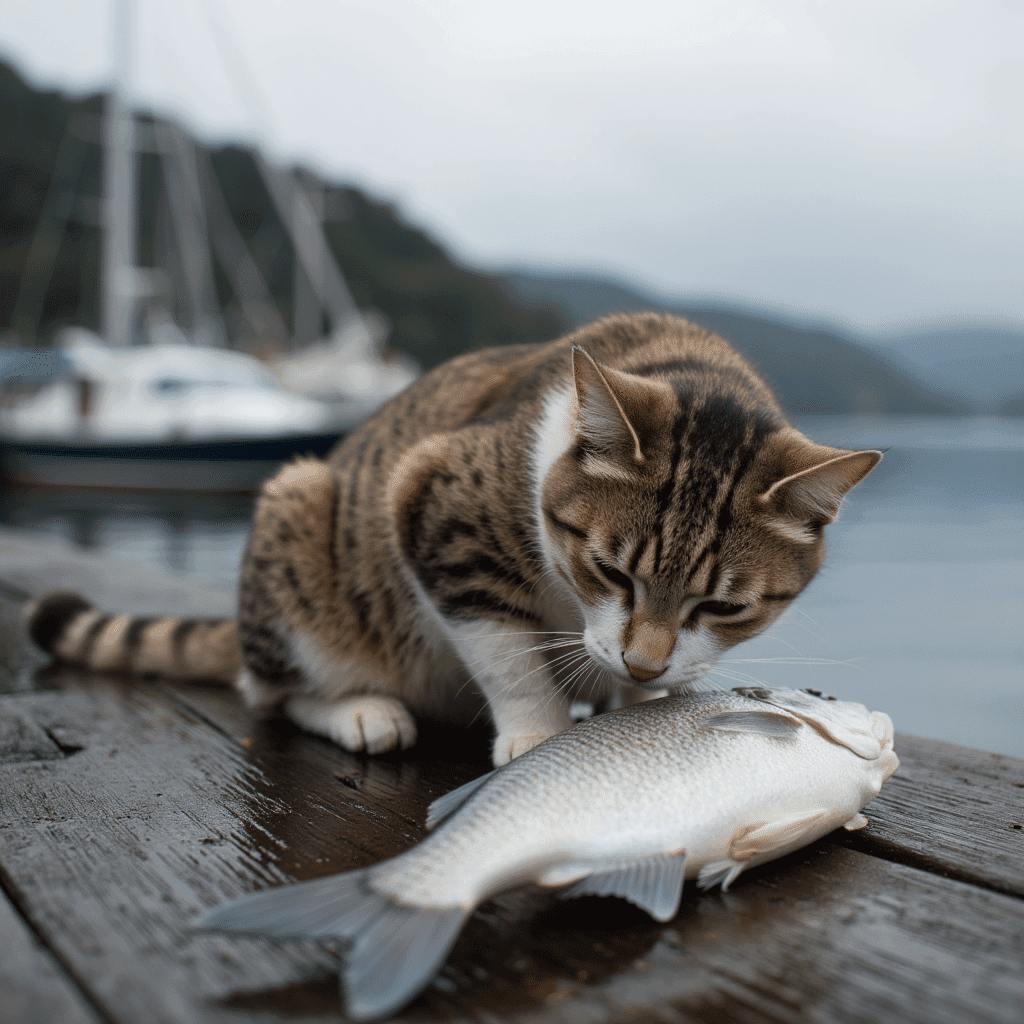
Once you have decided what way you are going to feed your diabetic cat, you can look more specifically at lean proteins. Turkey is a very good option as well as beef, perhaps chicken and possibly some organ meats.
When it comes to fish, the jury seems to be a bit out as to whether it is a good idea or not. Some sources say that fish is not a good idea because of some mercury levels and PBDE’s which are fire retardant chemicals linked to hyperthyroidism and high in phosphorus. Other sources say fatty fish like sardines, salmon, mackerel or whitefish like cod and haddock are good choices. In this case again you would need to consult a nutritionist or vet to see what their take is on this.
As for treats, the single protein treats like Purebites or Benny Bullys for cats is your best choice as they will have no carbs and be low fat. These treats can also be a good choice for weight loss.
All in all a cat with Type 2 diabetes will probably need insulin. Depending on when the diabetes is caught and what the levels are some vets prescribe medication first before going to the insulin, but most often this is the course. Food is going to be a big one.
The high protein, low fat and carb approach is the most recommended approach. Foods to avoid are the usual. Grains, corn, wheat, soy. Some say potatoes and sweet potatoes as well.
This is also going to be tricky because just like in prescription food for diabetic dogs, prescription food for cats can also have ingredients that seem to be exactly what you are trying to avoid. Royal Canin has a diabetic food available through the vet that has an ingredient panel that reads as follows: Chicken-by-product meal, barley, wheat gluten, corn gluten meal, soy protein isolate, tapioca, powdered cellulose, chicken fat, natural flavours, dried chicory root, fish oil, psyllium seed husk, potassium chloride, sodium pyrophosphate, calcium sulfate, vegetable oil, another long word that is a fancy name for prebiotics, and the vitamin pack.

So here we go again with an ingredient panel just like in the dog food that is suspect. Diabetic Cat International states specifically that food to avoid are: “Grains in any form: Corn, (corn, corn meal, corn flour, cornstarch, corn gluten etc.) wheat (wheat, wheat gluten etc. rice ( rice, rice powder etc.) barley, oats etc. Grains are high in carbohydrates and difficult for cats to digest. Soy: Soy can affect the thyroid and lead to HyerThyrodism.” (Diabeticatinternational.com)
Diabetic Cat International is also on the side that fish is not the best for a diabetic cat. They cite the same concerns with toxins and mercury levels as well as PBDE levels.
So there you go. Again the answers are not always clear. The most important thing to do is to find a food that is high in protein and low in fat and carbohydrates. If you find a food that is working, stick with it. Cats really do not need a constant change in food for variety.
Raw could be an alternative and I think speaking to the Raw Food provider’s nutritionist is a good idea. And to be clear when I say Raw I mean, raw food prepared properly by raw food vendors who have the equipment to prepare raw food safely. If you buy raw food from the grocery store, you will need to cook it.
Canned food is usually the way to go with diabetic cats. There are canned foods that will meet the criteria that you can get at your pet specialty store. Dry food is going to be more of a challenge. You will probably have to look up the manufacturer’s website to get more information about carbohydrate levels and don’t feel shy to call them directly with any question.
I would also say to be cautious with some of the foods designated as prescription due to some of the questionable ingredients.
And last but not least, look at some of the supplements you can use to help support your diabetic cat. Omega-3’s, probiotics, chromium, coenzyme Q10, and herbal blends like Gymnema, (gym-ne-muh) Fenugreek and Cinnamon can support blood sugar, metabolism and organ health.
I would however, strongly suggest you consult a holistic veterinarian or holistic practitioner schooled in animal nutrition and supplements first to make sure nothing is interacting with their insulin. There is no natural substitute for insulin but you can certainly support the systems to help support glucose levels and the immune system.
Well I hope that has helped when dealing with a diabetic cat. If you see any of the symptoms of excessive thirst, lots of pee-ing, weight loss, make an appointment with the vet. The earlier diabetes is caught in cats the better chance of remission.
And if diabetes is the diagnosis, get on the research train, because there is a lot of information about diet and supplements and protocols that you will really need to learn about, because as I say, knowing is caring.

For more episodes like this, please check out my Pet Health episode library.

Hi everyone, and welcome to Val Talk’s Pets, the forum for pet parents and enthusiasts alike. So, I have been working in the pet industry now for almost 10 years and, on a daily basis, I handle a lot of issues and questions arising from pet parents. I am not a veterinarian but I do have certifications in Canine, Feline, Small Animal, Fish and Herptile and Avian Health and Nutrition from the University of California, Davis Extension, the Vet College.

Hi everyone, and thanks for joining me for this episode of Val Talks Pets. On this episode, I was thinking I would share with you a few of my favorite […]


