
Saying Goodbye to 2025
📅 Episode Overview: Saying Goodbye to 2025 Another year has flown by, and I have tackled 24 topics related to being a pet parent or pets in general. For this […]
 play_arrow
How Cats and Dogs Handle Pet Loss Val Cairney

Pet parents grieve terribly when a pet dies, but what happens to the other pet in the household when a member of the pet family passes away? In this episode we’ll talk about How Dogs and Cats Handle Pet Loss.
So, this episode comes about because our Rory passed away on January 23rd. I mentioned in one of the latest episodes that we were dealing with a kidney issue with Rory and unfortunately it just went pear shaped very quickly. The positive however is that Rory passed at home, quiet, warm and with his family. We miss him so much, but we are also dealing with a sad doggy.
When we adopted Tundra we had two cats, Esme and Rory. Esme passed away 3 years ago. Esme and Tundra were not all that close. When she passed, we made sure he sniffed her, she too passed at home, and then he seemed to just carry on. He still had Rory, so I don’t know if that was a factor.
Rory took to Tundra like a little magnet. He loved Tundra, always rubbing up against him, seeking him out to visit when they were outside. They were pals. When Rory passed, we did the same thing and let Tundra sniff him.

Over the past week, we have noticed that he is a bit intermittent with eating and is anxious in the morning when he knows we will be leaving. We’ve discussed the issue that we think he is grieving and missing his buddy that kept him company when we were not home.
This is what got me thinking about how pets grieve when they lose another pet.
When you think about it, pets think about their family as not just the humans, but also the other pets. It would stand to reason that they would grieve the loss of another pet. And they do.
Some of the signs a pet may be grieving as listed by petdeparted.com are:
Basically, these signs can be a dog grieving the loss of another dog, a cat grieving the loss of another cat, a dog grieving the loss of a cat or a cat grieving the loss of a dog.
The reaction a pet may have to the loss of another pet will be different for each animal, so it is important to look for the signs.
I noticed very specifically that when I was getting ready in the morning, Tundra was following me around, coming into the bathroom, giving me his paw and would not settle. This is definitely different behaviour. I think he is anxious knowing he is going to be alone.
A lot of the advice for a grieving pet says that we need to give them a quiet place to process their feelings. Personally, I think this is hard because we want to give them that extra attention they need, and it seems concerning that the grieving pet has gone off on its own.
I guess the idea is to be mindful of this behaviour and to be reticent of a little personal space becoming depression.
hillspet.com, the makers of Science Diet dealt with this topic a bit and pointed out that although we may not know the full extent of an animal’s capacity to recognize the loss of another pet there is evidence that there is a period of mourning or at the very least a recognition of the absence of the other pet.
Some pets react quite clearly to the loss of the other pet while some may seem to not really notice. The difference here however, is that the pet may be very aware of the human’s emotion and will react to this.
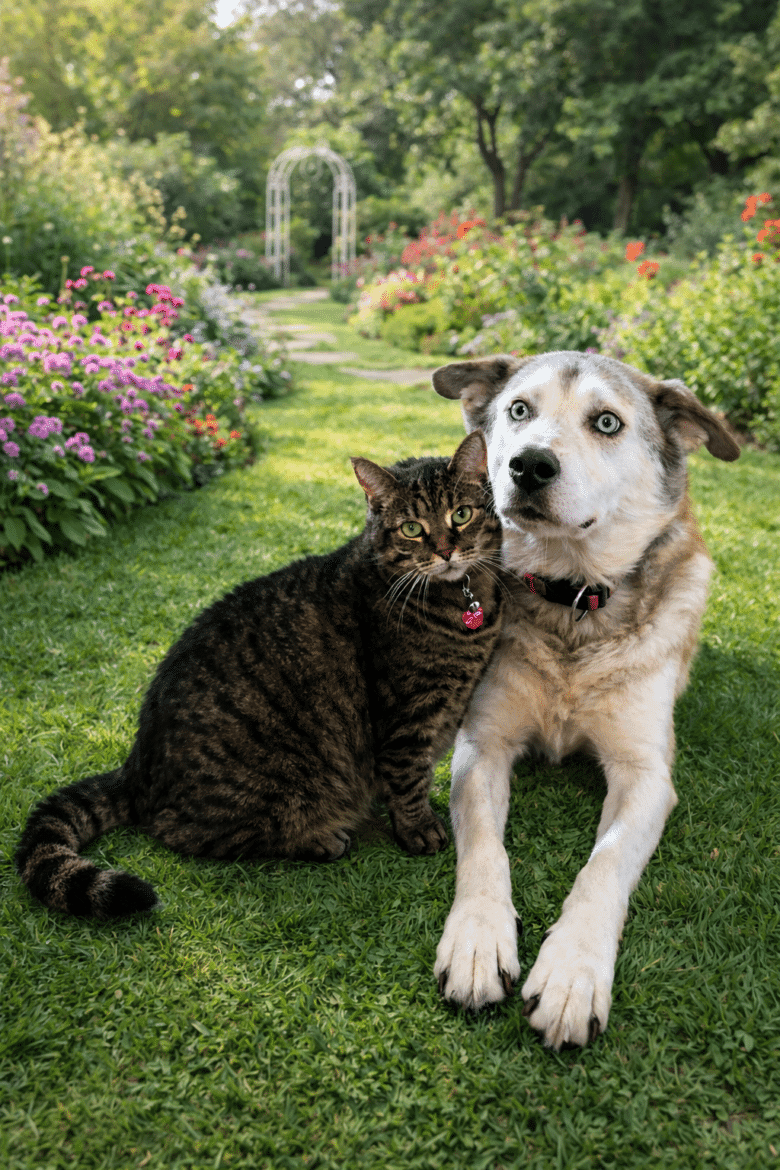
As Hills points out:
“Dogs can have a particularly rough time adjusting to a change in the family makeup because of their pack-oriented nature.”
“Dogs tend to see the family, including other pets, as a unit and come to understand their position and role in relation to the rest of the pack. When another pack member dies, this may leave your dog feeling uncertain about his role and how he fits in.”
In addition to the other symptoms pointed out, a pet may also act withdrawn or whine or howl. Cats may cry. They may pace or search for the missing pet. And cats may change their grooming habits.
It’s interesting that for a long time the idea that pets grieve in any way, was dismissed as an emotional response. It was thought that a pet was more reacting to the change in schedule than the actual loss of the other animal, or the human for that matter.
Experts are now strongly disagreeing with this.
Studies and scientists are now more open to the idea that domestic animals are sentient and do feel grief.
As humaneworld.org points out, there are stories of:
“an orca Mom swimming with the corpse of her calf, a dog crying on the gravestone of her owner and elephants stroking the bones of their matriarch.”

The legendary story of Greyfriars Bobby in Edinburgh is a famous tale of a dog’s loyalty and grief.
John Gray, a night watchman for the Edinburgh Police, adopted Bobby to keep him company during his long winter nights. John died of tuberculosis in 1858 and was buried in Greyfriars Kirdyard.
Bobby refused to leave the graveside, keeping vigil for 14 years, through all weather conditions.
Did Bobby understand that his human, John Gray had passed? Evidence strongly points to the fact that he did and missed him everyday.
Barbara J. King, emerita anthropologist at the College of William & Mary and author of How Animals Grieve, says, “grief is not ours alone.”
The overall sentiment as to whether a pet will grieve the loss of another pet is pretty overwhelmingly on the side that they do.
As for the length of time a pet will mourn, that too is individual. A pet may grieve for a few weeks to 6 months, as they process the loss. Some even suggest speaking to the veterinarian if the grieving goes past the 6 months.
During this time it is important to give them extra support, come up with different activities and try not to reinforce some of the behaviours that are not the best.
For example, if a cat is walking around the house meowing constantly, our instinct is to pet and comfort them. However, Hills states that this is reinforcing the behaviour and not allowing the pet to process in their own way.
As for getting another companion, it is not recommended until the household has worked through their grief and are prepared for a new pet, not a replacement for the one that passed.
What we do have to consider however, is our other pets in the house. Is our other pet ready to deal with a new pet? Have they moved through their grief?
Well as I have been compiling this episode, I have noticed a little improvement in Tundra’s demeanor.
Overall, he is getting better as it has just passed the three-week mark. We all just soldier on. It’s tough as all pet parents know. It’s all about time.
Recognizing is the most important because as I say, knowing is caring.

Click here if you would like hear more on dealing with pet loss.

Hi everyone, and welcome to Val Talk’s Pets, the forum for pet parents and enthusiasts alike. So, I have been working in the pet industry now for almost 10 years and, on a daily basis, I handle a lot of issues and questions arising from pet parents. I am not a veterinarian but I do have certifications in Canine, Feline, Small Animal, Fish and Herptile and Avian Health and Nutrition from the University of California, Davis Extension, the Vet College.

📅 Episode Overview: Saying Goodbye to 2025 Another year has flown by, and I have tackled 24 topics related to being a pet parent or pets in general. For this […]