


Pet Tech for Dogs and Cats
Exploring the World of Pet Tech Hi everyone and thanks for joining me on this episode of Val Talk’s Pets. In this episode it is time to explore the world […]
 play_arrow
Fresh vs. Raw Pet Food: Understanding the Differences, Benefits and Challenges Val Cairney
 play_arrow
Spotlight – The Labrador Retriever Val Cairney

Hi everyone, and thanks for joining me on this episode of Val Talk’s Pets. On this episode I will be spotlighting the most popular breed of dog in Canada and the United Kingdom, the Labrador Retriever.
Have you ever wondered what is the most popular breed of dog worldwide? Well, I have, and I have to say I was a bit surprised as it turned out to be the French Bulldog. The French Bulldog has held the spot for several years worldwide ousting the Labrador Retriever that held the spot for 31 consecutive years and is still a very close second. In the United States, the French Bulldog also takes number one having held this position for the last 4 years, again ousting the Labrador Retriever after 31 years.
In Canada the Labrador Retriever has held number one for 32 consecutive years. In the United Kingdom, the Labrador has been the most popular dog breed for over 30 years. Interesting, the Labrador Retriever held the position form 1991 until 2018 when guess who, the French Bulldog took over briefly. But the Lab quickly regained its top dog position a year later and has remained most popular since. It is estimated that there are over 1 million Labradors in the UK.
And so, it is with these statistics I am spotlighting the most popular dog in Canada and the UK, the beloved Labrador Retriever. There is a reason I think that Canada and the UK share this loveable breed and it has to do with the history of the breed. Let’s look at how Wikipedia outlines the origin of this breed. Labradors, actually date back to at least the 1830’s.

Back then, there was a breed of dog in Newfoundland, a province of Canada, that at that time was not part of the confederation. Before 1949, Newfoundland was a self-governing Dominion of the British Empire. It was a separate country with its own sovereignty.
At the time, there was a dog in Newfoundland known as the St. John’s dog, St. John’s being the capital, or the lesser Newfoundland dog. The St. John’s dog was a local, indigenous dog that had developed over centuries through natural selection rather than selective breeding. Today, this dog is extinct.
Not much was known about the genetic makeup of the St. John’s dog, but it was probably a mix of random-bred old English, Irish or Portuguese working dogs. Fishermen loved these dogs because they had great temperaments and were good working dogs. By mid 20th century the dogs began declining and by the early 1980’s they were extinct.
Now, let’s go back and make the connection to the UK. During the 19th and early 20th centuries, St. John’s water dogs were exported from Newfoundland to England. At this point, the dogs were crossbred with other dogs to create the retrievers. And it should be noted that the St. John’s water dog was also an ancestor to the large and gentle Newfoundland dog we know today.
At this point, we now have the development of the Labrador Retriever developed from the St. John’s water dog imported from Newfoundland. The name was given to the dogs, Labrador in deference to the region of Labrador which is part of Newfoundland today.
To be more specific about the importation of St. John’s water dogs it was actually through the 10th Earl of Home and his nephews, the 5th Duke of Buccleuch (buh cloo) and Lord John Scott. These fellows imported the St. John’s water dogs to be used as gun dogs.
Then along came the 2nd Earl of Malmesbury (moms berry) who liked to breed the dogs because of their natural ability in water fowling. In the 1880’s, these guys got together, Malmesbury, Buccleuch and Home to collaborate on developing and establishing the Labrador Retriever breed.
In the original breeding, the females were from the original imported dogs by the 5th Duke and the 10th Earl of Home. The offspring are the ancestors of all modern Labradors.
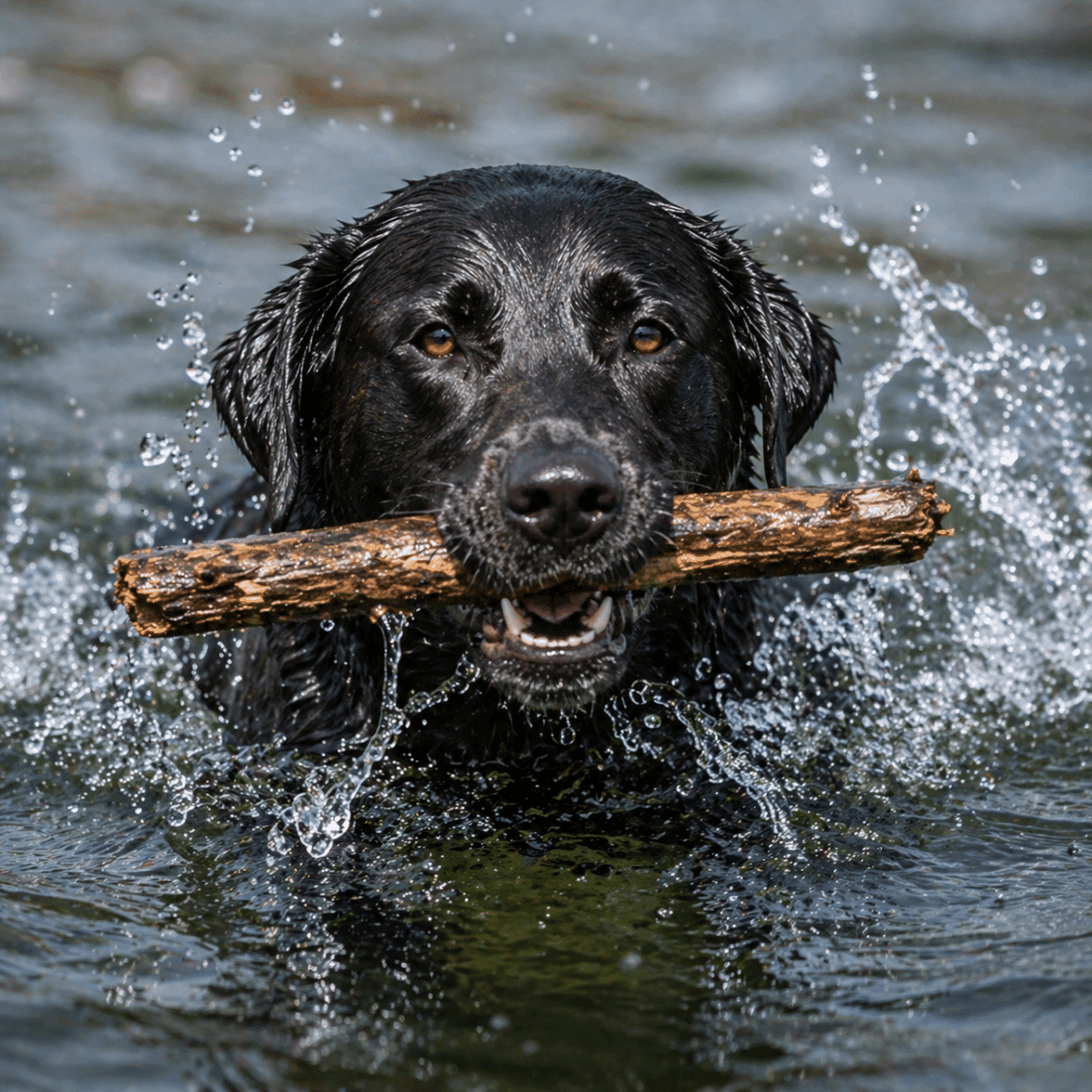
In terms of size and conformation, the bench-bred lines of the Labrador are significantly different between the UK and the US standards. Seeing as the Lab is the number one breed in the UK and Canada, let’s look at their standards.
According to the Canadian Kennel Club, Labs are considered medium sized dogs. Ideal height is 22.5 – 24.5 inches for males and 22.5 – 23.5 inches for females. Their weight is between 55 – 80 pounds.
Now, in many standards, over 50 pounds would make them a large breed dog, but the CKC in the standards refer to them as medium.
In terms of the UK standards, they are pretty much the same, with height being between 21.5 and 22.5 inches and weighing 55 to 80 pounds. They do however, list the Lab as a medium to large athletic breed.
In terms of colour, the acceptable colours are black, yellow or chocolate. Chocolate was at one time referred to as “liver”. I can see why that was changed.
In terms of temperament, Labs are known as the outgoing, friendly goofs. They are gentle and loving and rarely show aggression. They are super friendly, so they are not noted as being good guard dogs. Labs are great with children and usually get along with other dogs.
Labs are energetic and exuberant. They excel at swimming and games and do need regular exercise. They are known for being quite trainable and work well as service dogs.
It is important to make use of this highly trainable ability to keep their exuberance under control when necessary. A lab jumping on people is not good and they can easily knock over small children without meaning to.
Because labs are retrievers, they like to carry things around in their mouths and can maybe be a bit too “mouthy” with humans, meaning grabbing hands and legs. But this can easily be managed with proper toys.

The other thing about Labs, is that they are known to be hoovers. They love to eat and usually are not picky about what they are given. For this reason, becoming overweight can be an issue.
Labs also can be prone to ear infections which gets exacerbated when they love to swim. They can also have allergies which in some cases can manifest into ear issues. It is suggested that their ears be cleaned with a drying agent every 2 to 3 weeks and after swimming or having a bath.
One of the more concerning health issues that relate to Labrador Retrievers is Tricuspid Valve Dysplasia. According to Petmd, “the tricuspid valve controls blood flow on the right side of the heart from the right atrium into the right ventricle. Labrador Retrievers with TVD, have a valve that doesn’t function properly and allows blood to leak backward into the right atrium. Over time the right atrium and right ventricle can become enlarged, and the dog may develop heart failure. The prognosis will depend on the severity of the condition. Heart medications can be prescribed and some Labs with TVD live normal lifespans.
Labs may also be prone to elbow dysplasia where the elbow joint doesn’t develop correctly, causing it to be looser than normal. (petmd) Hip dysplasia is also something that can occur, where the head of the femur doesn’t sit snugly in the hip joint. As a result, the bone rubs against the hip socket leading to arthritis. (petmd)
Two other more rare issues are Centronuclear Myopathy and Exercise-induced collapse. Both conditions can be determined by a DNA test to see if a puppy has the genetic mutation.
As stated previously, Labs come in black, yellow and chocolate. A new colour reared its head and it is controversial, and that is the Silver Lab.
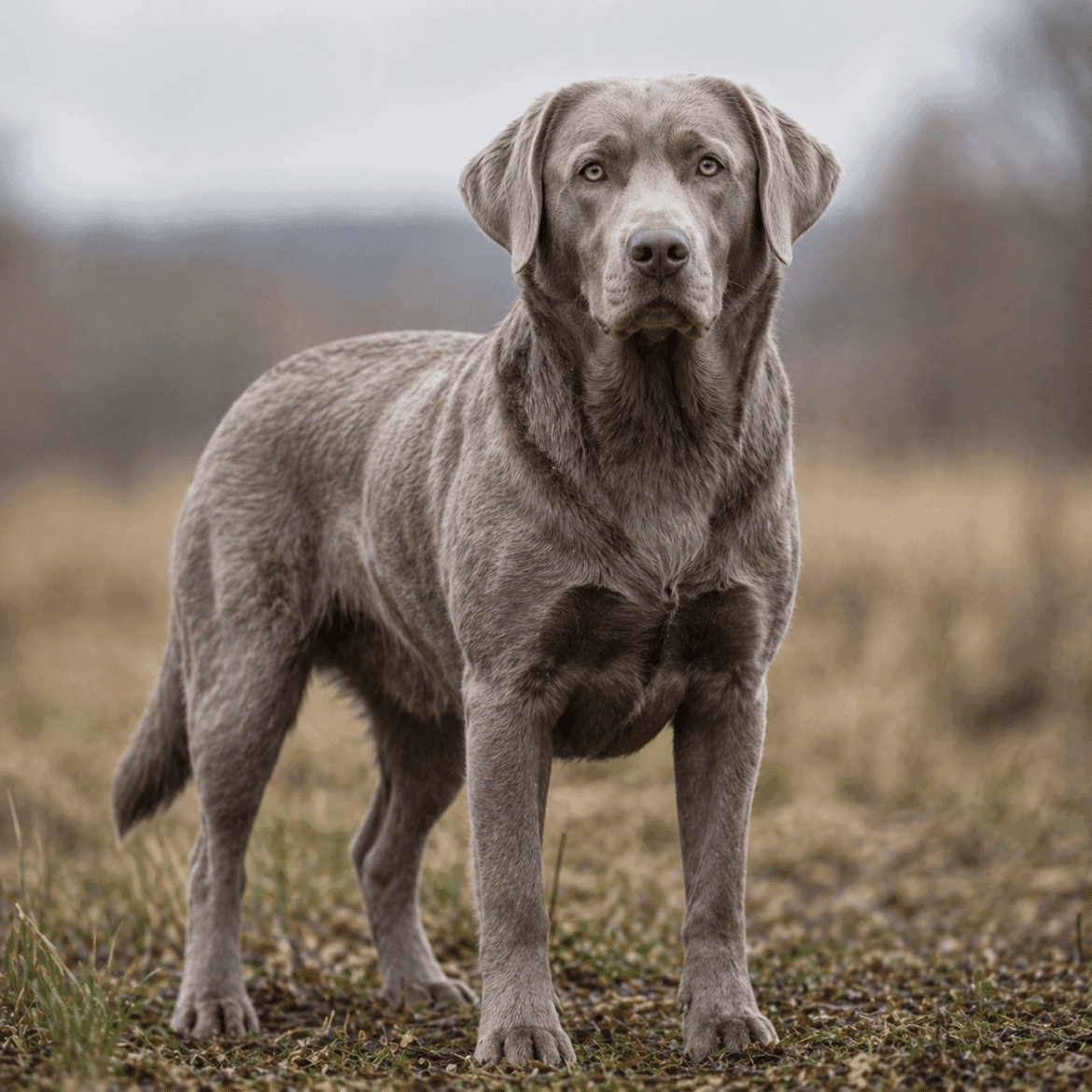
The controversy centres on whether silver labs are purebreds or crossbreeds. Some believe that the silver lab is derived from crossing labradors with Weimaraners. Others believe that the silver colour is the result of a recessive gene mutation.
According to the Labrador Retriever Club, stated by Frances O. Smith, DVM, PHD Chair, Genetics Committee, they state, “It is the opinion of the Labrador Retriever Club, Inc. the AKC parent club for the breed, that a silver Labrador is not a purebred retriever…”
According to the Canadian Kennel Club, “the CKC does not officially recognize “silver” as a standard colour for Labrador Retrievers.”
All labs may be prone to hip or elbow dysplasia, ear infections or obesity as I have already mentioned. However, silver labs are specifically at high risk for Colour Dilution Alopecia or CDA.
Well, there you have it. Labrador Retrievers are one of the best family dogs anyone can have. They are also one of the top chosen service dogs for their trainability, temperament and depending on the service they are in, their size.
They are super popular in Canada. I can tell you from personal experience, I encounter a lab owner just about every day. Every morning I see one of my favourite labs, Bonnie being walked. She is a yellow lab. They really are an amazing breed.
As for the silver lab controversy, personally I don’t like the idea of playing with the gene pool…
Because as I say, knowing is caring.

If you enjoyed this episode, please check out my other Spotlight episodes.

Hi everyone, and welcome to Val Talk’s Pets, the forum for pet parents and enthusiasts alike. So, I have been working in the pet industry now for almost 10 years and, on a daily basis, I handle a lot of issues and questions arising from pet parents. I am not a veterinarian but I do have certifications in Canine, Feline, Small Animal, Fish and Herptile and Avian Health and Nutrition from the University of California, Davis Extension, the Vet College.

Exploring the World of Pet Tech Hi everyone and thanks for joining me on this episode of Val Talk’s Pets. In this episode it is time to explore the world […]


Comments are closed.