

Do not buy rabbits, chicks, or baby ducks as Easter gifts.
Introduction Hi everyone, and thank you for joining me on this episode of Val Talk’s Pets. As we approach the Easter holidays, I want to discuss something I believe is […]
 play_arrow
Spotlight on the Maltese Dog: A Charming Little Companion With a Big Heart Val Cairney
 play_arrow
Pet Rats: Care, Housing, Feeding & What to Know Before Bringing Them Home Val Cairney
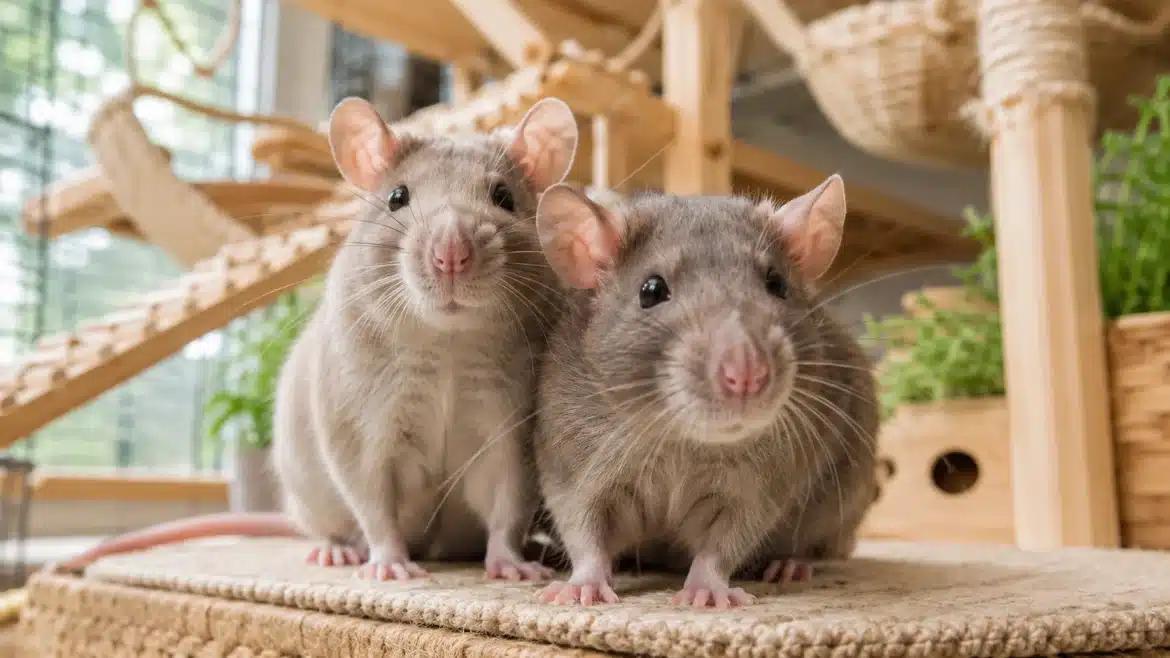
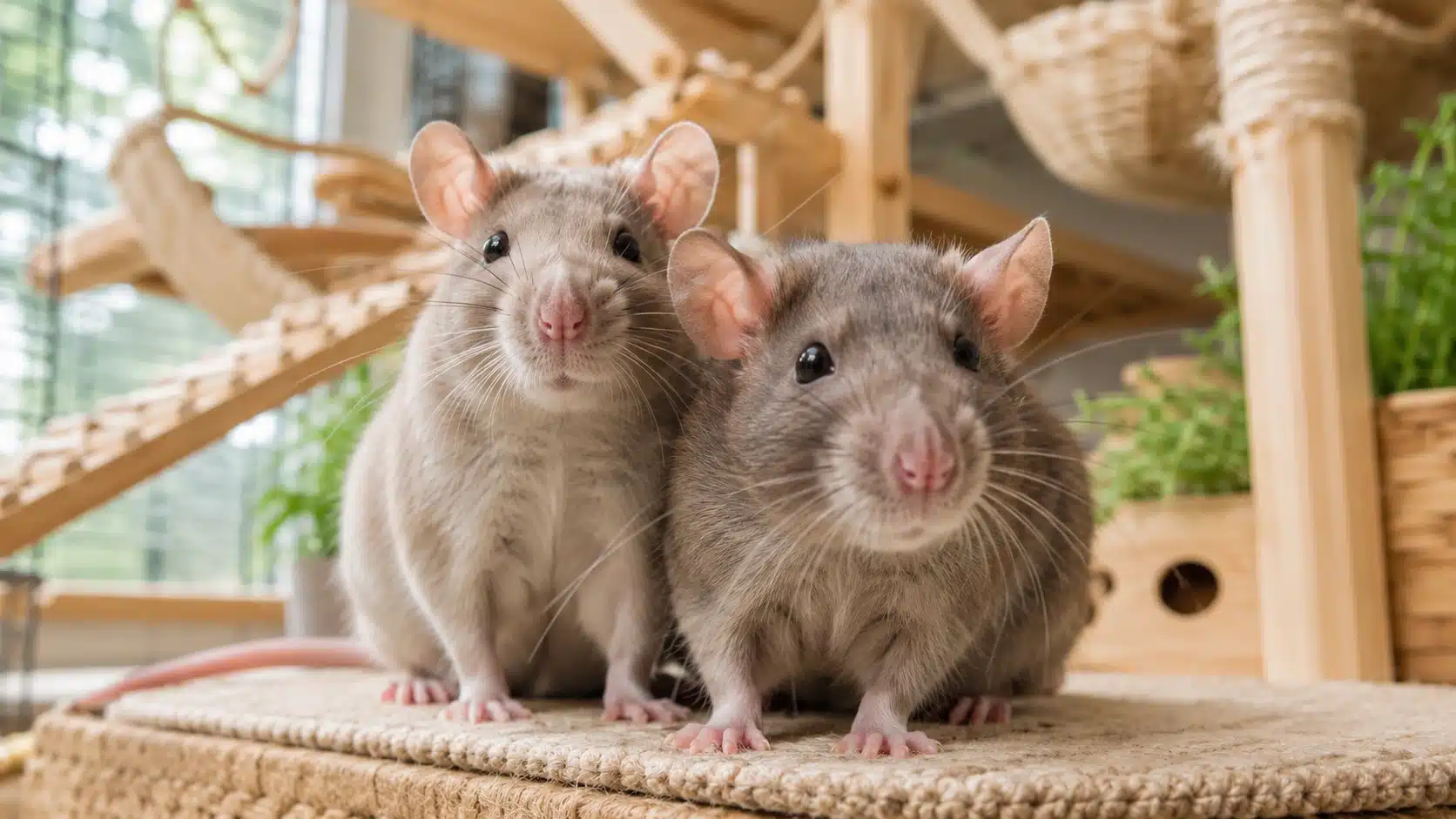
Hi everyone and welcome to this episode of Val Talk’s Pets. In this episode I’m going to explore one of our small animal pets that has a love it or hate reputation. Can you guess what it is? Let’s go exploring into the world of pet rats.
Rats are one of those pets that some people just adore or some are just totally creeped out. The obvious source of this is that wild rats are considered vermin and carry disease and can wreck a lot of things with their invasions. The domesticated pet rat is a much different story. Can you turn a wild rat into a pet? Well apparently, you can if the rat is very young, but it is not the same as a domestic rat and although possible, there will be a lot of patience and training to accomplish turning a baby wild rat into a pet. Public Health does not recommend keeping wild animals as pets. So, let’s not talk about them. Let’s concentrate on the lovely pet rats that many people have and love as pets.
Pet rats are known for being very social and will bond with their humans very well. They get along with other rats well and they are very interactive. Many rats have been trained to learn a trick or two and respond to their names. They are highly intelligent. They are quiet on the whole and although they are easy to care for, they are not considered low-maintenance.
The average lifespan of a pet rat is 18 to 36 months. So up to three years is a good age for a rat. In this regard the commitment level is low as opposed to a dog, cat or rabbit that can live on average 12 years and even reach 15 years. They are nocturnal, so they will be more active at night. Because they are highly social, it is not recommended to keep them alone. This is something to really consider because owning a rat basically means you will have at least two rats. And they need a fair bit of space.
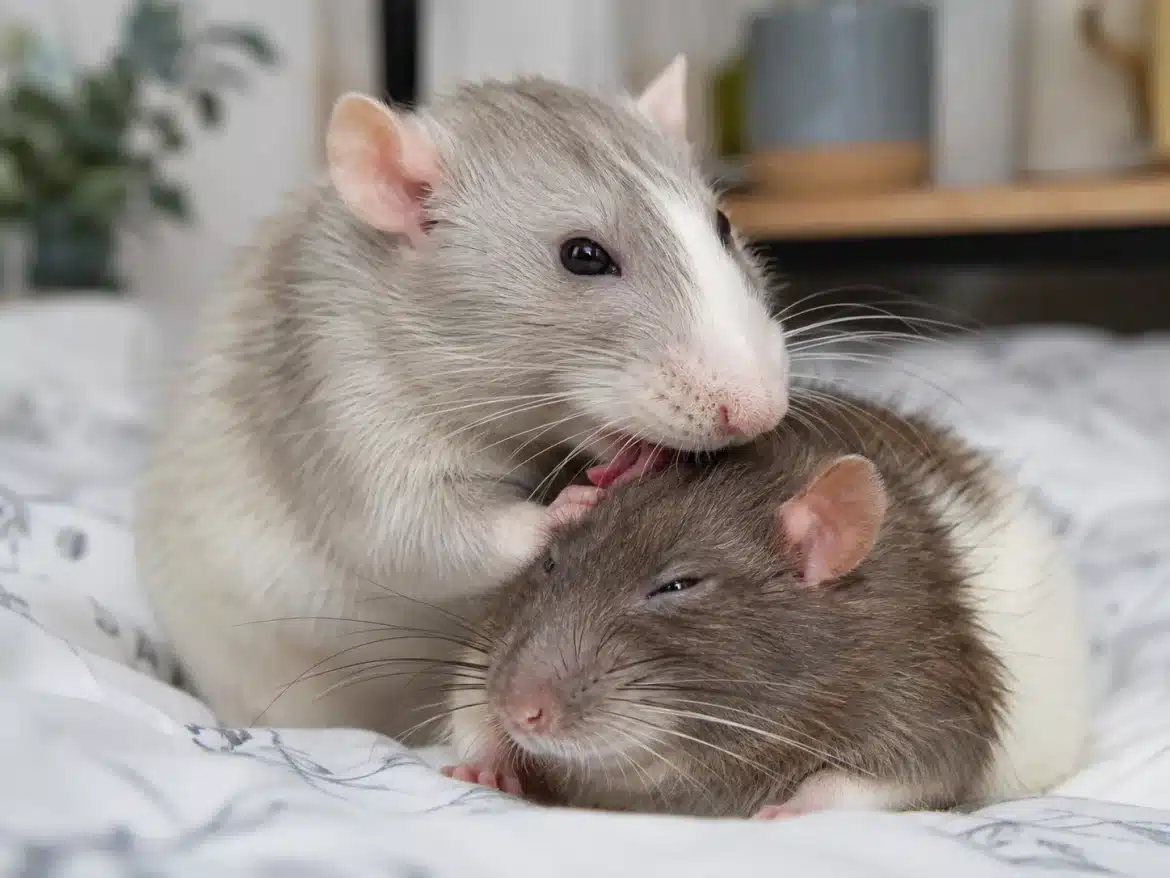
Let’s talk about the idea of having more than one rat. It is really important to have the rats be the same sex. Here is why. According to The Spruce Pets, “male rats are sexually mature by 6 to 10 weeks. Female rats are sexually mature by 8 to 12 weeks. Females go into heat for about 24 hours every four or five days once they reach puberty.” As you can see, having baby rats on a regular basis can be very easily accomplished.
You can get a rat neutered or spayed, but it will require an experienced exotic animal veterinarian. If that is not possible, it means that you cannot put a male and female rat together. As long as everyone is the same sex, all should be well and the rats will get along with each other. This means that their habitat has to accommodate the number of rats you have.
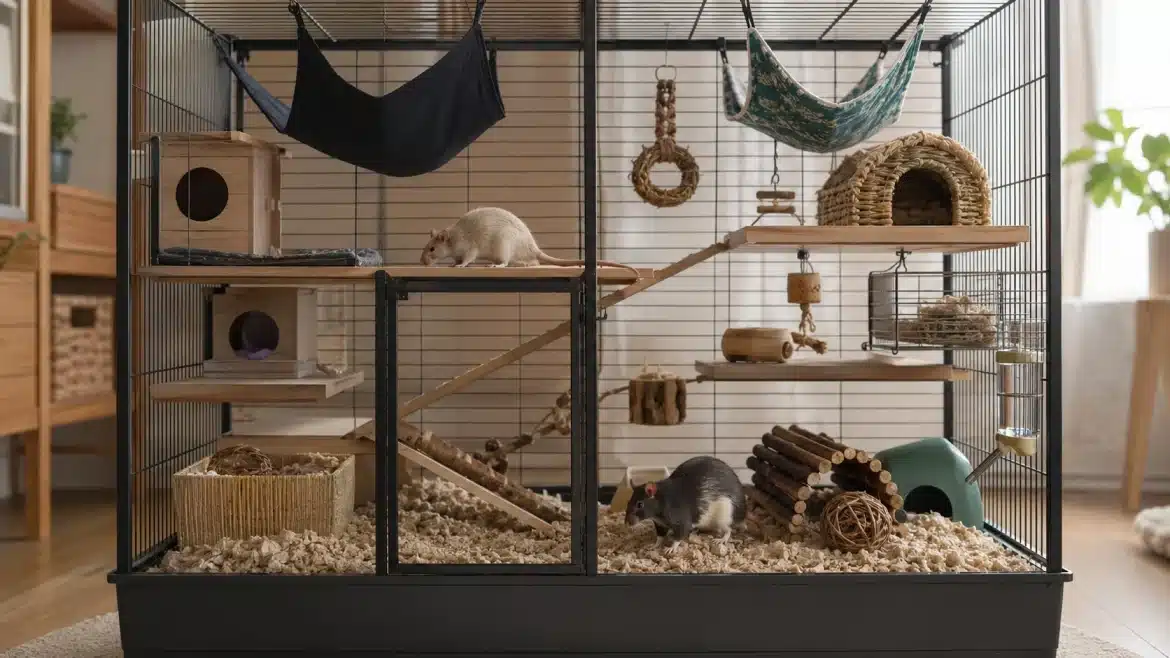
Let’s look at the basic habitat needs. First, a rat habitat cannot have the bar spacing any bigger than ½ inch because rats are very good at squeezing themselves through small areas. A glass tank or aquarium is not suited for rats as they require proper ventilation. The floor should be solid metal or plastic. If the habitat happens to have a wire-grid bottom, it will have to be covered. Rats can suffer from a very painful foot infection called Bumblefoot that ca be caused by walking on a wire floor. (Bumblefoot is a painful bacterial infection on the bottom of the foot that causes red, swollen lesions, scabs and limping). If the tray of the habitat is not deep enough, some kind of barrier along the edges will have to be fashioned to keep the bedding inside.
The habitat size itself should be roughly 30 inches long by 18 inches wide and 30 to 40 inches high for two rats. The idea is to aim for 3 to 5 square feet of usable floor and shelf space combined for each rat to provide a very happy space.
It is also recommended that the habitat have multiple levels, ramps and hiding spots to keep the rats active and mentally stimulated.
As for bedding, it is recommended that a low-dust substrate be used. Paper bedding can be soft and low dust and great for burrowing.
Aspen shavings, a good hardwood option, allows for digging as well but can be pretty messy if the habitat can’t hold the shavings inside.
Hemp bedding is very absorbent and controls odour well.
Fleece liners are good for rats with respiratory issues. You do however, have to place an absorbent layer underneath and provide a separate dig box.
What should you not use? Pine and Cedar shavings. These softwoods have aromatic oils in them that can cause severe respiratory and liver damage with the inhalation and processing of volatile organic compounds
Corn cob bedding can grow mold easily and can pose an ingestion risk.
Clay cat litter is a real no-no. It is highly dusty and can cause blockages if swallowed.
Fragranced bedding is not good either as chemical scents can irritate delicate lungs.
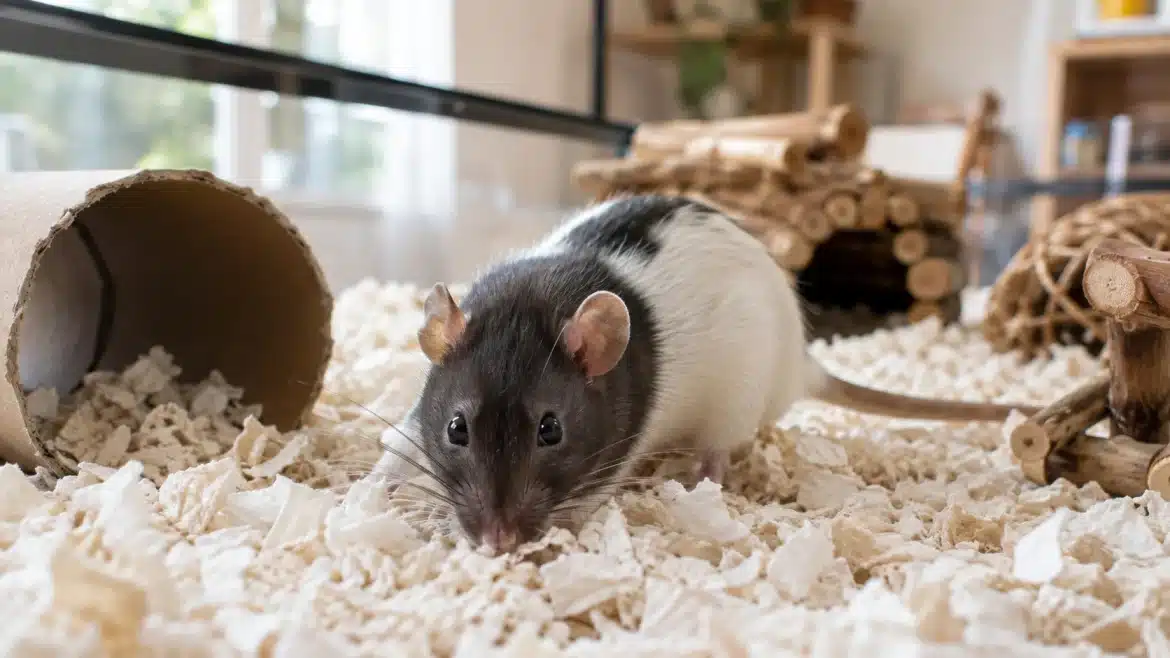
The habitat will need to be cleaned daily, scooping out droppings and uneaten food. A full clean and disinfection should be done weekly. And don’t forget toys and rat safe chewing items to keep them happy and content. And because their teeth continuously grow, chewing toys are very important to keep the teeth at a healthy length. Cardboard, willow twigs or safe wooden blocks should do the trick.
Like most of our small animal pets, rats are omnivores and need a balanced diet that includes high-quality commercial rat food supplemented with fresh fruit, vegetables and small amounts of protein. Commercial high-quality rat food comes in pellet form or block form. These foods are fortified with essential vitamins being A, B, C, D, and E. They also have minerals like calcium and magnesium and do have the right balance of protein being around 16% and fat around 8%. It is not recommended that other small animal food be given.
In terms of fruit and vegetables, the acceptable choices are, apples, pears, bananas, melons, berries and citrus fruits. Veg that is acceptable are broccoli, cabbage, celery, carrots, parsley and fresh corn.
Unacceptable fruit is mangoes and green bananas. Unacceptable veg include, raw sweet potato, dried corn, avocado, raw beans, and raw artichokes. Approximately one tablespoon of fruit and veggies per day is enough for a healthy adult rat.
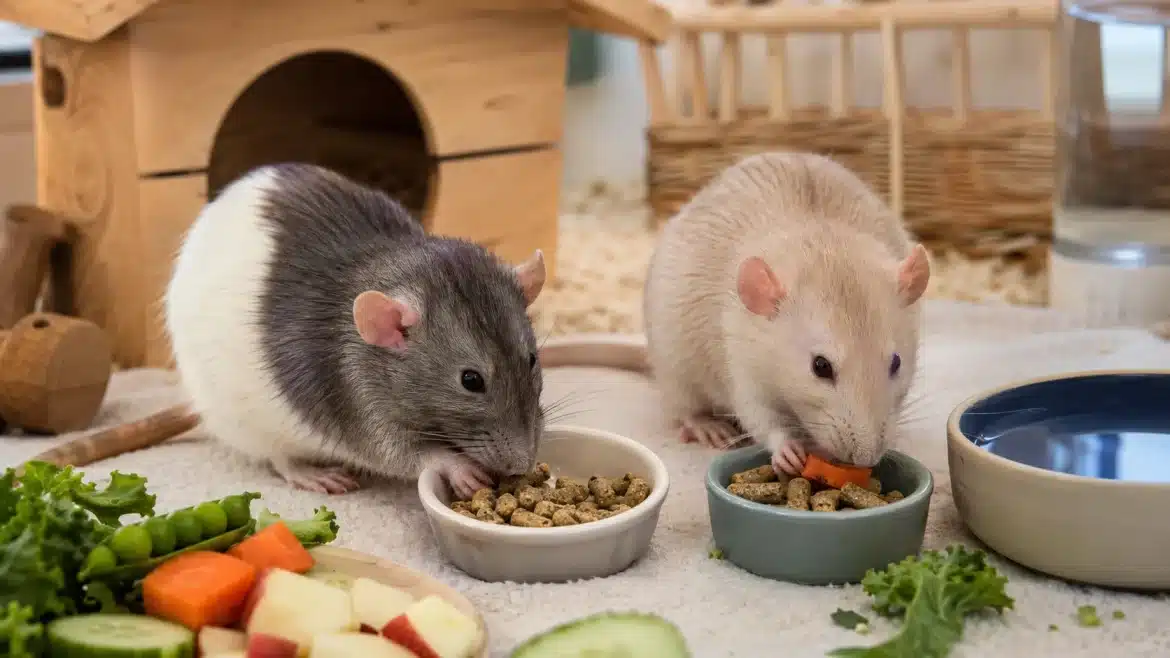
What do we give our rat if we want to give them a little treat? There are lots of choices for small animal reward treats at your pet specialty store, however you have to make sure that you can give them to rats as not all the treats are rat friendly. But, you can actually give a few things from the kitchen that if given in moderation can be quite nice as treats. For example, Semi-sweet chocolate, orange juice, cookies, and potato chips. But, remember, not too many and not on a regular basis.
And of course, a good supply of fresh water is mandatory. Rats can drink from a bowl or a bottle. Both will need to be changed and rinsed everyday. And a little tip about bottles. Most bottles have a fill line. There is space left open above the fill line. This creates a vacuum. When you open the bottle to change the water, the vacuum is released. If you do not fill the bottle all the way up to the fill line again, there will be no vacuum and the bottle will leak. So rule of thumb is to fill the bottle up to the fill line every time it is opened, regardless of how much water the small animal drinks in a day.
And a last tip about feeding rats. When feeding rats either with treats or bowls of food, fruit and vegetables, it has to be shared evenly with all the rats in the habitat. Meaning if one is getting bananas, everyone has to get bananas and so on. If not, the other rats can get aggressive if one is getting something they are not.
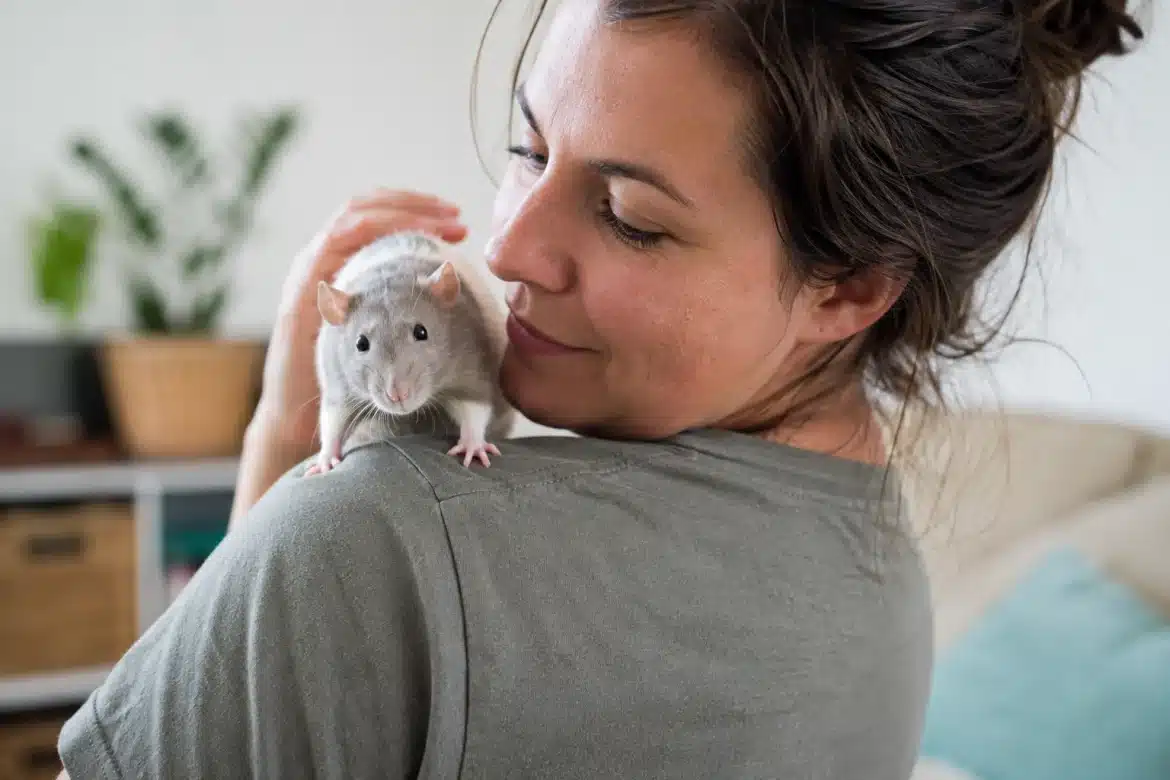
When it comes to pet rats, they love to be cuddled and hang out on your shoulder or sit on your lap. But it is important to make sure that they are being handled over soft surfaces in case they wiggle out and fall. As well, if there are children in the household, lessons on handling a rat carefully and gently are paramount and never to grab the rat by its tail.
Are there any diseases to be concerned about owning a pet rat? The answer is yes. Pet rats can carry Leptospirosis and this can be transmitted to humans. This is a bacterial disease often found in rat urine. It can cause flu-like symptoms, liver and kidney issues. Hantavirus is a group of dangerous viruses spread by rodents, including certain mice, rats and voles. It can be spread through inhalation of particles from infected rat droppings, urine or saliva. It can lead to severe respiratory issues. This is one of the reasons it is not recommended to kiss your rat on the mouth. Rat-bite fever is also caused by bacteria and can be transmitted through bites or scratches from infected rats or contact with their urine. Fever, muscle pain and headaches can occur.
LCMV, Lymphocytic Choriomeningitis Virus. ((kor-ree-oh-meningitis). This virus can cause meningitis and is transmitted through contact with infected rat saliva, urine, or droppings. It also presents with flu-like symptoms.
So, yes, rats can carry disease, but the risk of transmission can be significantly reduced with a few good practices. Number 1, hygiene. Washing hands thoroughly after handling the rat or cleaning the cage is crucial. And of course, keeping their habitat clean as well greatly reduces any chance of transmission.
Number 2. If a rat parent were to experience symptoms after interacting with their rat, getting to a health professional right away is important.
Number 3. Basically, exercise caution when handling rats and use all the preventive measures and be diligent. Unfortunately, there are no vaccines that can be administered to a rat for these diseases.
All in all, having pet rats can be quite rewarding. They are very intelligent, very affectionate. They don’t make a lot of noise, and they are fairly easy to maintain. Plus, their costs are on the low side considering the cost of other family pets and they do not have a long lifespan. I’m not really sure if that is a pro or a con. Either way, owning a couple of rats can be a really fun way to have a pet that can be a wonderful companion that provides affection and entertainment. If you think having a few rats is for you, speak to some rat parents and get some good insight because as I say, knowing is caring.


Hi everyone, and welcome to Val Talk’s Pets, the forum for pet parents and enthusiasts alike. So, I have been working in the pet industry now for almost 10 years and, on a daily basis, I handle a lot of issues and questions arising from pet parents. I am not a veterinarian but I do have certifications in Canine, Feline, Small Animal, Fish and Herptile and Avian Health and Nutrition from the University of California, Davis Extension, the Vet College.

Introduction Hi everyone, and thank you for joining me on this episode of Val Talk’s Pets. As we approach the Easter holidays, I want to discuss something I believe is […]


