Backyard Breeders: The Different Types and How to Spot Them
Hi everyone and thanks for joining me on this episode of Val Talk’s Pets. What does the words Backyard Breeder conjure up in your mind? Do you think of awful […]
 play_arrow
Fresh vs. Raw Pet Food: Understanding the Differences, Benefits and Challenges Val Cairney
 play_arrow
Wildfires and Animals: What Happens to Wildlife and Evacuated Pets? Val Cairney
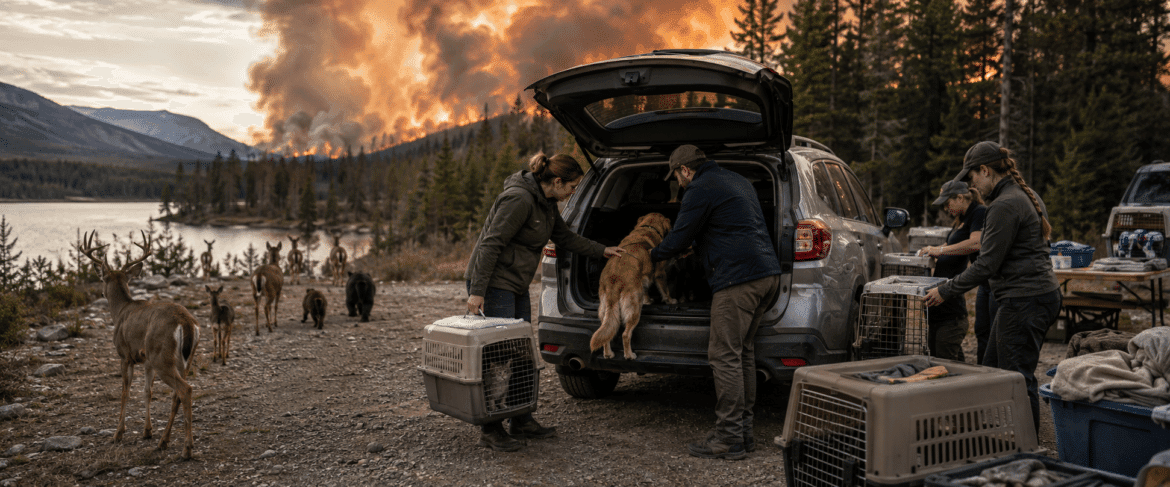
Hi everyone and welcome to this episode of Val Talk’s Pets. In this episode I am going to explore a topic that is current and can be devastating, and that is what happens to wild animals during a wildfire and domestic animals when a community is evacuated?
It is hard to be anywhere in the world right now and not have wildfires or at the very least hear about them. As of July 29, 2026 the Canadian Wildland Fire Information System, stated there were 882 active fires.
The fires are spread out across the country being active in British Columbia, Yukon, Alberta, Northwest Territories, Saskatchewan, Manitoba, Ontario, Quebec, Newfoundland and Labrador, Prince Edward Island. Apart from the other Maritime provinces, that’s just about everybody.
In the United States, large fires are being reported in Oregon, Washington, Minnesota, Colorado, California and Florida. France, Portugal and Spain are highly affected with fires right now. There is very high danger across southern Scandinavia, parts of eastern Europe and further pockets in North Africa. In the UK, almost the whole part of England is under very high threat, from Bristol to York. In Scotland, fires have been raging in the Cairngorms wreaking devastation in the mountains.
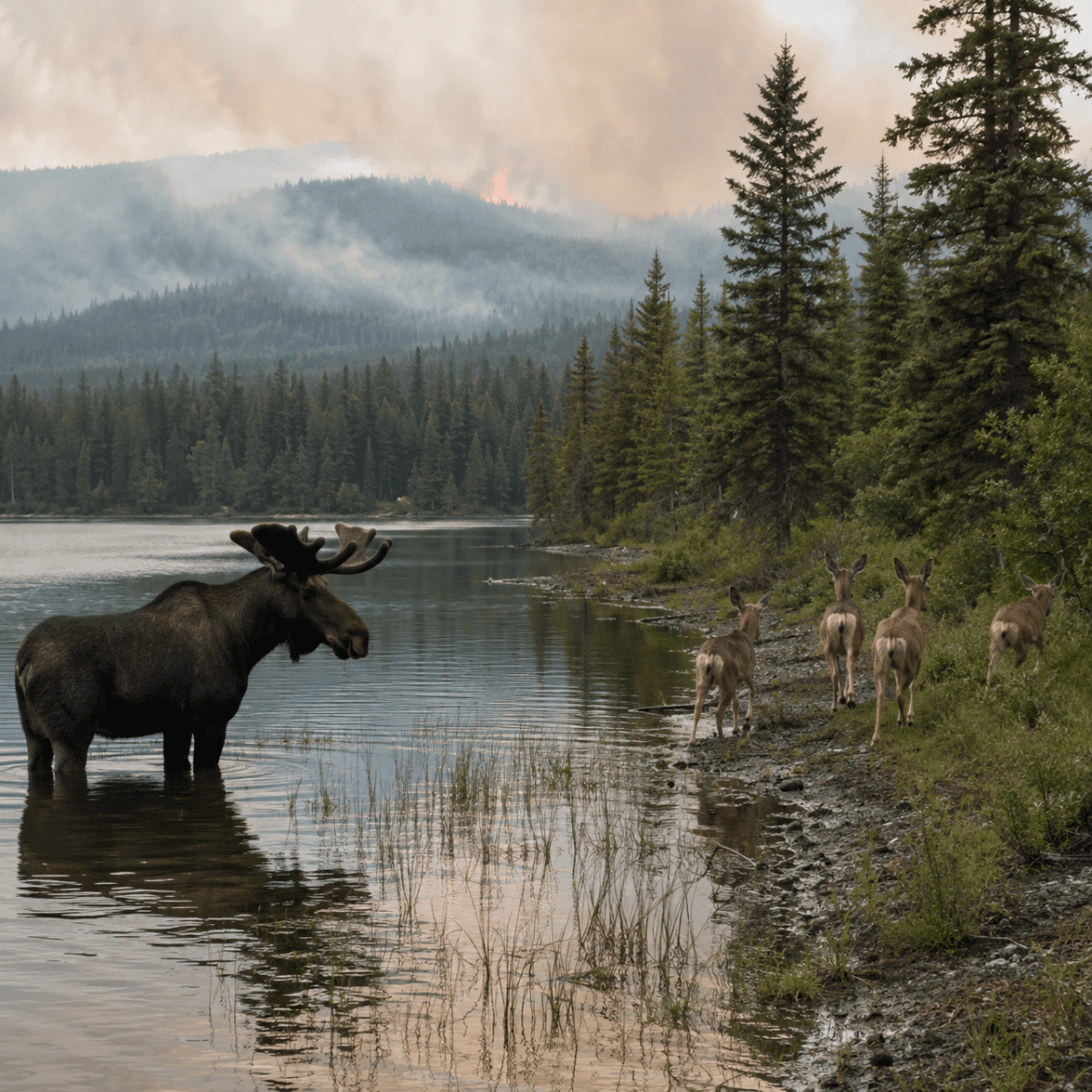
So, what happens to all the animals that are under threat from wildfires? Let’s have a look at what the wild animals face and how they try to cope.
According to onetreeplanted.org, research ecologist Gavin Jones, stated that “most animals survive fire”. However, during the wildfires in Australia in 2019 into 2020, it was estimated that 143 million mammals were killed or displaced. These numbers really put a highlight on the devastation as not just trees were decimated.
Gavin Jones did say that “Animals have adapted warning systems and have to be able to recognize those dangers. Creatures register smoke, shifts in heat, and the crackle of approaching embers, giving them enough time to escape.”
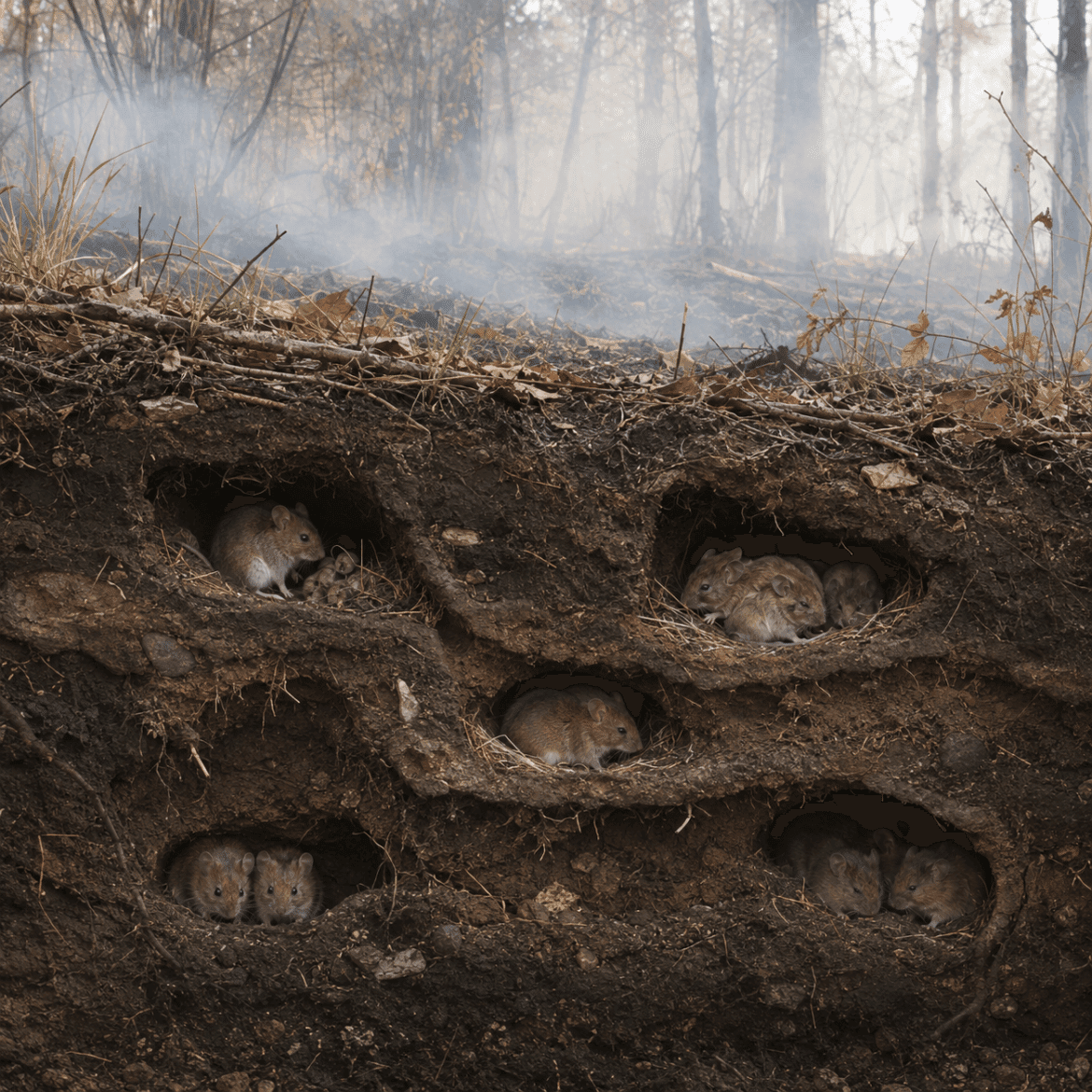
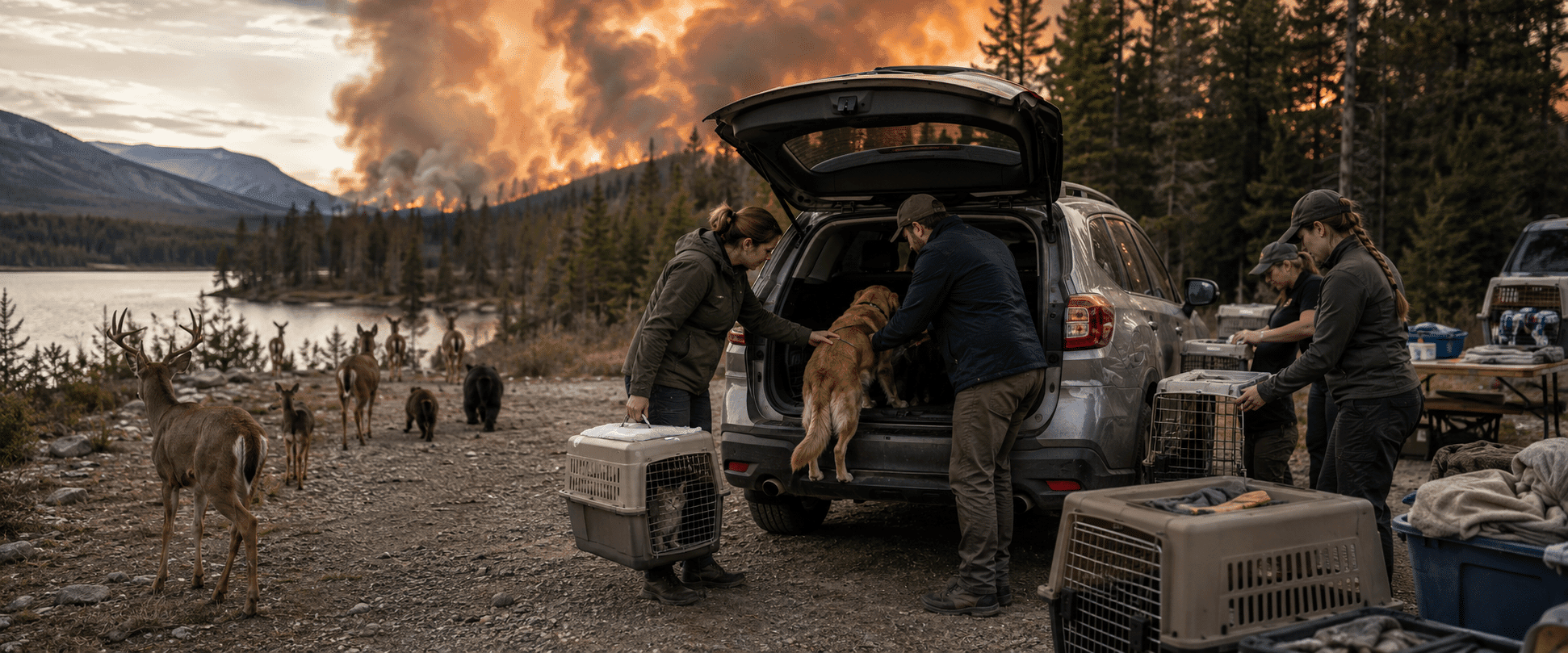
One Tree Planted explains that “Where animals go depends largely on what they are. According to the National Forest Foundation, large mammals like deer, bears and bobcats will move to unburned ground, and elk and moose will wade into lakes and ponds to wait it out. Small mammals such as mice and voles drop into underground burrows, where soft soil insulates them, while climbers like porcupines and fishers may head up into the canopy. Adult birds fly off and amphibians and reptiles tuck under logs, rocks and wet ground.” Some animals will even double back to the black area because that means they avoid the front. However, returning is the issue, as water and food becomes extremely scarce.
According to AZ Animals the animals that “are more mobile tend to do better in the short term because they can flee. Animals such as ground-nesting birds, amphibians, reptiles and rodents are among the first to perish in a forest fire simply because they cannot escape. Animals that can flee may still find themselves in danger because the fires change direction quickly, trapping larger animals, like elk, bears and moose. If these animals can escape the fire, it will likely come with injuries some of which can be life-threatening”.
I would like to think that Gavin Jones is accurate saying that most animals survive fires, but it sure isn’t looking promising. I do know that some caution reports were put out to those people in the wildfire zones to be on the look out for wild animals in their backyards because they could easily be sheltering there, I really feel for these animals.
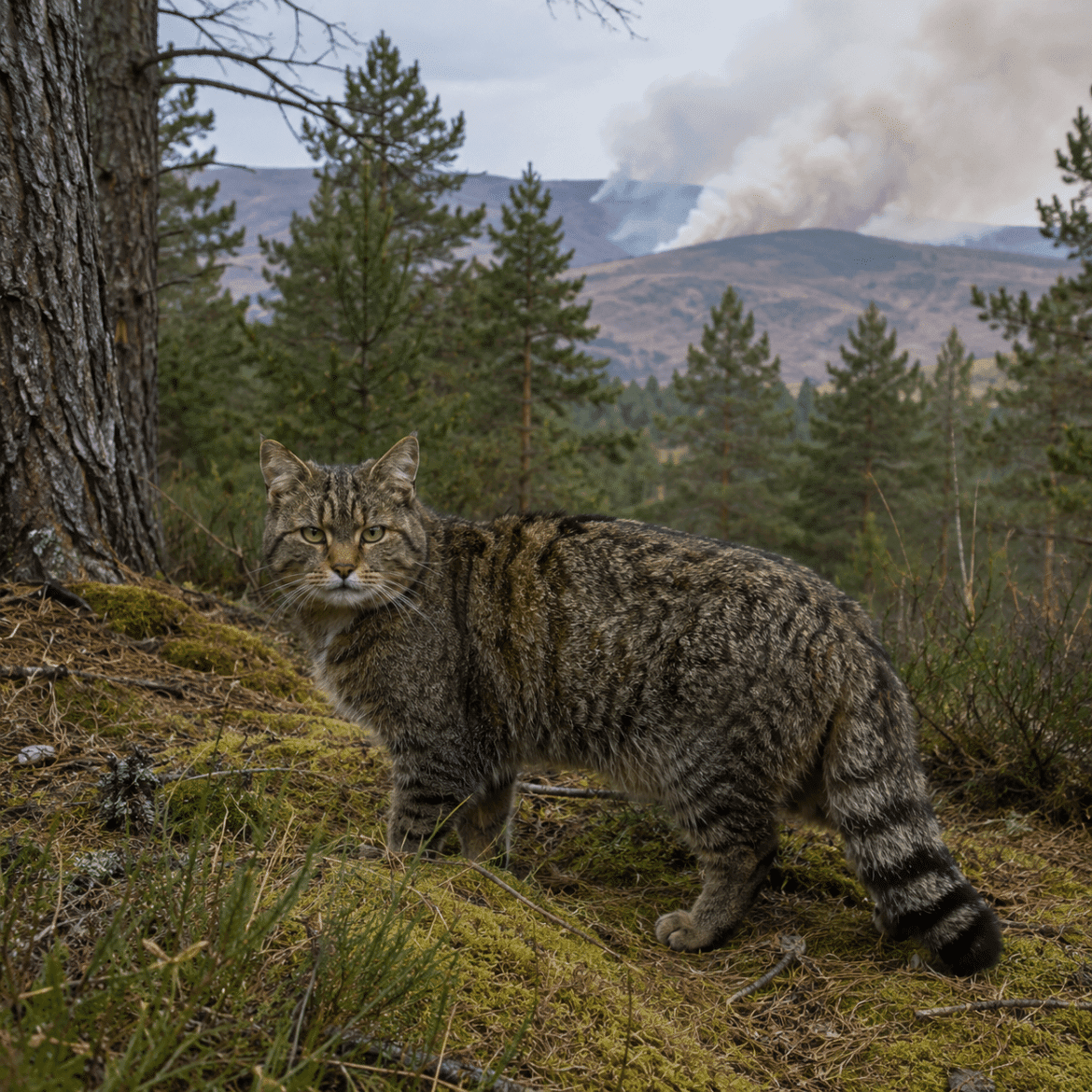
When the reports came out that the Cairngorms were on fire with what has been described by the BBC as “apocalyptic” damage, the first thing that came to my mind was the Scottish Wildcats. I truly hope they have been able to flee to safe areas as they are critically endangered and the thought of those recently released and those flourishing in the Cairngorms just perishing is beyond heartbreaking.
So, the wild animals caught in wildfires may face death from fire or from injuries fleeing fires, or from smoke inhalation or toxic ash or simply starving. Some will escape, but there will be fatalities.
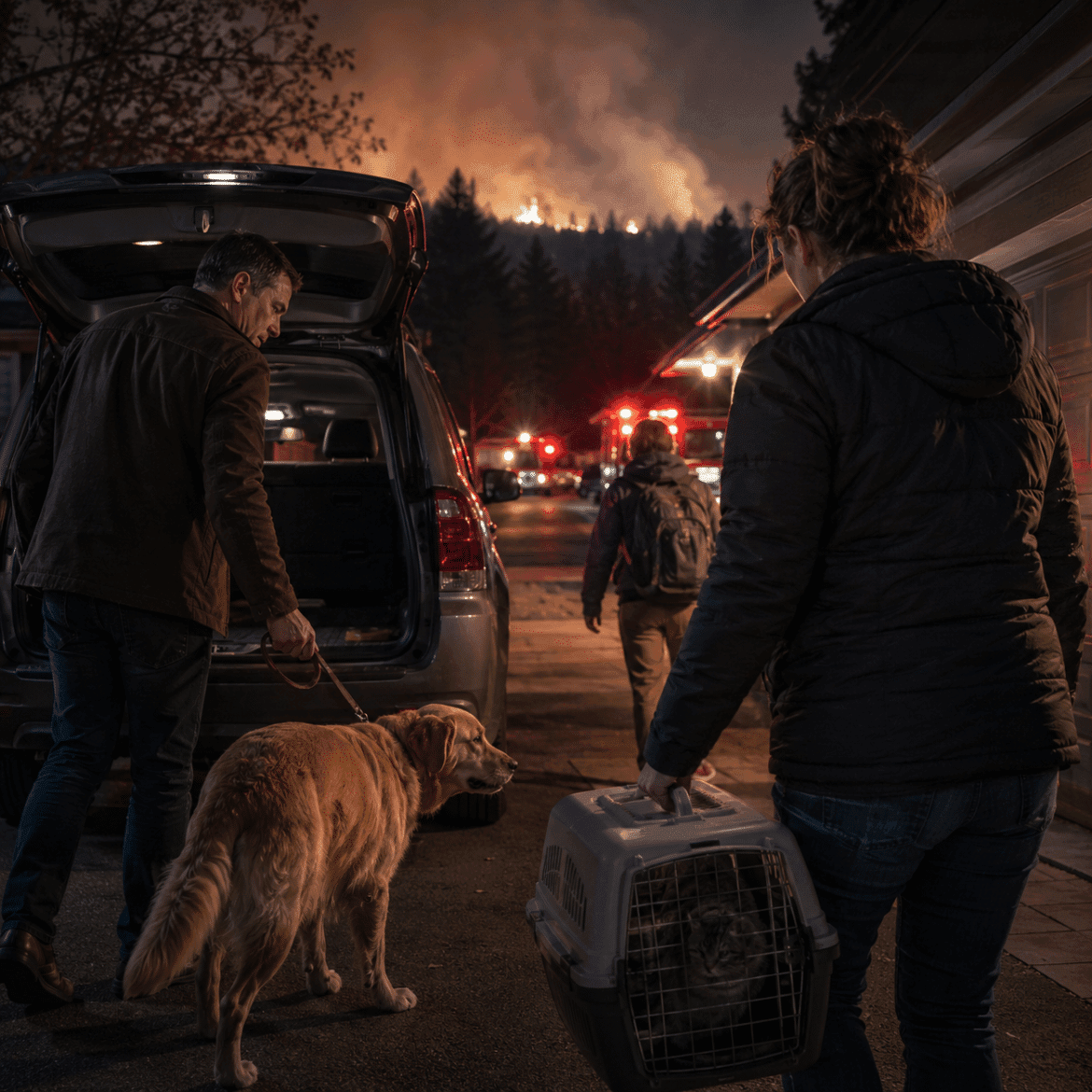
Now, let’s switch to our domestic friends that are at home and all of a sudden their world is turned upside down. When wildfires are in your area obviously the best thing to do is be prepared. I watched a woman being interviewed from northern Ontario who said it was the middle of the night when they were all told to get out and get out now!
People were being evacuated and being sent to temporary housing or hotels or if they are lucky to friends or relatives in safe areas. Those that had to go to shelters or hotels often found that their animals were not accepted. Pet friendly rooms at hotels filled up quickly and not all the evacuation centres accepted pets. And some report that they may have been given the go ahead to bring their dog, but no cats were allowed. Some people were in such a frantic position they couldn’t find their cats or were told to leave their pets and get in the transport vehicles.
What has happened since these evacuations? Well, many things. Some people have been lucky to bunk in with friends or family that have welcomed their pets. Others have been lucky to get into a hotel that allowed their pets and others have been able to get into the shelters that allow pets. Others have not been so lucky.
Many people had to leave their pets at an animal shelter. Many shelters including the SPCA shelters across Canada for example, have opened up as much space as possible to house pets that could not go with their families. Some families in remote fly-in communities had to leave pets behind on short notice as strict weight and space limits meant pets were not allowed on initial transport.
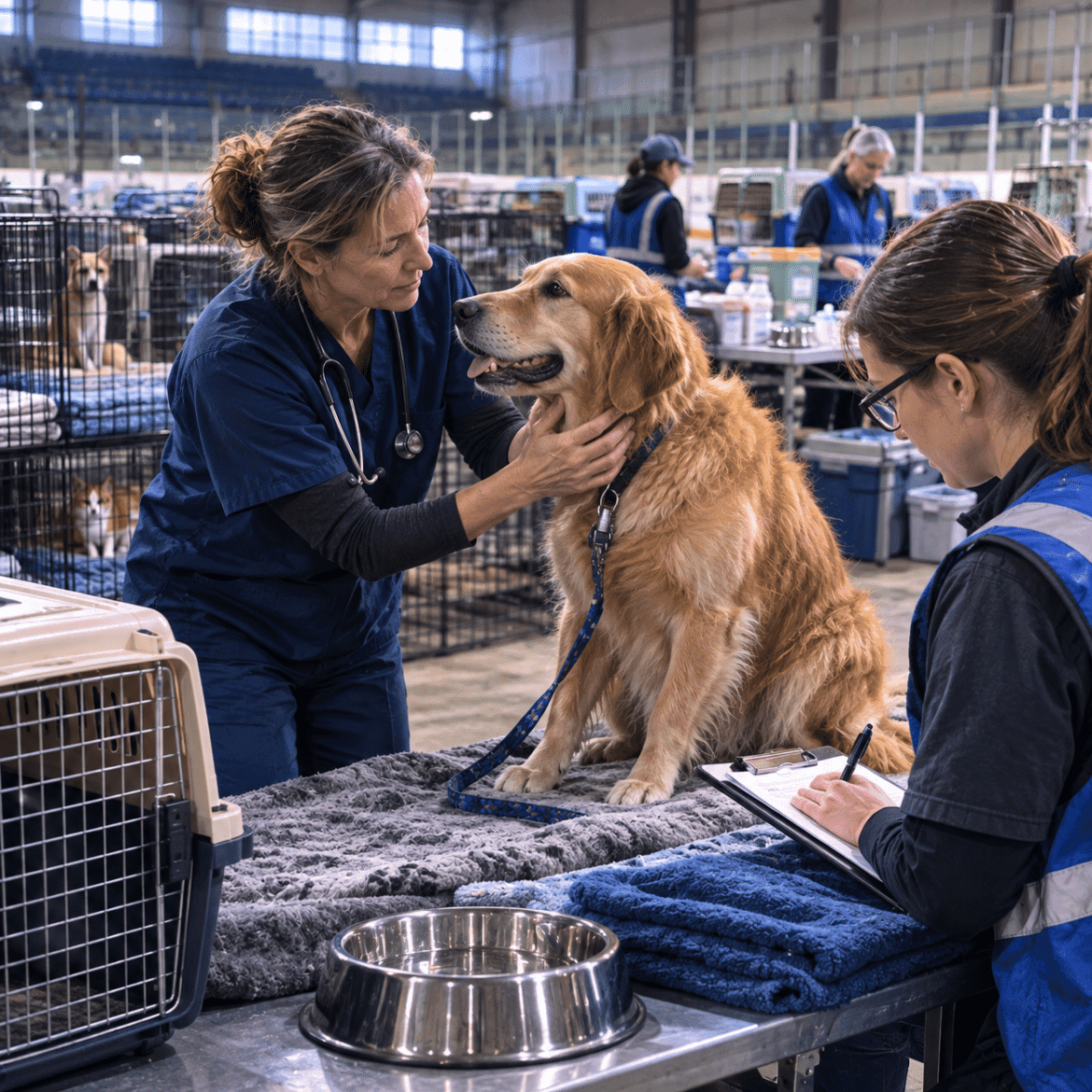
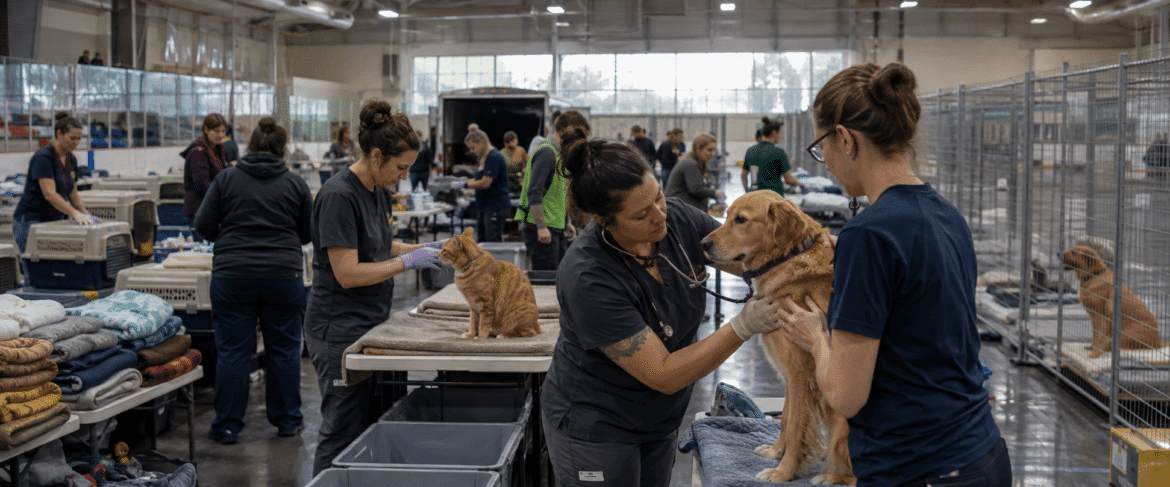
What happens then is, animal welfare groups and volunteers go into the areas after the humans are evacuated to find and care for left-behind pets. Vets Around the Corner for example, in Ontario have quite the set up. They have procured an arena in Thunder Bay and have set up areas for exams, vaccinations, first aid, food and water and caring areas.
Vets Around the Corner also travelled to a fire zone near Whitesand First Nation, travelling roads with active smoke and fire and went door to door to save left-behind cats, dogs and other animals. They then transported the rescued pets by vehicle to a local airstrip. A rescue airplane was waiting. The animals were loaded safely onto the plane and evacuated. There is a system in place to let rescue organizers know the address of an evacuee and that there are pets inside the house or left outdoors. In the information given to people in these areas, they stress to not tie your dog up outside. And I think everyone can see why.
When the fires started gobbling up homes, resorts, buildings, and evacuations were underway, pets that were taken in by rescue organizations were placed in temporary shelters or buildings being used as shelters. It was then that the call went out to people in non-fire areas to foster dogs and cats waiting to be reunited with their families.
One of the organizations working out of the Thunder Bay area received an overwhelming response with applications flooding their systems. At this point they announced that they would be closing the online applications in order to process the ones they had and start getting the animals to the temporary foster homes. I actually just saw a post from my local shelter that some of the dogs had arrived and would be in their care until they could be reunited with their pet parents.
The OSPCA, Northern Reach Network and local disaster response teams have been organizing and managing the animals to house the animals across regional animal welfare centres, volunteer foster networks and specialized emergency response facilities. I can’t even imagine what it must be like for people who have been evacuated to not be able to have their pets with them. I know there is some solace knowing they are safe being sheltered and fed, but what an incredible worry on top of the whole worry wondering if your entire home is gone or knowing your home is gone and what to do next.
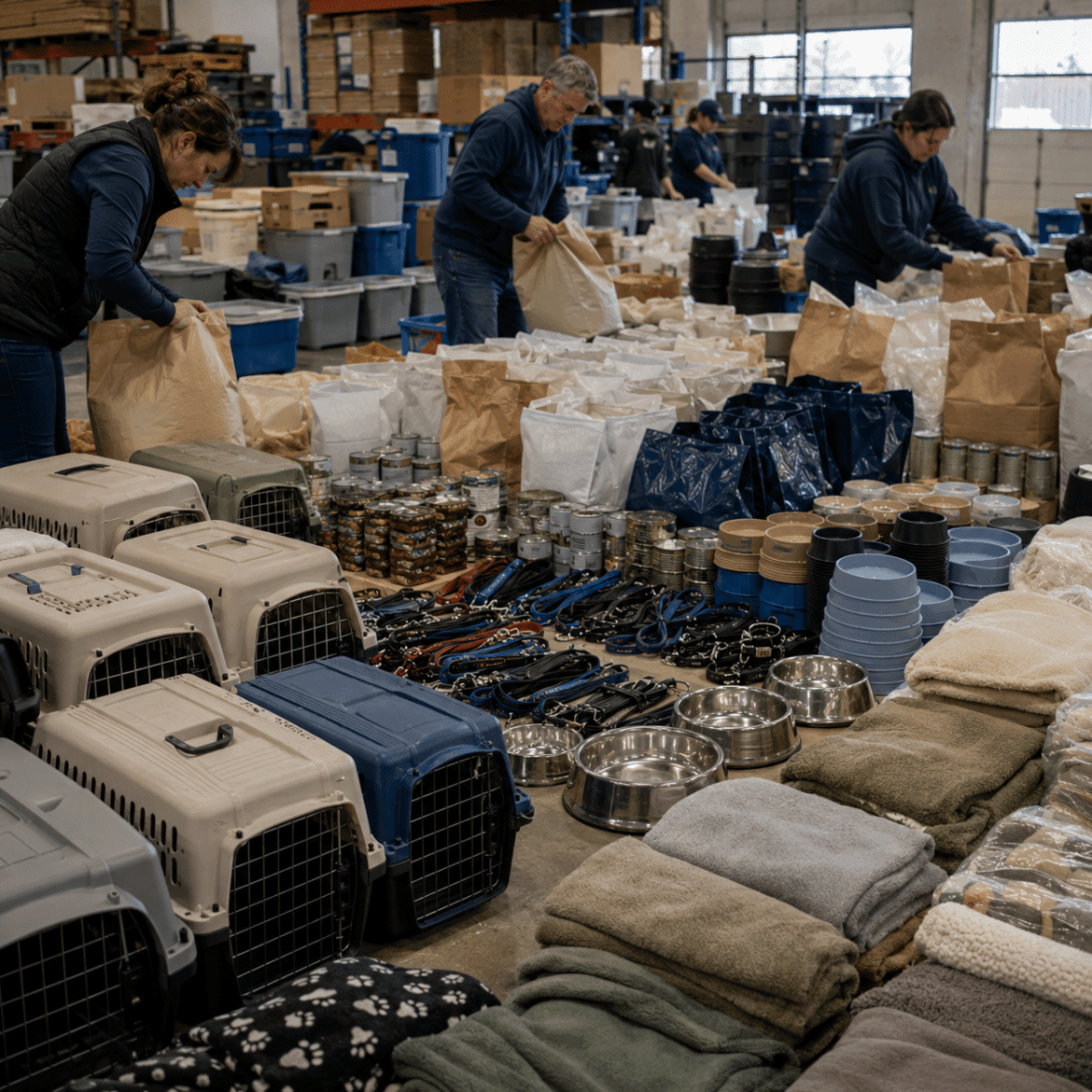
The next thing in all this organization, is getting the supplies and food required. Individuals have been donating supplies and money as well as pet supply companies and stores. Pet Valu in Ontario sent 33,000 pounds of food to the affected areas and another was being sent out again by aircraft according to their posts. Leashes, collars, bowls, crates, food and medicine and first aid equipment and supplies are all needed. Northern Reach Network posted that they are taking care of all the animals’ needs, so fosters do not need to worry about cost. I’m sure there are a lot of people who don’t care about the money, they just want to help. Regardless, the organizations are making sure everything is taken care of.
On top of dogs, cats and small animals, farm animals and working dogs also have to be considered. People were letting their farm animals just go to run wherever they could. Horses were being transported and chickens were going with their families or again heading to foster care. In Kamloops B.C. The Canadian Disaster Animal Response Team set up The Cooper Centre to house animals that cannot stay in hotels, such as farm dogs and poultry. Ranches and Fairgrounds have become foster shelters for livestock and larger animals.
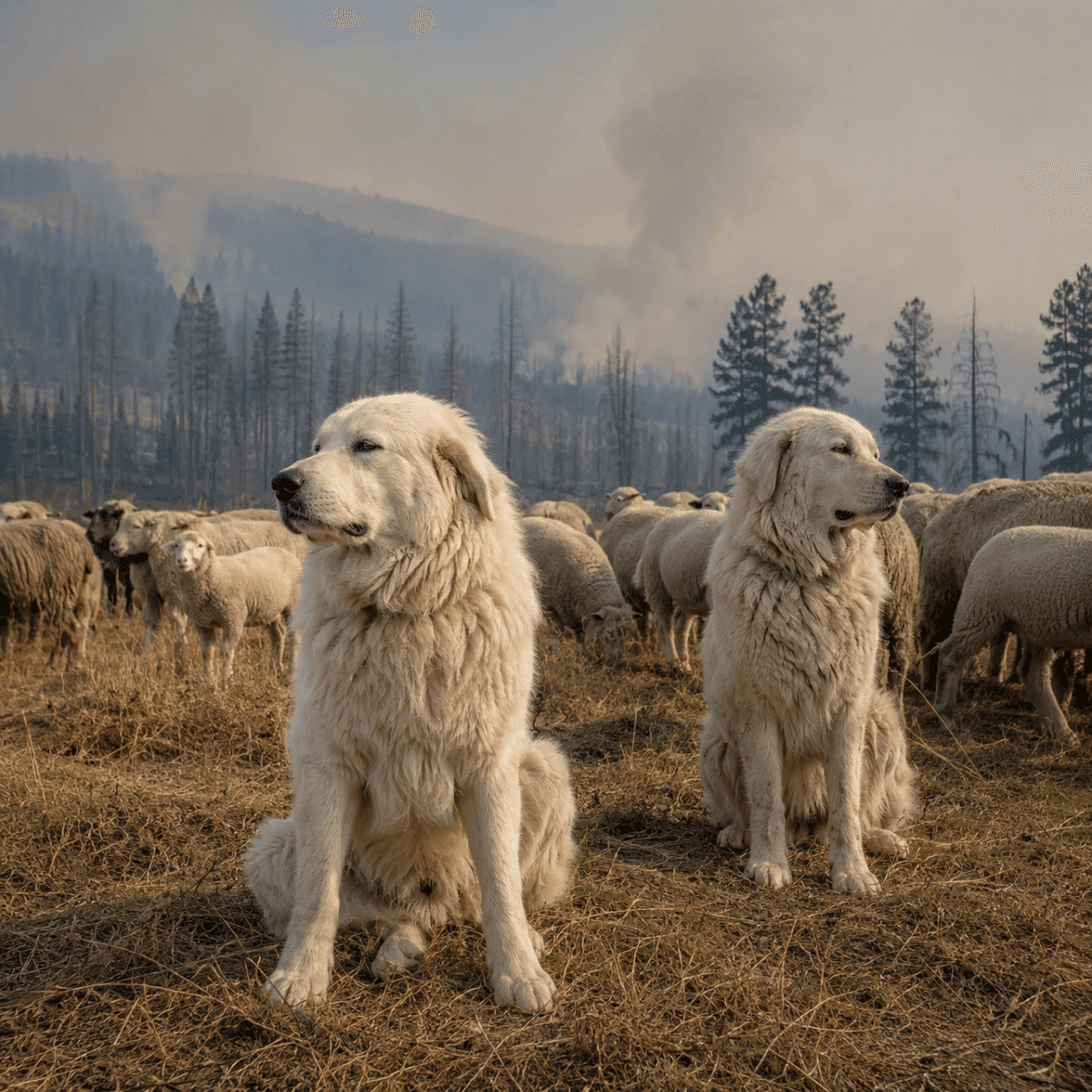
And we have the story of Tad and Sophie, two Maremmas (Mar-remma) guardian sheep dogs who protected their flock of sheep while the fires in British Columbia raged. The owner of these two dogs was forced to abandon the dogs when a fire advanced on the ranch. They left a 35lb bag and food and hoped for the best.
The owners eventually were allowed back after 20 days. When they returned, they saw their neighbour’s house had burnt down and sitting in the field was Tad and Sophie surrounded by sheep. The owner stated, “They protected them from wildfires, but also from bears and coyotes.” She said, “The sheep would never have survived without them.” In the end only one ewe was lost. Tad and Sophie got some special steak and lots of love. It just goes to show you the amazing ability and heart of dogs.
All of this is a good lesson for everyone. We should all know where our dog’s leashes and collars are and crates for our cats in case a disaster befalls us and we need a quick exit.
I feel for all these displaced pets and their families that are probably so worried. The organizations that are on scene like Vets Around the Corner, the OSPCA, Northern Reach Network, and regional humane societies, are doing a tremendous job. The network of veterinarians, veterinarian technicians, assistants, volunteers, fosters, pet food and supply companies, and donors, are together getting everyone and all the animals through this horrific experience. It is amazing when everyone comes together and works in harmony for the love and protection of animals and their families.
If you would like to donate or apply to foster, you can go online to any of the above organizations or drop off donations at PetSmart or donate money to Companions for Change Charities at any Pet Valu who is sharing all money donations 50/50 with the OSPCA and the Red Cross. In this case all help is appreciated and letting others know where they can help is also appreciated because as I say, knowing is caring.

Hi everyone, and welcome to Val Talk’s Pets, the forum for pet parents and enthusiasts alike. So, I have been working in the pet industry now for almost 10 years and, on a daily basis, I handle a lot of issues and questions arising from pet parents. I am not a veterinarian but I do have certifications in Canine, Feline, Small Animal, Fish and Herptile and Avian Health and Nutrition from the University of California, Davis Extension, the Vet College.

Hi everyone and thanks for joining me on this episode of Val Talk’s Pets. What does the words Backyard Breeder conjure up in your mind? Do you think of awful […]