
Spotlight – The Bearded Dragon
Introduction Hi everyone and thanks for joining me on this episode of Val Talk’s Pets. On this episode I’m going to spotlight one of the most popular reptile pets; the […]
 play_arrow
Fresh vs. Raw Pet Food: Understanding the Differences, Benefits and Challenges Val Cairney
 play_arrow
Spotlight – Dandie Dinmont Terrier Val Cairney
Hi everyone and welcome to this spotlight episode on a breed of dog that really needs renewed recognition, and that is the Dandie Dinmont Terrier. There is lots to explore about this breed, so let’s go.
When I was a kid, I had a book that had all kinds of dog breeds in it with brief explanations about the breeds. I read that book over and over and I became familiar with breeds of dogs that in today’s world of designer dogs and cross breeds and mix breeds pretending to be actual breeds, have become less and less known.
One of these breeds is the Dandie Dinmont Terrier. I’ve always known about this breed, but I did not know that their existence was becoming in peril.
On June 7th of this year, the Toronto Star covered an event that took place on June 6th 2026 at Harbour Square Park in Toronto. The event was part of a Global effort called World Dandie Dinmont Terrier Day, established to raise awareness about the Dandie and the dwindling numbers that has had the U.K. Royal Kennel Club classify the Dandie as “vulnerable.”
Before we get more into the concerns over Dandie populations, let’s have a look at the breed and its history.
The Dandie Dinmont Terrier is a Scottish breed and according to the CKC, was the first terrier to have a name and the only breed of dog whose name comes from literature.
As the CKC points out, “A direct line of these dogs descended to both the aristocracy, Henry the third Duke of Buccleuch, (Buh-kloo) commissioned Gainsborough to paint his Dandie in 1770 and the farmers in the Teviotdale Hills. (te-ve-ut-dale) Here Sir Walter Scott chanced upon them and – charmed by their uniqueness-made them famous in his 1815 novel, Guy Mannering. His character, “Dandie Dinmont” a farmer, kept the immortal six – Auld Pepper, Auld Mustard, Young Pepper, Young Mustard, Little Pepper and Little Mustard. (Mustard and Pepper are the two colours of the Dandie Dinmont Terrier). As the book became popular, the breed became famous as Dandie Dinmont Terriers.”
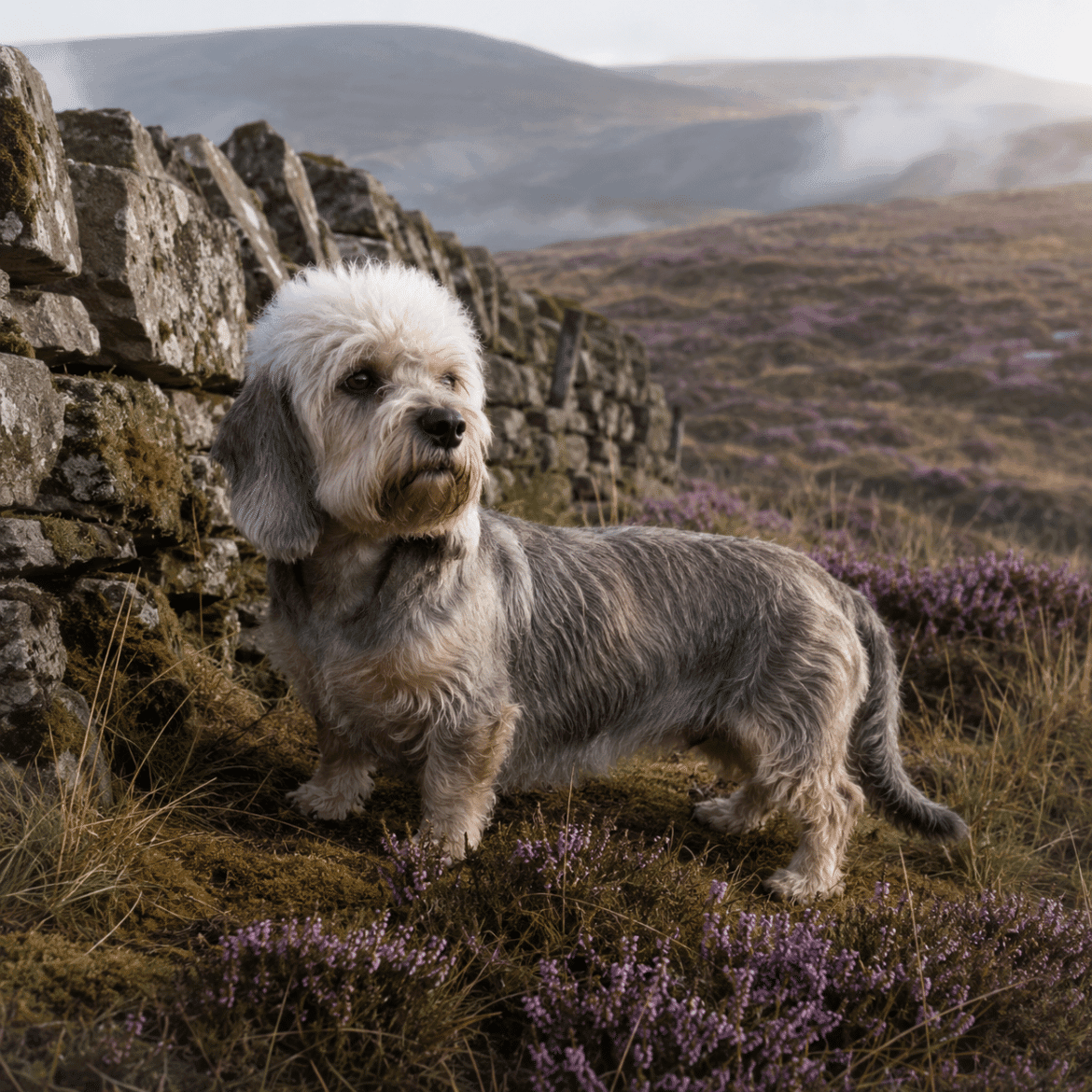
As with most ancient dog breeds, the ultimate origin remains unknown. The dogs did originate from dogs being used in The Anglo-Scottish border country and used for hunting badgers and otters.
There is thought that the dogs were a cross between Scottish Terriers and Skye Terriers. It is also speculated that some interbreeding in the mid 1800’s, may have introduced Dachshund blood.
But and this is interesting, every living Dandie Dinmont today, can trace the male bloodline to “Old Ginger” who was born June 4th 1842. Old Ginger is the foundational patriarch of the Dandie who was bred at the Haining estate in Selkirk Scotland.
“Old Ginger was born to a dog named Old Pepper and a mother named Vixen. He was was a mustard-coloured terrier. He was eventually acquired by Eaglesfield Bradshaw-Smith and used as a primary stud, solidifying the breed’s distinct look. “To honour his legacy, a bronze statue of Old Ginger crafted by the Queen’s Sculptor for Scotland, Alexander “Sandy” Stoddard, was unveiled at The Haining in 2017.”
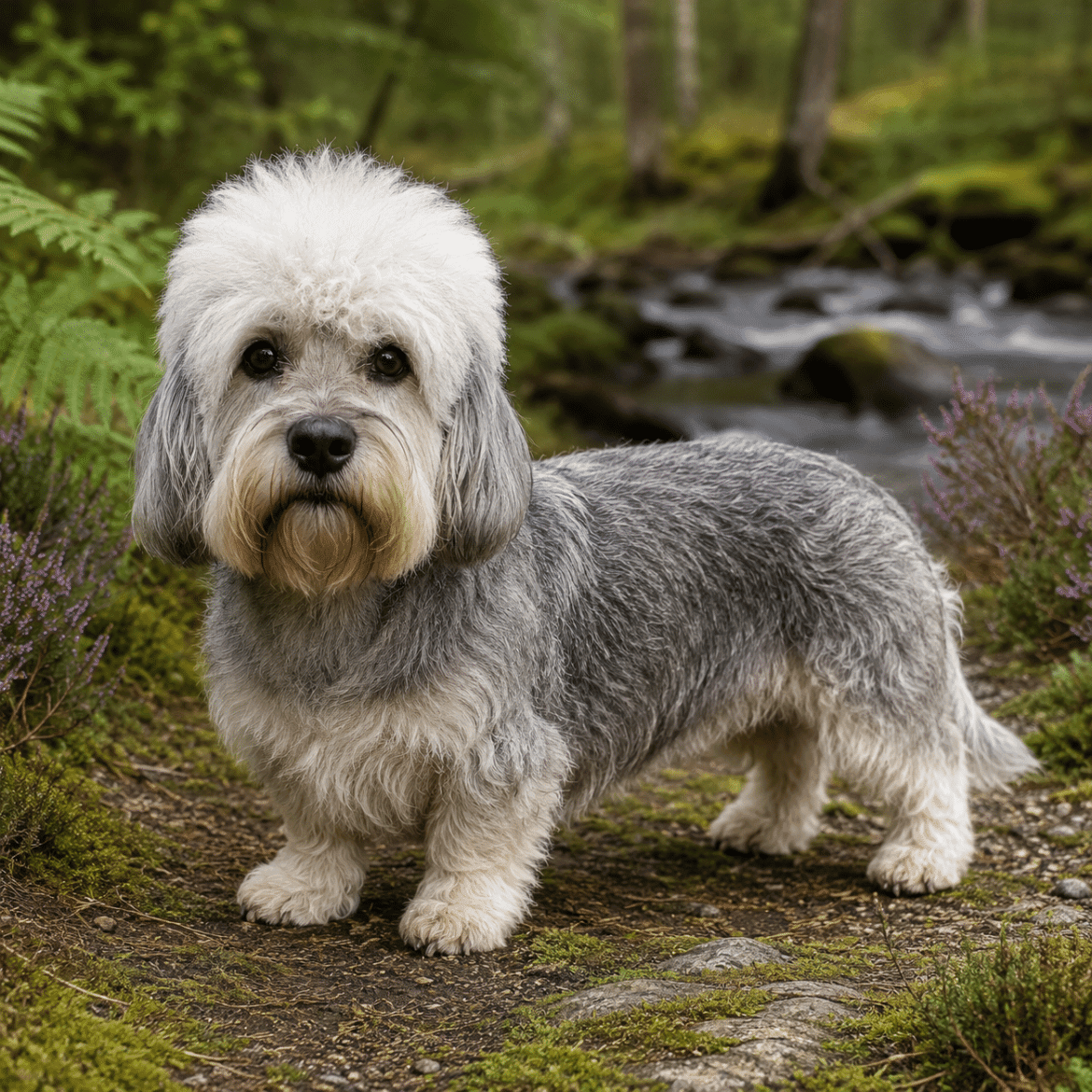
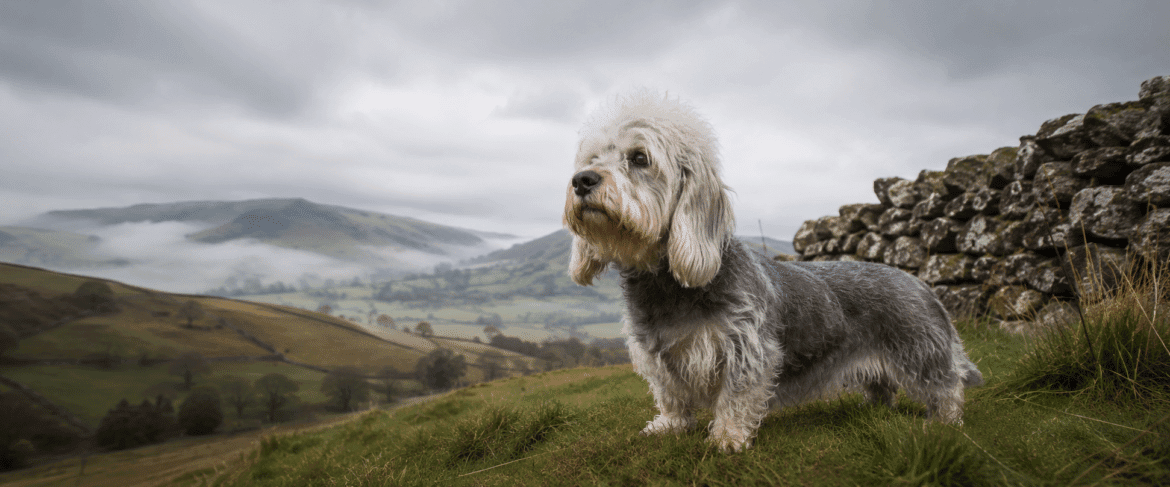
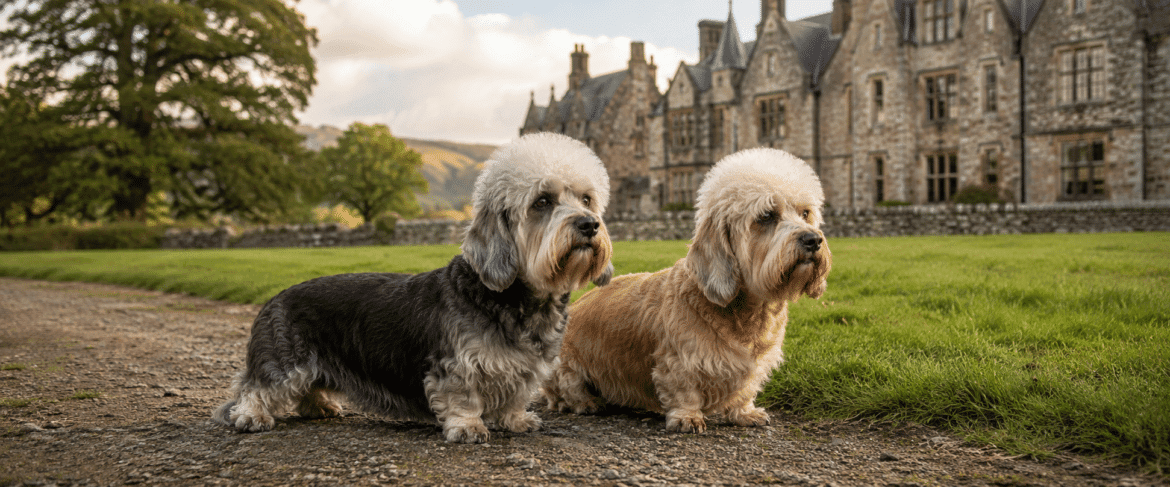
So, what does a Dandie Dinmont look like? Dandie’s have short legs and an elongated body. You can see how the speculation about Dachshund blood came about.
If you look at most Scottish terrier breeds like the Westie, the Skye, the Cairn, they have these little ears that stand up right. Not the Dandie. The Dandie has long ears that hang down the side of their face.
And to make them even cuter, they have a tuft or topknot of hair on the top of their head.
They are considered a small breed dog with height at the withers being 8 – 11 inches and they can weigh anywhere from 18 – 24 pounds. They, like all the other Scottish breeds, are hardy. However, their elongated body could possibly create some issues with stair climbing.
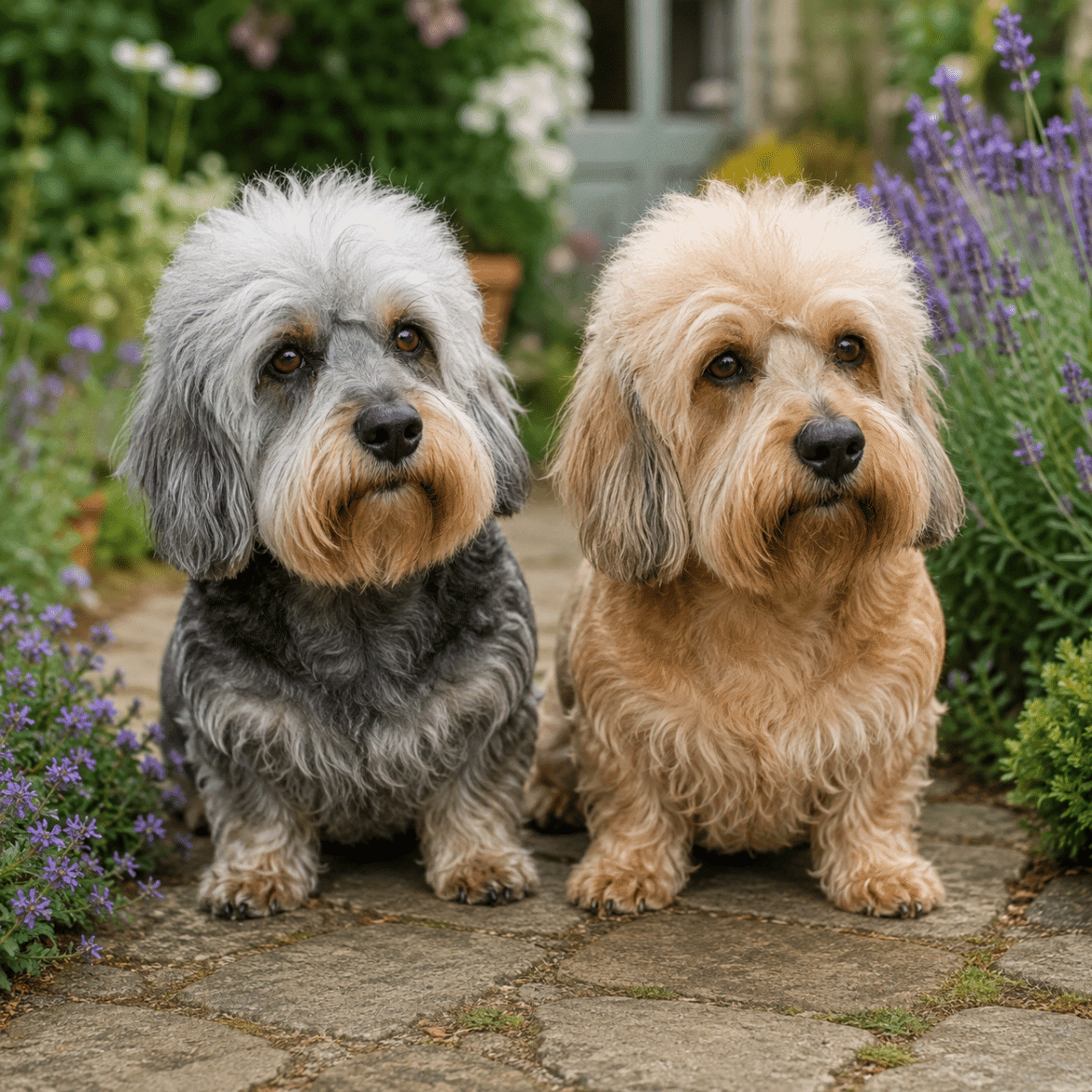
Their coat has two colour ranges; pepper and mustard. Pepper means their colour ranges from dark blueish black to a very light silvery gray. Mustard colour can vary from reddish brown to fawn.
Their coat can reach a depth of 2 inches.
Like many of the rough coated Scottish breeds, Dandie’s can benefit from a grooming technique called hand-stripping. The breed has a weather resistant wire topcoat, so hand-stripping where the dead hair is plucked from the follicle rather than cutting it, can maintain this signature coat.
In terms of temperament, the Dandie does exhibit traits of terriers in general. They are however, considered the “most docile” of the terrier breeds.
Dandie Terriers can be good with cats if trained but it isn’t recommended to leave them to their own devices with small animals. They are good companions and are fine with older children and can even be a good guard dog.
But, like most terriers they can dig holes.
The Dandie has been estimated to have a life expectancy of almost 13 years. That’s pretty good.
In terms of some of the concerns health wise, their elongated body can cause back problems and sometimes their back discs can slip causing spinal disc herniation.
Wikipedia also points out that, “an American study found a higher risk for extra hepatic congenital portosystemic shunts, with 1.6 % of Dandie Dinmont Terriers having the condition compared to 0.18% overall and 0.05% for mixed breeds.”
And apparently the Dandie also has a slightly higher cancer risk.
Let’s now have a look at the designation of the Dandie being classified as “vulnerable”. By definition being “vulnerable” means that the breed’s “population has dropped to critical levels and the breed is at risk of extinction”.
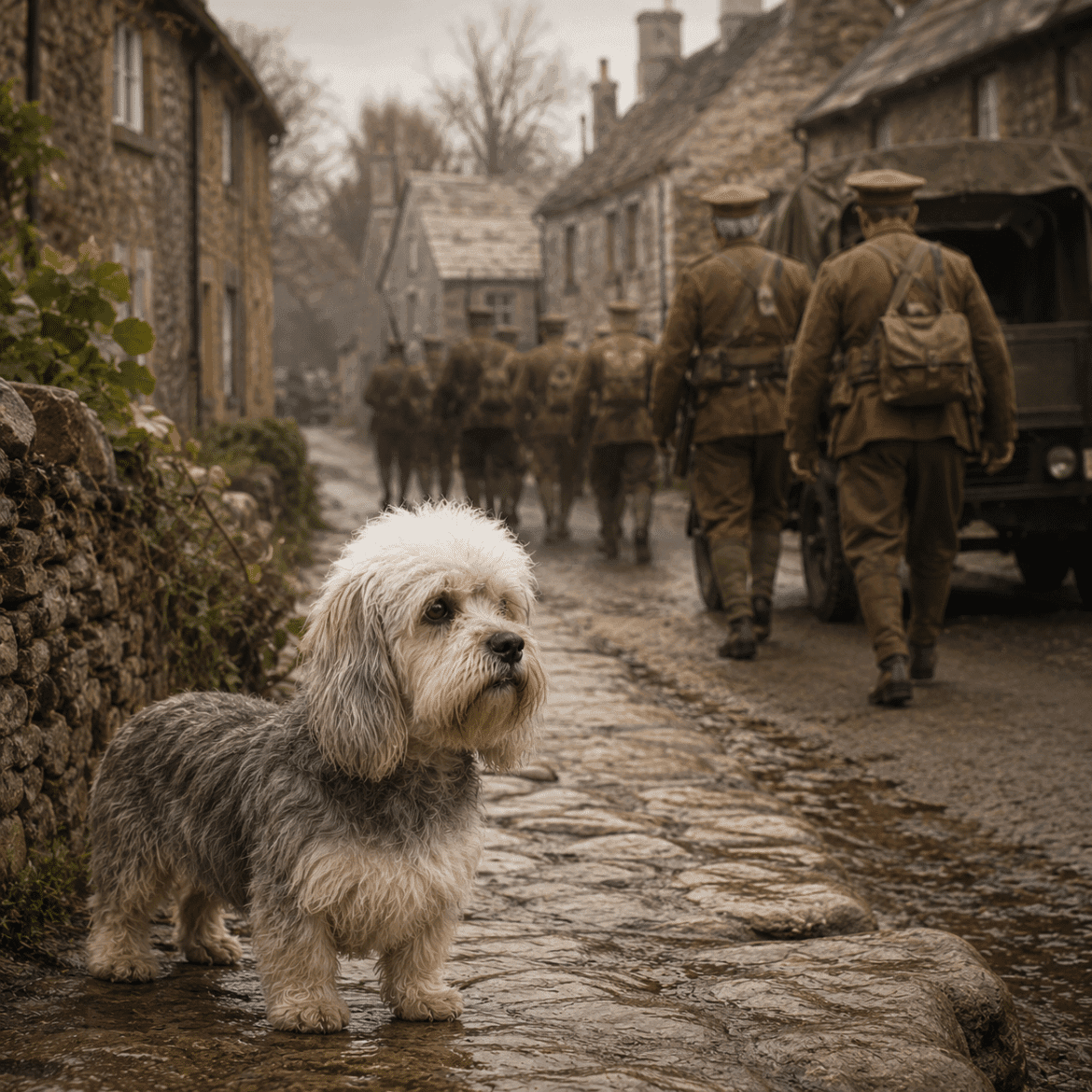
Mike MacBeth the president of the Dandie Dinmont Terrier Club of Canada explained in the Toronto Star article that “Dandies were popular in the U.K. for centuries, but during the First and Second World wars, MacBeth said the British government told dog breeders to cull them.”
MacBeth said, “there was no food for people so forget feeding dogs, adding the breed numbers have never really recovered.” (Toronto Star, June 7, 2026)
This is so sad and I’m sure many breeds faced the same situation. Unfortunately, the Dandie hasn’t seemed to recover as MacBeth pointed out.
MacBeth also stated in the Toronto Star article that “only about 250 Dandie Dinmont puppies are born around the world each year.” Another statistic I looked at said there were fewer than 3,000 thought to exist in total.
This is so sad and it really makes you wonder if more historical breeds are going to go the same way because the decline has been attributed to not only the war issues but also competition from modern “designer” breeds.
Now, as you know, all these weird or not so weird cross-breeds in my opinion are not breeds, they are what they are; crosses. There is no such thing as a malti-poo for example. It is a Maltese poodle cross, period.
Making up names doesn’t mask the fact that the dog is a cross of two different breeds or even more becoming a mix breed, or what used to be called a mutt. I don’t like that word very much either, but mix breed is more definitive.
The other reason for Dandies being less popular was due to the original skill they were bred for becoming obsolete. Hunting with dogs for vermin kind of went by the wayside.
Other terriers like the Westie were able to transition from field sports to companion. For some reason the Dandie didn’t quite make that transition. That is such a shame.
Today clubs like the Dandie Dinmont Terrier Club of Canada, Dandie Dinmont Terrier Club of America, the Dandie Dinmont Terrier Club based in the UK, Caledonian Dandie Dinmont Terrier Club based in Scotland and The Working Dandie Dinmont Terrier Club, are all working and focused to save the Dandie.
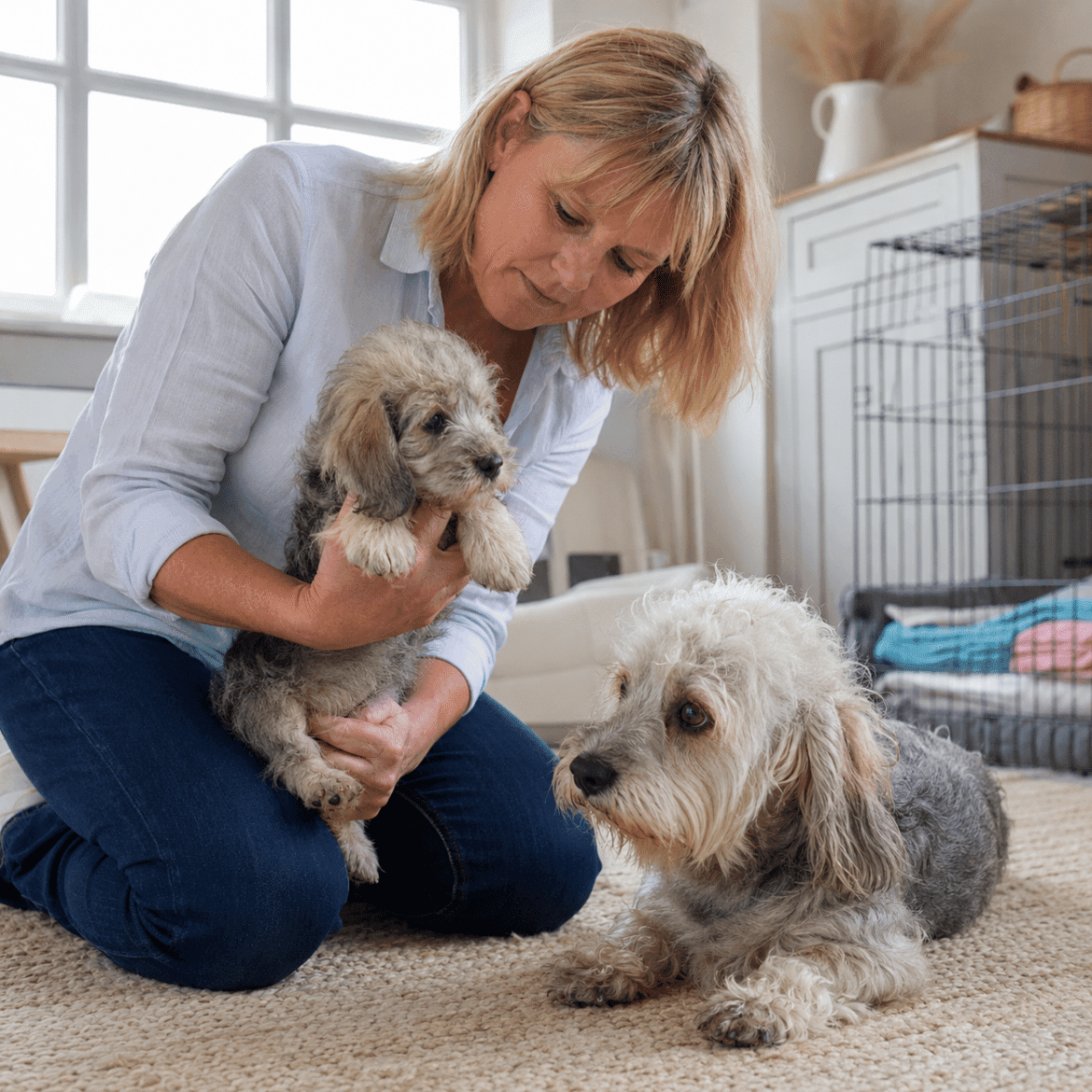
“Their efforts include public awareness campaigns, careful genetic preservation and rescue operations.”
And “outside of formal breed clubs, independent charities like the Dandie Dinmont Terrier Rescue League work to rehabilitate and rehome Dandies that have been caught in neglectful situations, like puppy mills.”
So, let’s give some love to the Dandie Dinmont Terrier, a breed that is hanging by a paw and needs support.
The Dandie is a great dog for those who love the terrier personality with a bit of restraint. They are super cute and like their counterparts are a hardy breed. What more can you ask for?
For information about available pups or just to get more information, contact any of the breed clubs mentioned above, I’m sure they would love to hear from you.
And by all means do a little more research about this wonderful breed. It would be such a shame to have such a noble, historical breed leave this earth. We can’t have that happen!!
Get the word out, because as I say, knowing is caring.

Hi everyone, and welcome to Val Talk’s Pets, the forum for pet parents and enthusiasts alike. So, I have been working in the pet industry now for almost 10 years and, on a daily basis, I handle a lot of issues and questions arising from pet parents. I am not a veterinarian but I do have certifications in Canine, Feline, Small Animal, Fish and Herptile and Avian Health and Nutrition from the University of California, Davis Extension, the Vet College.

Introduction Hi everyone and thanks for joining me on this episode of Val Talk’s Pets. On this episode I’m going to spotlight one of the most popular reptile pets; the […]


