Petcurean – An Interview With Ashley Norton & Theresa Lantz
On this episode of Val Talk’s Pets I’m going to be looking into an amazing premium pet food company called Petcurean. Petcurean is a Canadian pet nutrition company known for […]
 play_arrow
Spotlight on the Maltese Dog: A Charming Little Companion With a Big Heart Val Cairney
 play_arrow
Fresh vs. Raw Pet Food: Understanding the Differences, Benefits and Challenges Val Cairney

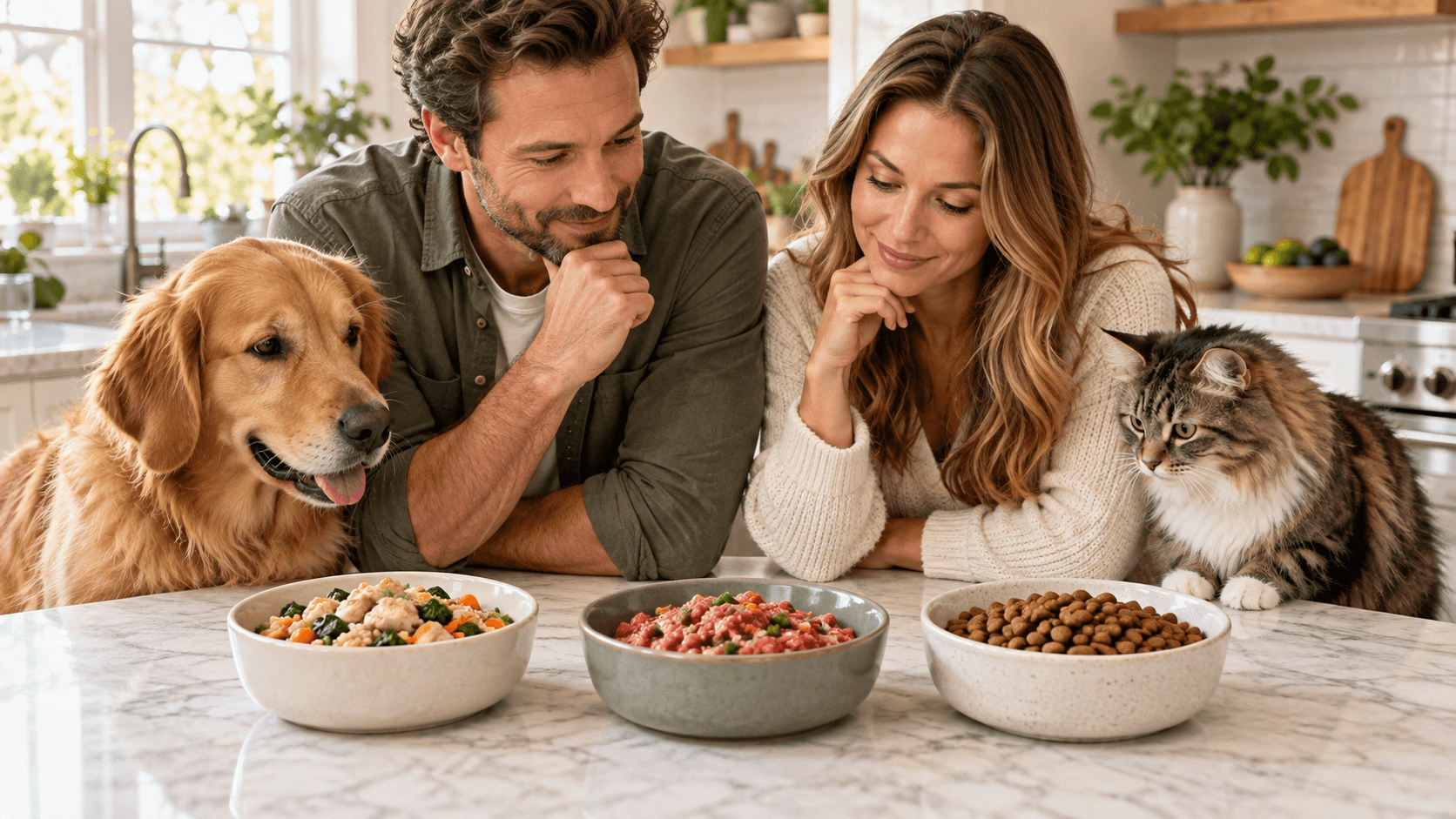
Hi everyone and thanks for joining me on this episode of Val Talk’s Pets. Nutrition for pets has come a long way from decades ago and it is also constantly changing. One of the forefront feeding choices is fresh food diets and raw diets. So, let’s go exploring.
Let’s start with the fresh food diets and what that means. A fresh food diet means that what the pet is being fed, is lean meats, fruits and vegetables and grains that have minimal processing and no preservatives. One thing that is positive with a fresh diet is that the meals can be tailored towards different needs of the pet. So, age, weight, activity level and health concerns can be addressed. Because these meals consist of foods that have had minimal processing, they are often easier for a pet to digest and can be more palatable. The one thing to be cautious about however is, some fresh diets do not have enough essential nutrients and will require supplementation.
What exactly is a fresh food diet? A fresh food diet to begin with, is not a Raw Food diet. Fresh food is food that again has minimal processing, but you may recognize the words “Gently Cooked”. Gently cooked products for dogs are considered fresh food. These foods are usually in the raw food section freezers where the raw food is kept in your pet specialty store. You can usually see some of the ingredients in the package, like carrots or peas and the protein.
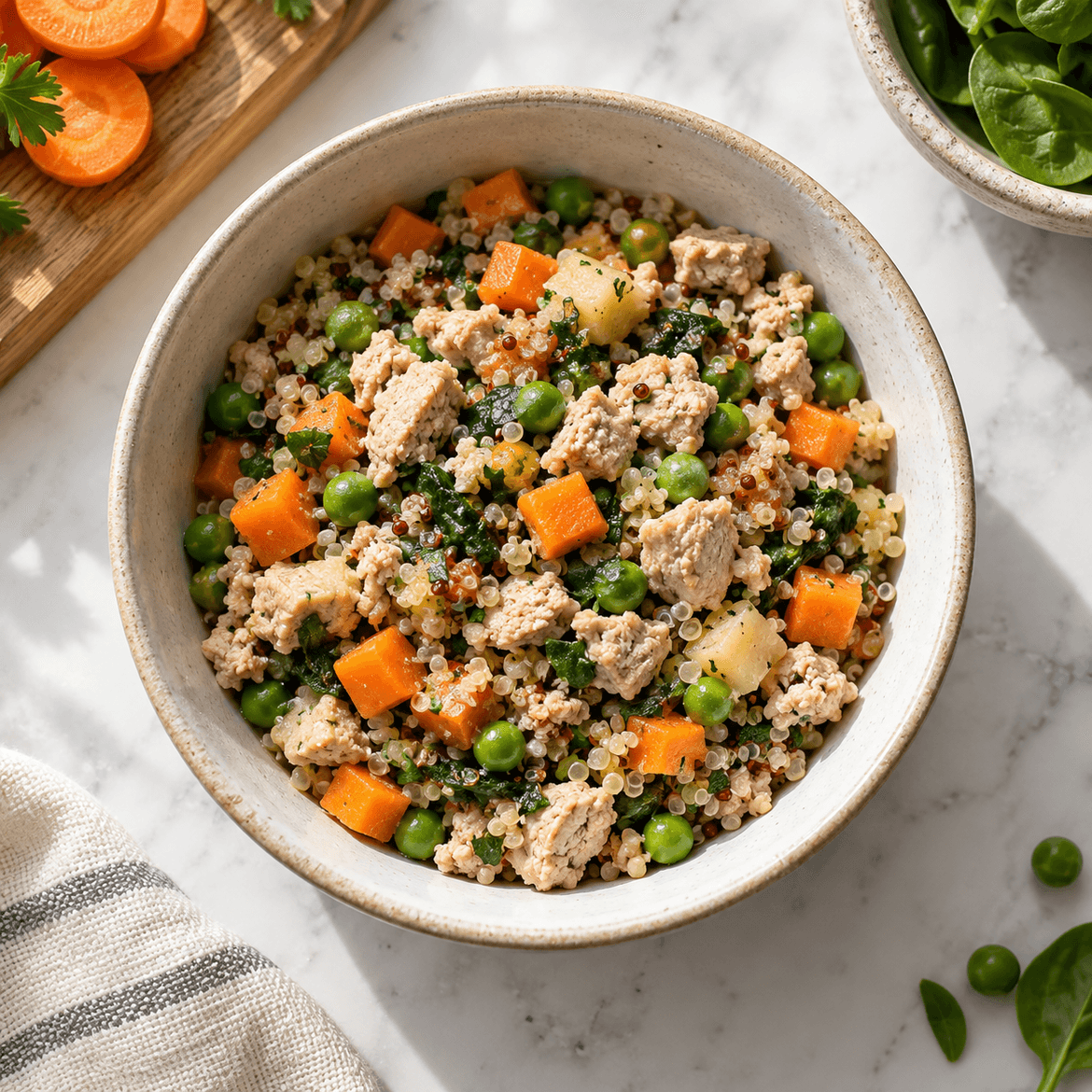
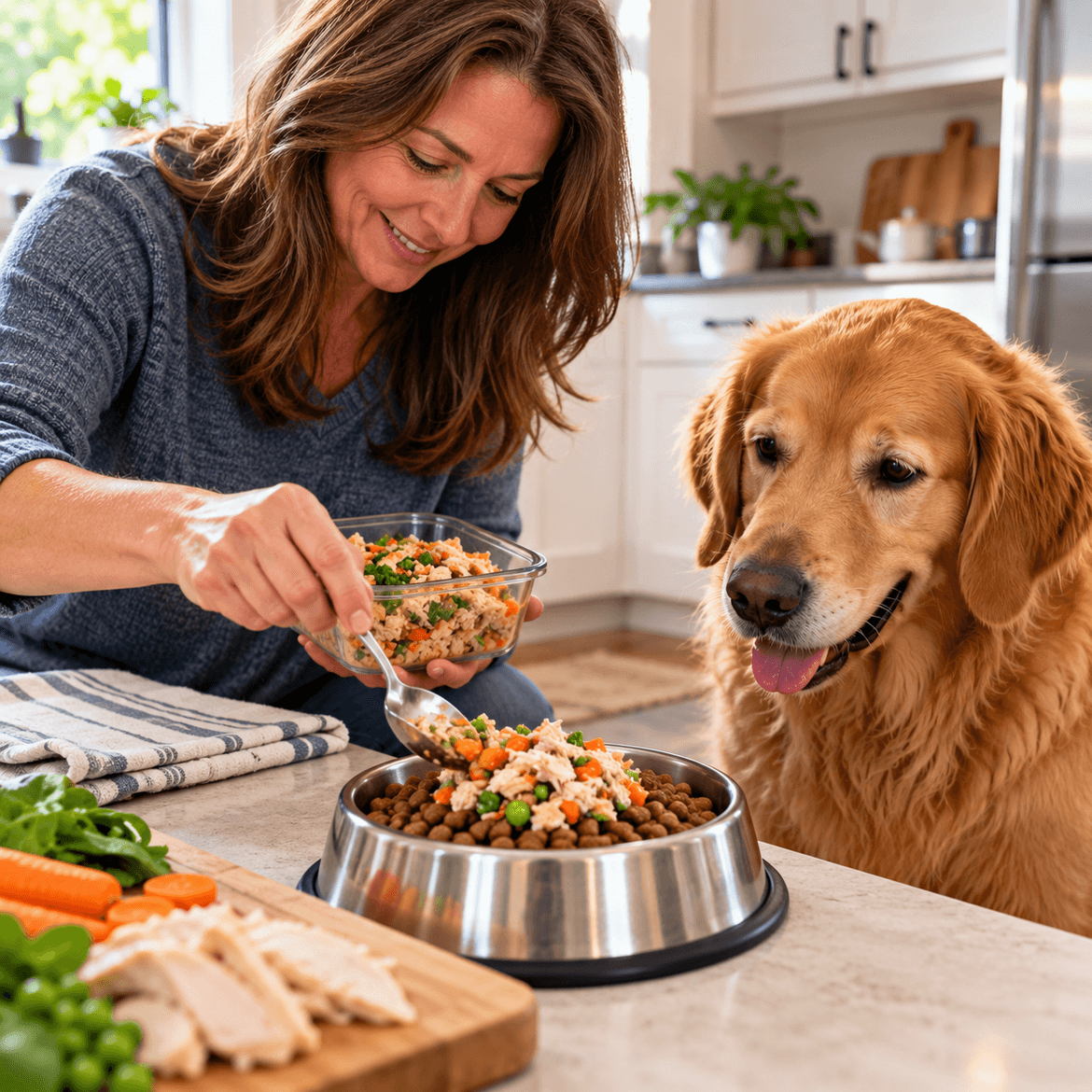
These foods will require defrosting and then be kept in the fridge after opening. I have used a fresh food brand for Tundra mostly as a topper. I’d go broke if that was all he ate. And that is another issue to consider as well; cost. I find most people with large dogs will do the same as me and use a fresh food product to add to the regular food. Some people with small dogs will actually do a fresh food diet only.
Other forms of fresh food can be found shelf stable, meaning they are not in a fridge but most likely will require refrigeration after opening. There are also some other types of food that fall into the fresh food category, and they are dehydrated food or air-dried or freeze dried. You would need to do some label reading however, because quite a few freeze-dried foods are actually raw and have then been freeze dried. Air-dried as well uses slow, low temperature airflow to remove moisture while keeping natural nutrients and flavours intact. There are many air-dried foods for pets these days, Zeal, Ziwi, Honest Kitchen, Open Farm etc. all do an air-dried product. In my opinion, these options are quite expensive. I would never be able to feed my dog on this diet solely due to cost.
There are actually many fresh food products on the market. From people that have gone on Dragon’s Den to celebrities that seem to think they know pet nutrition, there is a lot of choice. There are also a lot of fresh food pet subscriptions, where you can have food delivered to your home on a regular basis
The upside to fresh food diets is that it gives the pet the joy of eating some real food as opposed to kibble. They get the nutritional value of food that has no preservatives and has limited processing. The fact that there is a cooking feature, the chances of foodborne bacteria are greatly reduced.
The movement to a fresh food diet often comes out of health issues the pet is experiencing. Dogs in particular that have upset stomachs or they just won’t eat the regular food they are given, often turn to fresh food diets. Some pet parents also move to fresh food diets because they want a diet that has little processing and preservatives. The idea that the pet is eating food more similar to humans plays into the fur baby culture where pets are family members that deserve the best. And there is nothing wrong with this approach.
The downside to a fresh food diet is definitely the cost. I have read where the cost of a fresh food diet is offset with lesser veterinarian bills, in my opinion, is just not enough. Most vet bills are incurred with health checkups, vaccinations and injuries. Yes, some people find they end up at the vet spending tons of money because of digestive issues, but I don’t think that in the long run for most people they will reap back the cost of a fresh food diet from the veterinarian costs. It will help, however, for overall health.

The other downside is remembering to take food out of the freezer if you are using a frozen style. Also, traveling with a fresh food diet can be a challenge. As well, leaving your pet with a sitter and not providing enough food can really challenge the sitter as they go looking for the food the dog or cat eats.
Let’s discuss for a moment the idea of home cooking for your pet. If you cook for your pet, is it considered a fresh food diet? The answer is yes! Pet parents that prefer to put together meals for their pets that are prepared by them with human ingredients are considered to be providing a fresh food diet.
The challenge however is, making sure the meals are balanced and provide the proper amount of protein for that animal. For example, according to skovpet.com, “A widely cited study from UC Davis School of Veterinary Medicine evaluated 200 DIY dog food recipes from books and online sources. The findings were clear:

(AAFCO – is the Association of American Feed Control Officials, a non-profit organization that sets nutritional standards, ingredient definitions, and labelling guidelines for animal feed and pet food. Canada does not have a direct government-enforced or official federal equivalent to AAFCO, hence most Canadian pet food manufacturers will follow AAFCO standards voluntarily. Canada also follows the NRC mentioned in the study from UC Davis. The NRC is the National Research Council which provides the foundational scientific and nutritional guidelines used to formulate balanced pet foods in Canada.)
We have to remember that dogs and cats, in particular, have dietary requirements that are different from humans. As well, there are certain vegetables that dogs cannot eat and most cats are not keen on vegetables. Remember, they are true carnivores. Preparing meals for a pet at home requires some very serious research to make sure the balance is correct and that nothing toxic has been added. One way to make sure the meal is balanced is to add a fortifying supplement to each meal that has all the vitamins and minerals required.
The other thing to remember as well, is that any protein purchased at the grocery store must be cooked. Grocery store protein has not gone through any processes to remove bacteria because it is meant for humans and therefore would be cooked to the proper temperature. Vegetables as well should be cooked and not served raw for digestive and assimilation purposes.
It is quite the task to home cook for a pet, not only the time involved, but the research to make sure the nutritional balance is being met. Again, dogs and cats are not humans, their nutritional requirements are not the same as humans.
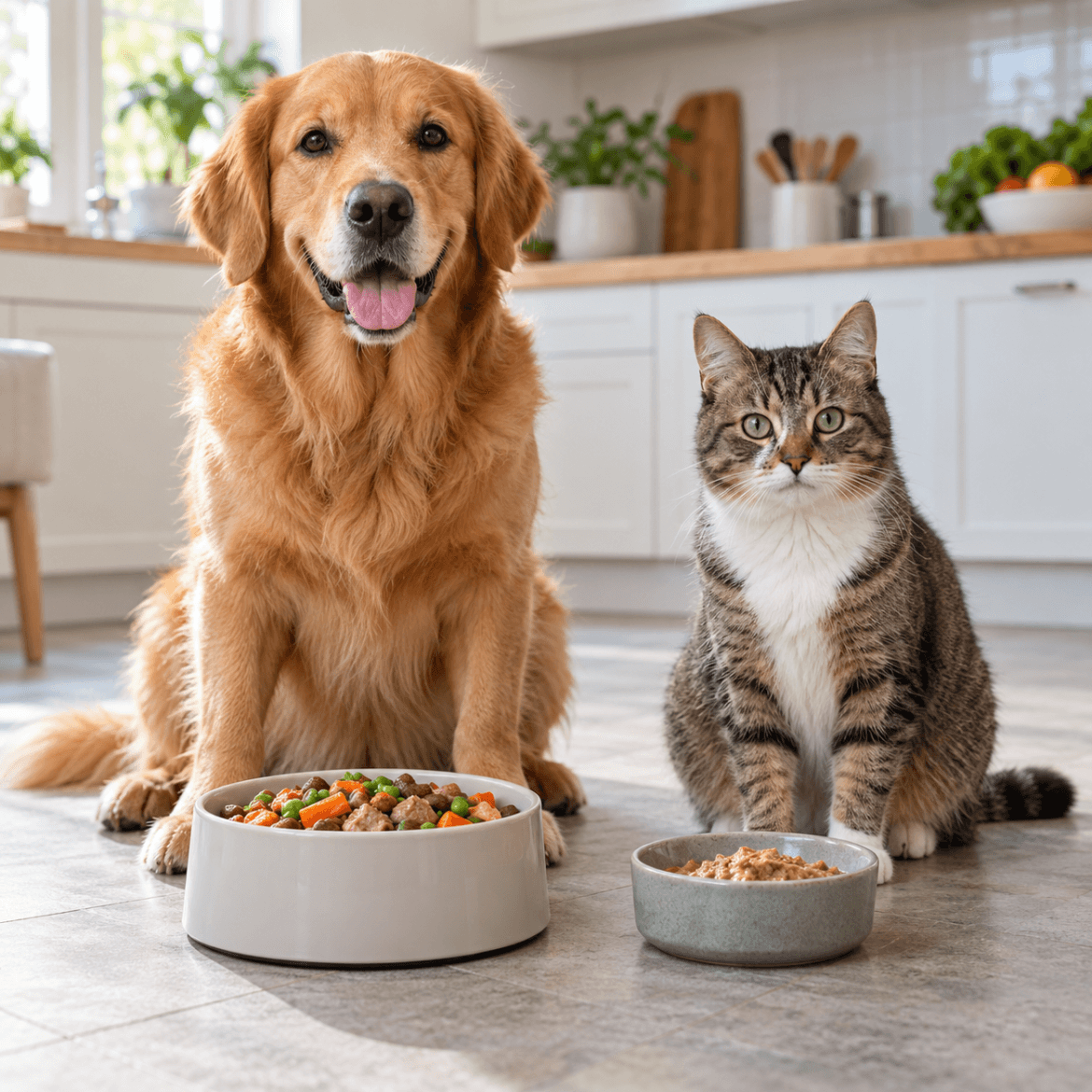
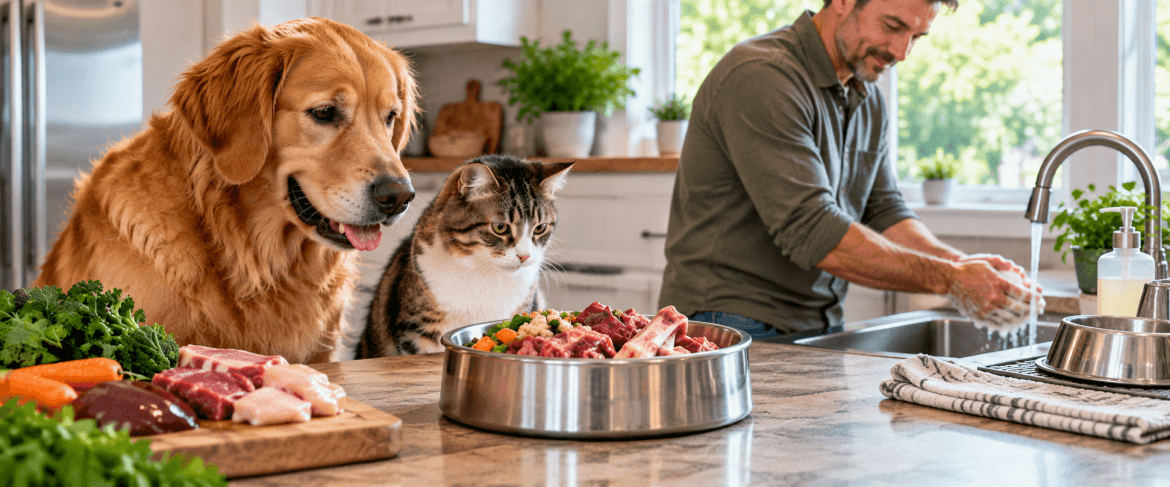
Let’s look at raw food now. There are many raw food providers on the market that are available at your pet specialty store. Raw food has gone through the process of deep commercial freezing. What this does is make the bacteria inactive and can kill off certain parasites. However, once the food is defrosted, the bacteria will wake up and can grow again. This is why when feeding raw it is very important to wash all utensils, bowls, hands and surfaces. This is also one of the reasons that many veterinarians are not fans of raw diets. But let’s face facts, many, many dogs and cats eat a raw diet. Almost every pet specialty store has a section of freezers with raw products. The rise of raw and raw feeding in the last several years has grown exponentially, so something must be working correctly.
The question is, how do dogs and cats eat raw without getting sick given what we have just learned. First, the stomach acids in dogs and cats have a very low pH. This neutralizes many incoming bacteria before they cause illness. We all know our dogs can eat or drink things that are super gross and they have no issue later. Well, this is why.
Secondly, dogs and cats also produce strong bile acids that act as a natural defense against pathogens.
Thirdly, healthy pets with strong immune systems usually handle these bacteria loads, though high-risk pets like those who are very young or old or sick animals, can still get sick.
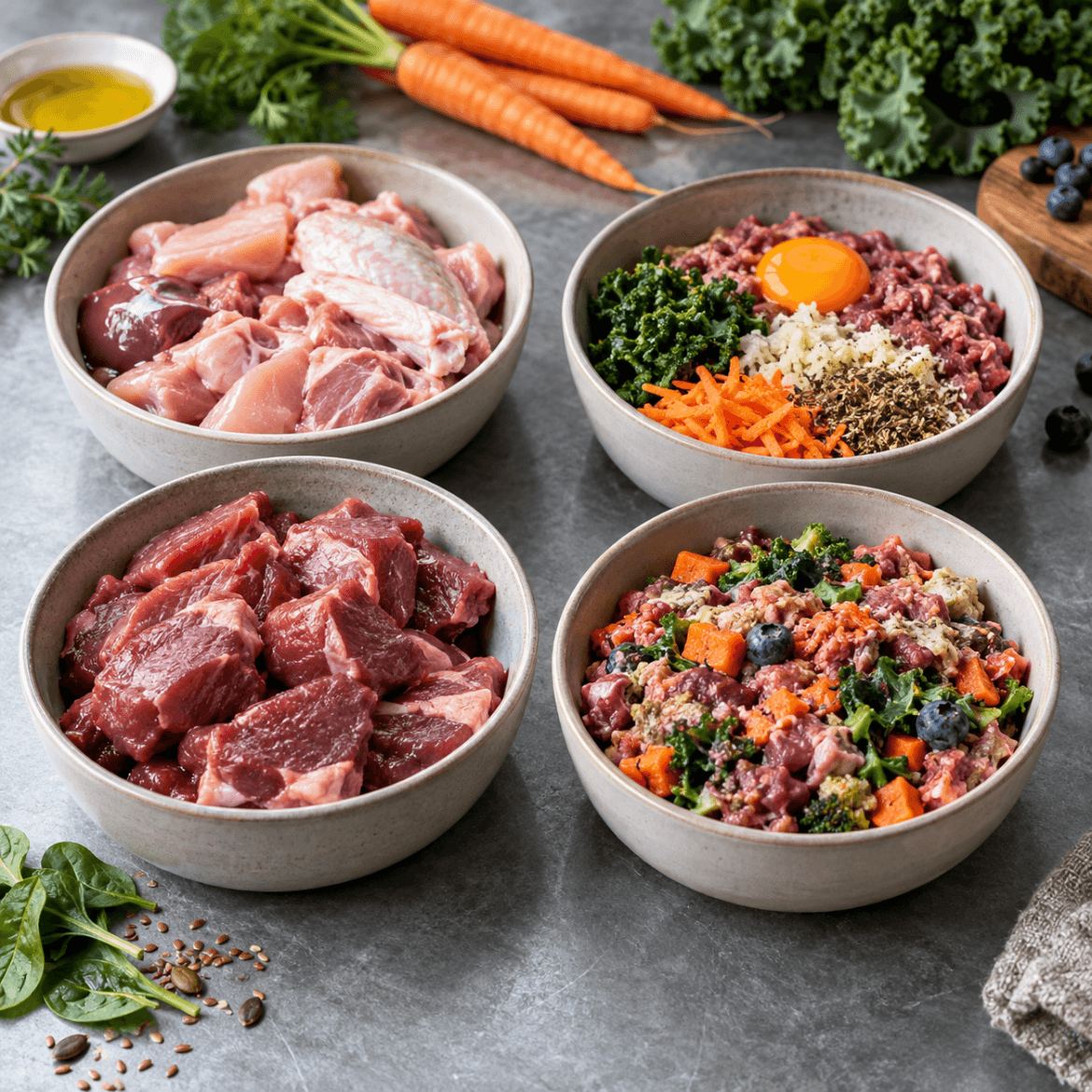
Raw food often comes in a protein only style and a complete dinner where fruits and veg are added. The single proteins usually have the meat, bone and organ meat. These products are often used for dogs that have severe allergies and digestive issues. However, most pet parents that feed a single protein in raw usually supplement with some form of additive to make sure the full vitamins and minerals are present. Because there is bone in the formulas, you should never cook a raw product from a raw food producer.
Feeding raw isn’t for everyone. This is a frozen product so it too has to be defrosted, and you would have to remember to do that. If raw is the only thing that is fed, depending on the size of the dog, it can get pricey. Some people do a combination of raw and kibble. They feed one meal kibble and one meal raw.
And one of the things to also consider is that not all dogs or cats actually like raw. Some love it, but not all do, so looking at fresh food might be an option or going back to traditional dog foods. And one thing to mention is that there is no actual evidence proving that fresh food or raw diets are more beneficial for nutritional health.
So, there you have it. Fresh food and raw diets are not the same thing but the approach or reason for feeding them seem to be in the same direction. Pets that have allergies, digestive issues or palatability issues can do very well on a fresh or raw diet. As well, if providing a less processed, more natural diet is important to you, then this is also a good reason to feed fresh or raw. The important thing is, to make sure the balance is correct and supplementing with vitamins and minerals is part of the diet.
Convenience and cost also have to be considered. So, if feeding a fresh food diet be it with a prepared brand available at your pet specialty store, or cooking at home, or venturing into the world of raw foods, don’t be disappointed if your pet doesn’t take to it right away. But, if they do, remember to do your research to get the proper nutritional balance your pet needs, because as I say, knowing is caring.

Hi everyone, and welcome to Val Talk’s Pets, the forum for pet parents and enthusiasts alike. So, I have been working in the pet industry now for almost 10 years and, on a daily basis, I handle a lot of issues and questions arising from pet parents. I am not a veterinarian but I do have certifications in Canine, Feline, Small Animal, Fish and Herptile and Avian Health and Nutrition from the University of California, Davis Extension, the Vet College.

On this episode of Val Talk’s Pets I’m going to be looking into an amazing premium pet food company called Petcurean. Petcurean is a Canadian pet nutrition company known for […]