

Food Allergies and Sensitive Stomachs in Dogs and Cats: What Pet Parents Need to Know
Hi everyone and welcome to this episode of Val Talk’s Pets. For a while now, I have been getting questions on a fairly steady basis about a dog or cat […]
 play_arrow
Fresh vs. Raw Pet Food: Understanding the Differences, Benefits and Challenges Val Cairney
 play_arrow
Tick Season: What Pet Parents Need to Know About Prevention, Removal and Lyme Disease Val Cairney

Hi everyone, and thanks for joining me on this episode of Val Talk’s Pets. It’s that time of year that we must be concerned with ticks. As fall approaches, the tick issue will escalate. It’s time to get prepared and know what we are up against.
I did do an episode called Fleas, Ticks and Worms oh my, which you can also access, but because the tick issue has escalated exponentially, I think an up to date and dedicated episode is in order.
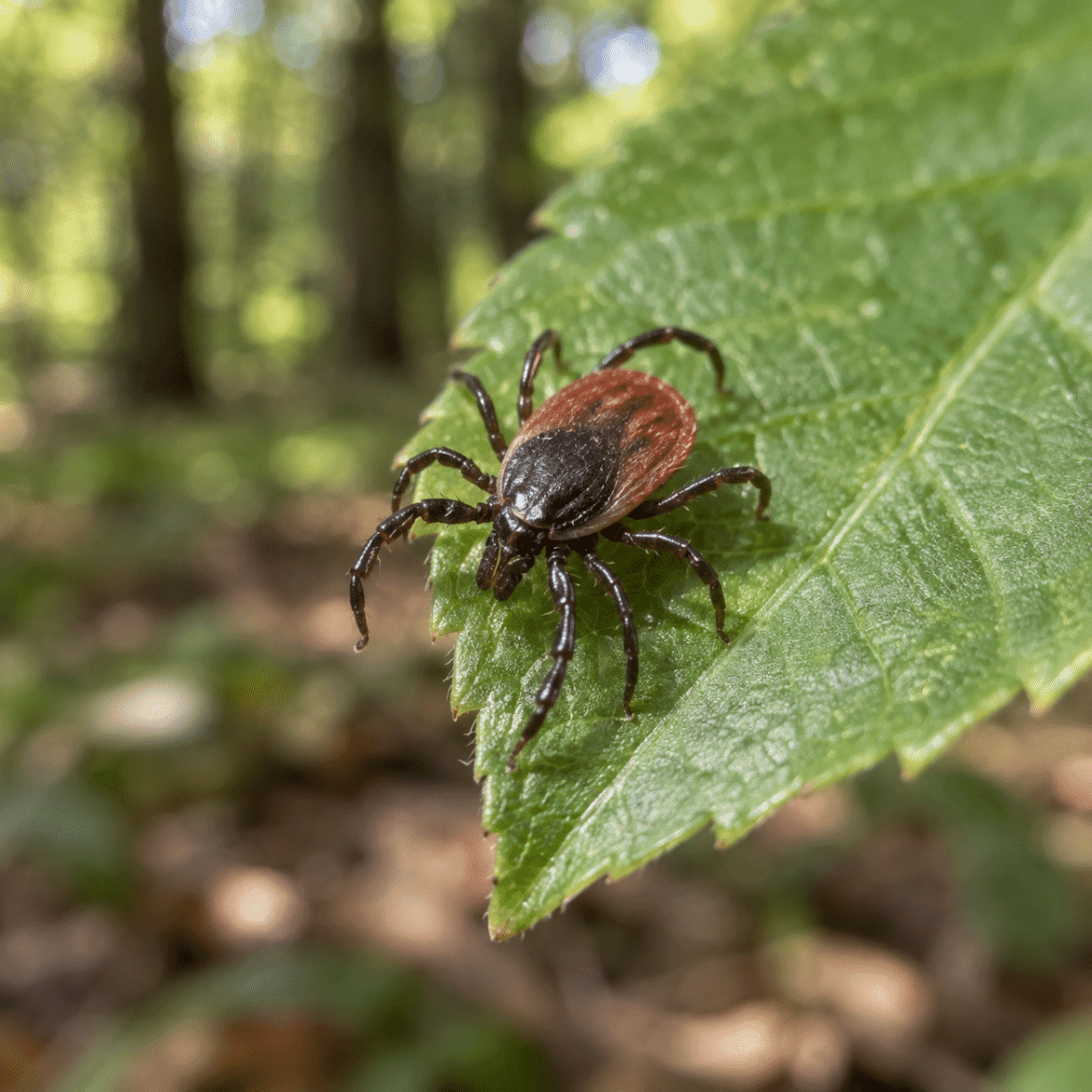
First of all, what exactly is a tick? Ticks are a parasitic arachnid closely related to mites. There are two types of ticks, basically hard ticks and soft ticks. In Canada there are soft ticks, but they are rare compared to the hard ticks. Let’s concentrate on the hard ticks as they are the kind we encounter most in Canada and the rest of North America. The hard ticks are called Ixodidae. (ix-o-di-die). Their bodies are teeny tiny when not engorged and do have eight legs, hence the arachnid designation. The most common type of tick in Ontario is the Blacklegged Tick or Deer Tick. The other is the American Dog Tick.
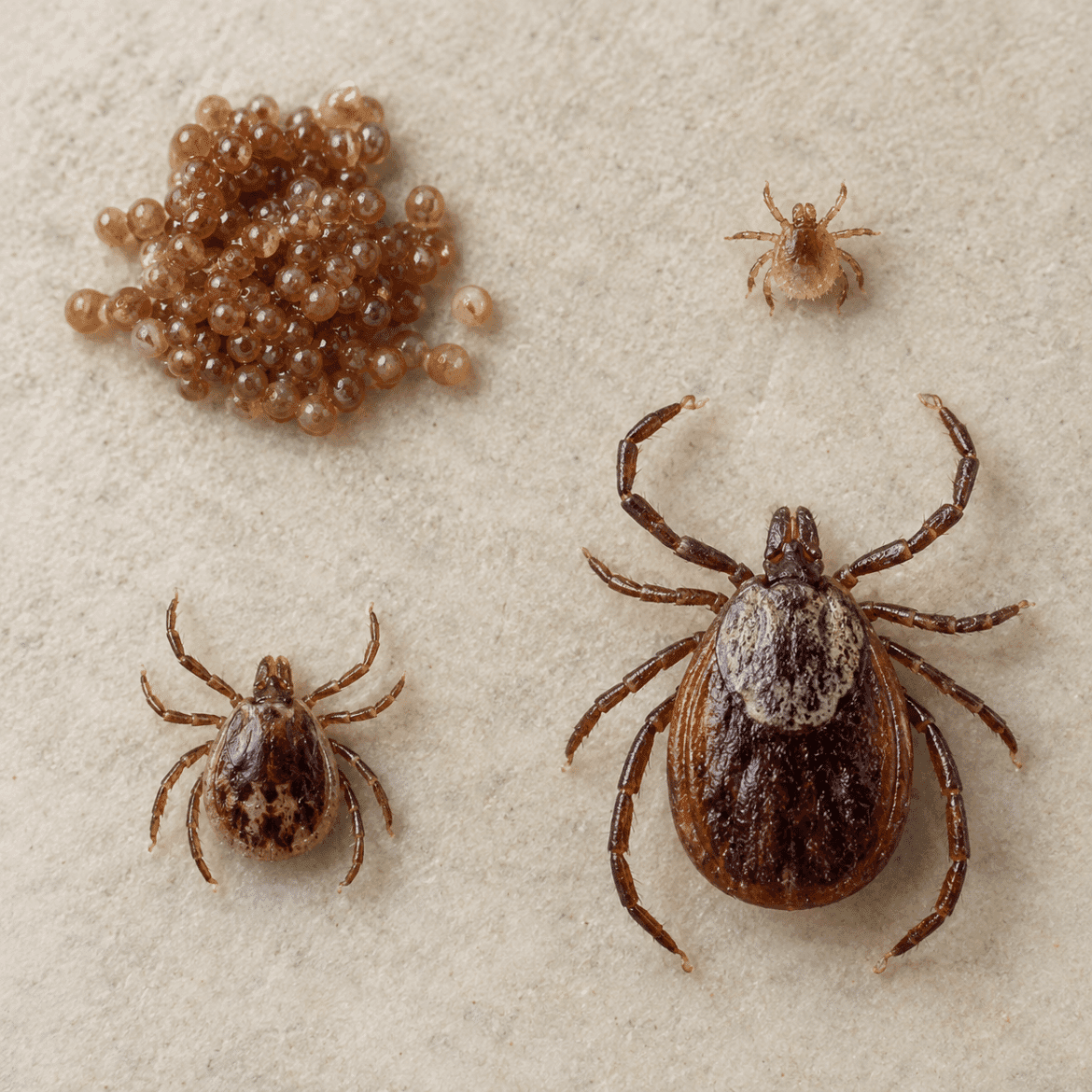
Ticks have four stages to their life cycle. Egg, larva, nymph and adult. In order to get to each stage of life, they have to find a host and feed. For this reason, they undergo a multi-host life cycle. Because they feed on small animals, birds and then up to larger animals and humans, they are what is called a “vector”. They can carry disease from one host to another. As the tick makes its way through its lifecycle it will latch on, feed, drop off, molt and then do the same thing until it reaches adult stage and then it will lay eggs if female and then die shortly after. Males feed on a host, mate with a female and then die.
If you find a big, engorged tick, it is almost always an adult female. Males do not become fully engorged. When an adult tick first latches on, it is in its flat form and is about 1/8 to 3/16 of an inch. Ticks like to live in woody, brushy or grassy areas as well at in piles of leaves and woods. We find that in the spring and fall; the ticks are just horrendous. In the spring all the winter clean up must be done and after the leaves and pine needles etc. are cleaned up, the ticks usually disappear. But, when fall comes, it is right back to the ticks.

Ticks locate potential hosts by sensing odour, body heat, moisture, and/or vibrations in the environment. This is important information, because spraying repellent only on the dog’s legs or your legs for example, just means the tick will move around the treated area to get to the area that is not treated. This is why you can easily find a tick on your stomach or chest even having sprayed a repellent. The same goes for the dog.


According to petmd.com, topical repellants work “by disrupting the nervous system of the tick and eventually killing it. This does not necessarily cause the tick to fall off the pet, but it will prevent the tick from completing its blood meal.” The topicals are administered as drops down the dog’s back and the skin will absorb the natural oils distributing the active ingredients across the body. Most topicals are 30 day doses and are specific to weight.
Advantix for example works so that the dog does not necessarily have to be bitten for it to work. If the tick comes in contact with the treated skin and fur, the active ingredients will attack the tick’s nervous system, killing or repelling them before they can bite. Zodiac, another tick topical works the same way.

The issue with topicals is the fact that they are chemicals being put into your dog’s body. If that is a concern, then you will need to find a non-chemical spray repellant. In Canada, the Nova Scotian company Puregard, has the first Health Canada registered natural tick and mosquito repellant that can be used on dogs, humans and horses. Not cats because of the essential oils. This is a botanical based product using refined PMD from lemon eucalyptus. PMD stands for p-menthane-3,8-diol. This product will give up to 5 hours protection against ticks, but again, it has to be sprayed everywhere, no patches can be left unsprayed.

The rule of thumb when it is tick season is to do what you can prevention wise and check your pet every time they go outside. It doesn’t matter if they haven’t been in the forest or long grass, ticks can be in any grassy area. I have got a tick on me cleaning up under the gazebo. There is no grass there, so how did I get it?
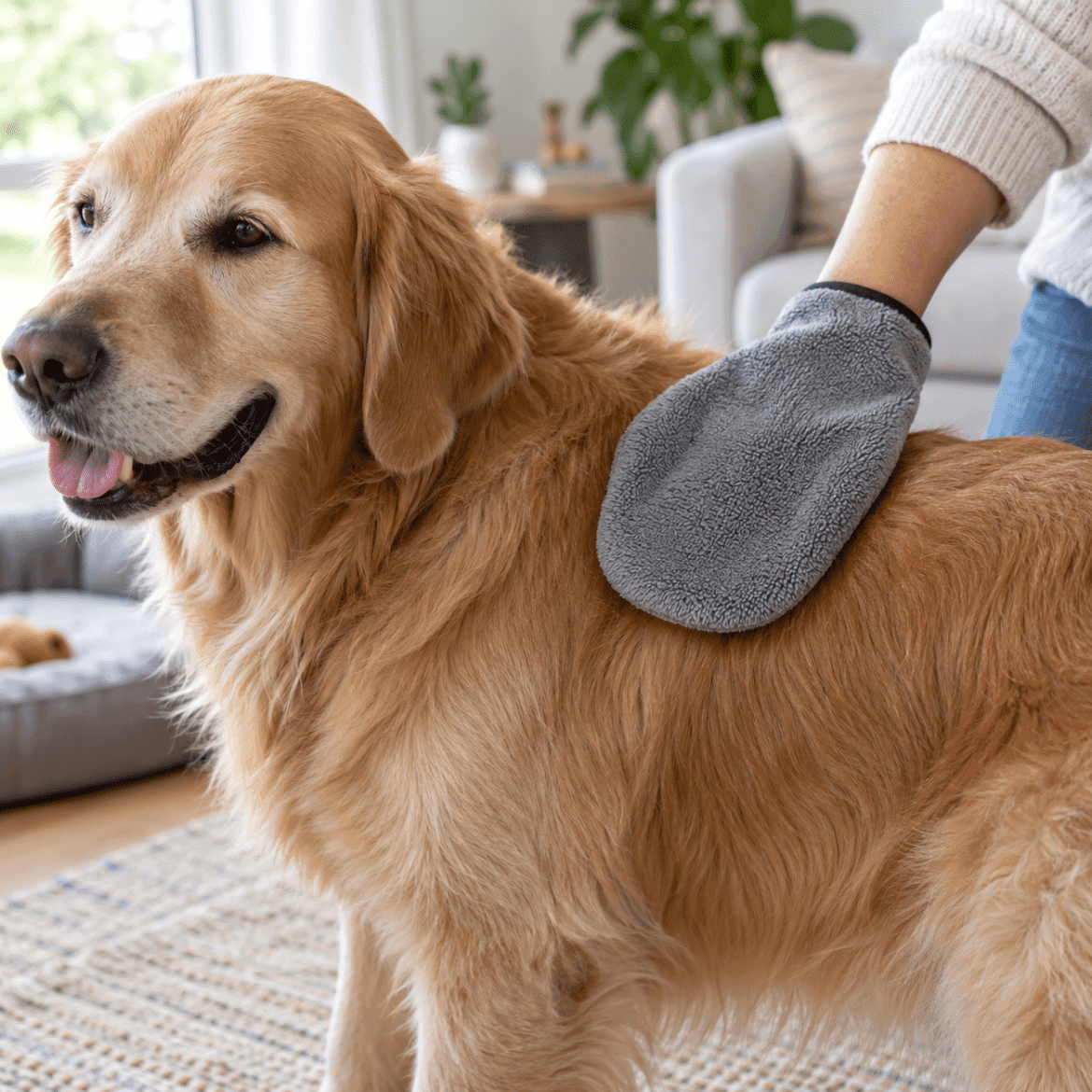
One product I do find very helpful is the Tick Mitt. This is a microfibre mitt that comes with a mesh bag. When coming indoors, you rub the mitt over the dog’s body or your own, and any little ticks that haven’t attached yet, will be picked up on the mitt. You then put the mitt in the mesh bag and put it in the dryer for 10 minutes to kill the ticks. I really like the Tick Mitt because it catches those ticks, I can’t see before they attach.
Now, if you find an attached tick, the first thing to do is not panic. Ticks generally have to be attached for 24 to 48 hours before transmitting Lyme Disease. What happens is, once the tick attaches and starts feeding, the warm blood awakens the dormant bacteria in the tick’s midgut. The bacteria multiply and enter the tick’s circulatory system and migrate to the salivary glands over the course of approximately 24 hours. Once the bacteria reach the salivary glands, they are slowly injected into the host’s bloodstream along with the tick’s saliva as it continues to feed. The risk of contracting Lyme disease is very low if an attached tick is removed within 24 hours. This is why it is so important to check your dog and yourself after being outdoors.
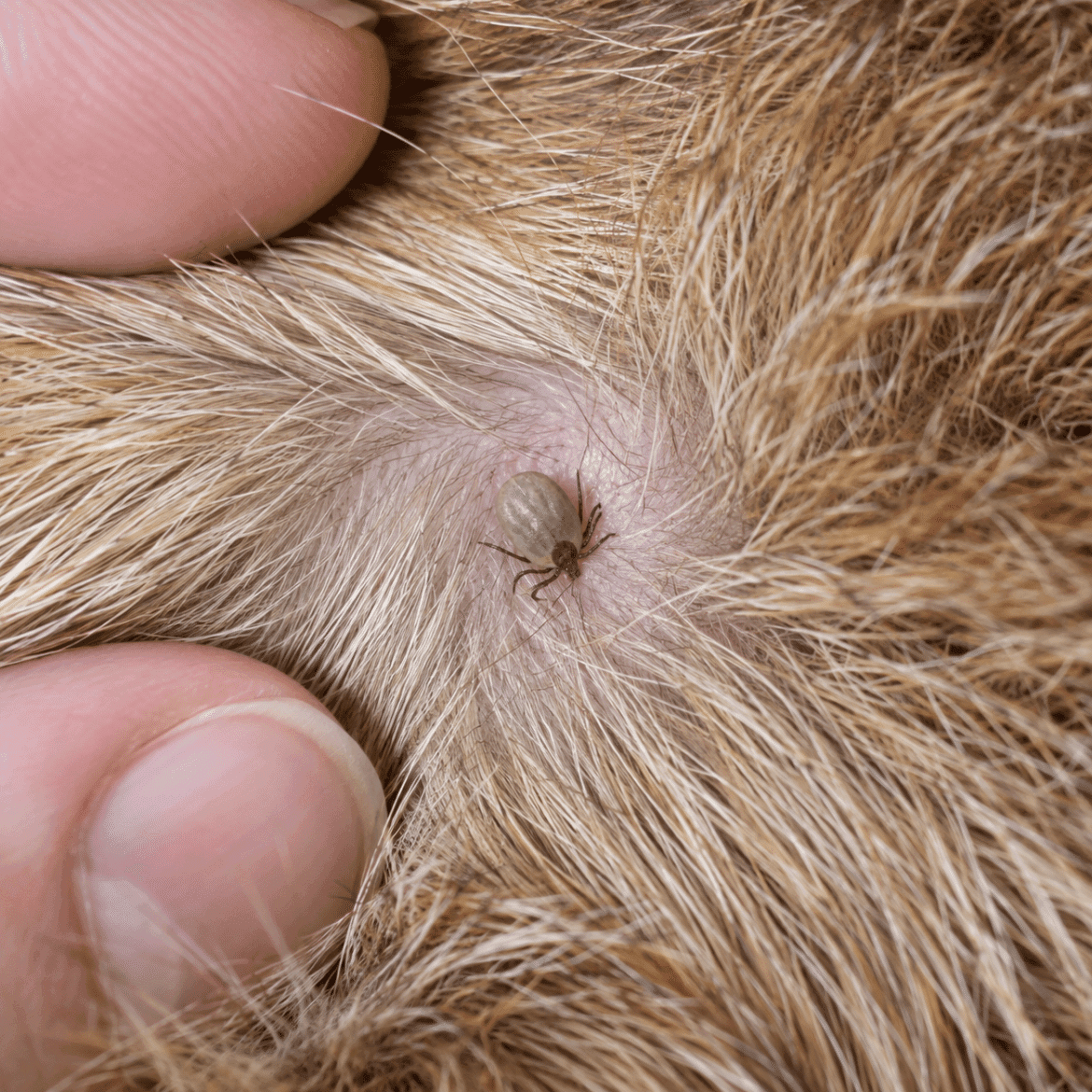
Once you find an attached tick, separate the fur and use a special tick key, follow the directions for that specific tool and remove the tick. Some removers have you twist the tick, and some have you pull straight up. Just read what the directions say. If you do not have a tick remover, you can use tweezers, but you have to get really close to the skin and pull up with force. After removing the tick, you can wash the area with soap and water or spray an antiseptic spray, like colloidal silver or Vetericyn.
If part of the tick gets left behind, what you are seeing is not actually a head. Ticks have a feeding structure called a capitulum (cap-uh-TEL-uhm) that holds their mouthparts. They do not have an independent head with a brain or eyes. If this mouthpart is stuck in the skin, it’s not really a big deal. If you can grab it easily with tweezers and pull without resistance, that is fine. However, if it doesn’t come out easily, then it should be left. Leaving this part is okay, because the body will push it out naturally.
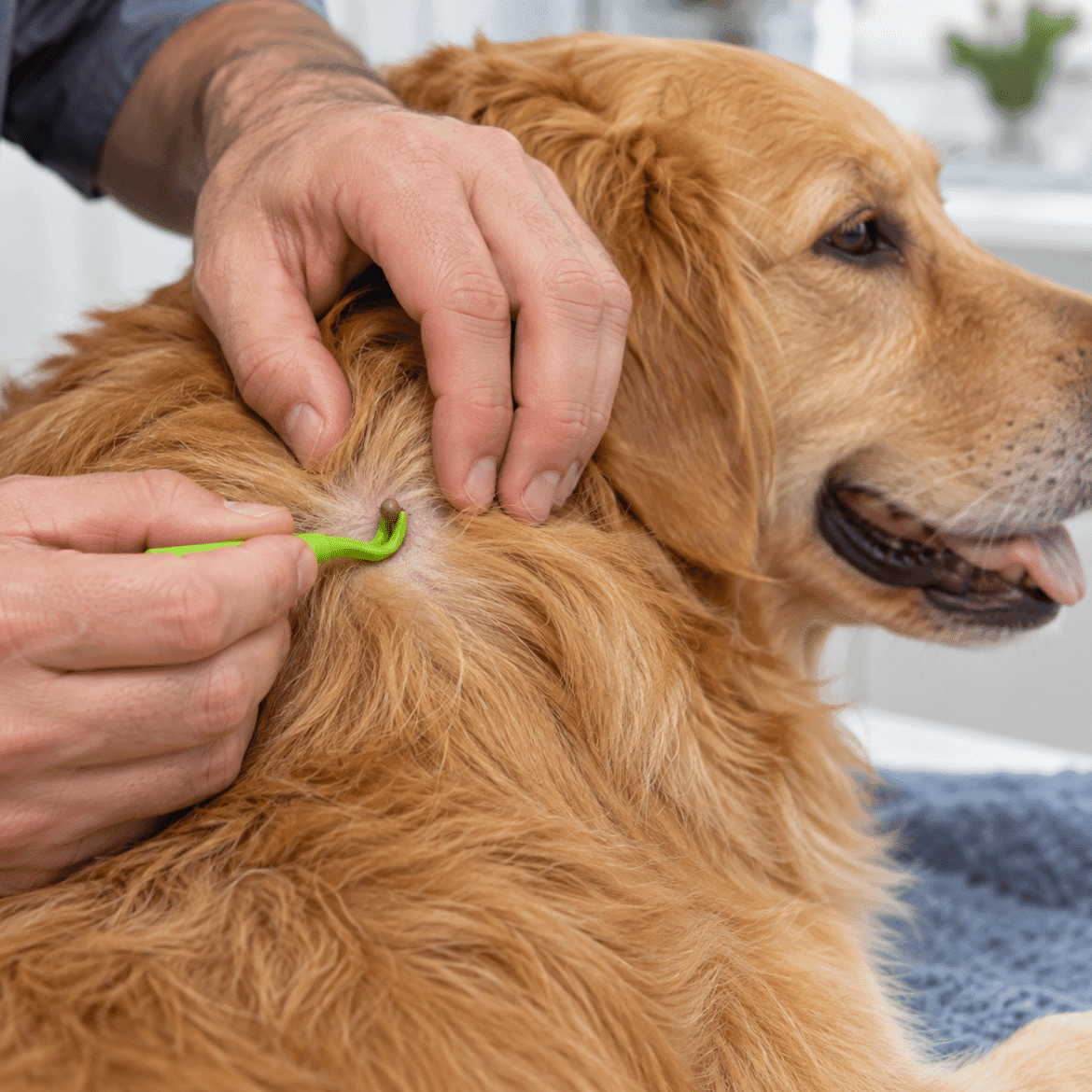
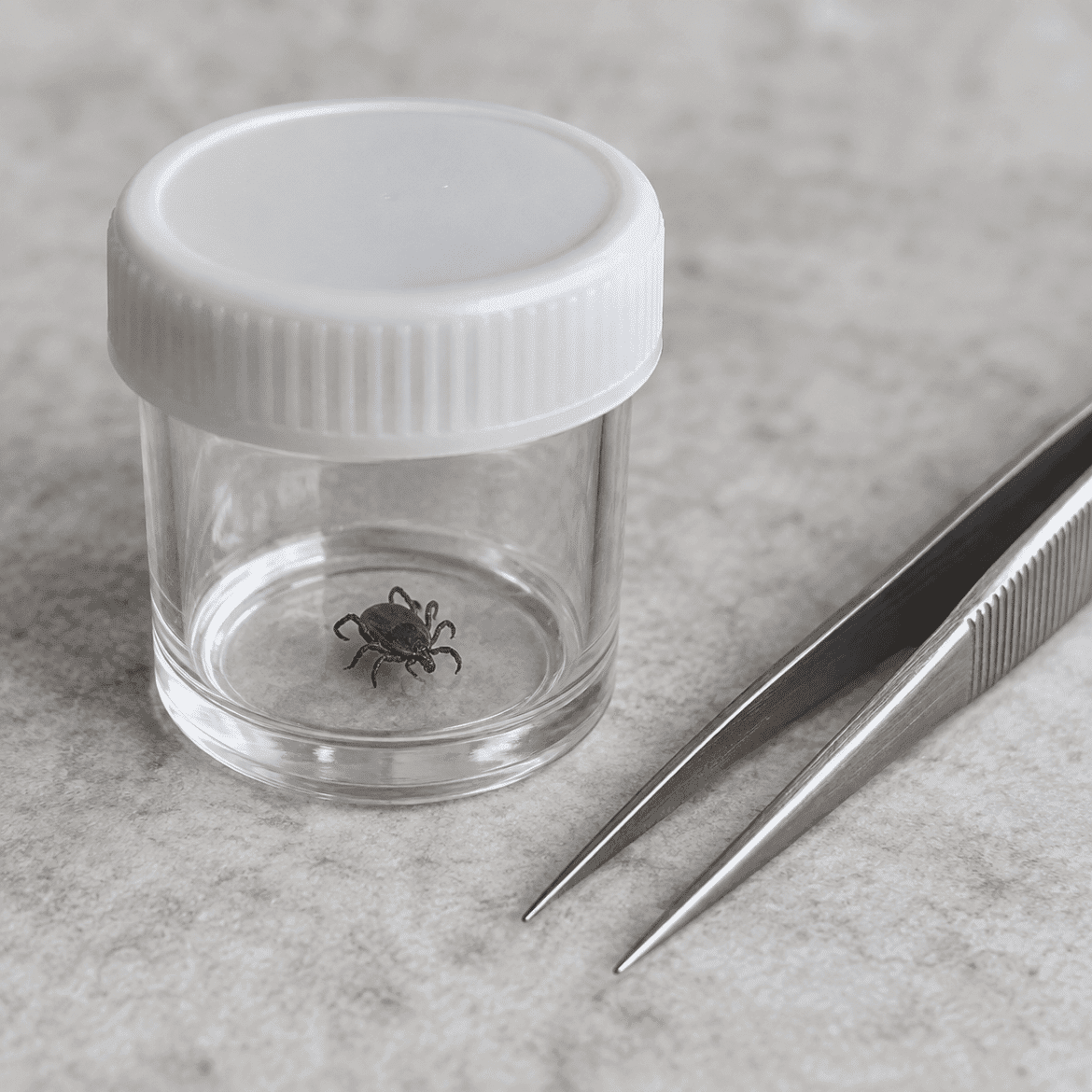
What to do with the tick. Most people flush them down the toilet. Some keep them in a jar to see if they need testing, but if you got it out within that 24-hour period, that isn’t really necessary. I personally like to put them in a paper towel and then squish it with my tick key.
So, that is pretty much the scoop on ticks on humans and dogs. Cats is a whole other story.
Most tick prevention products have an ingredient called Permethrin. Permethrin is highly toxic to cats, and this is why there isn’t a tick solution for cats in most retail stores. Because Health Canada is very specific about products available for cats and dogs, the risk for toxic ingredients that could seep into a tick product for cats is too risky therefore most tick repellants are available at the vets through prescription. Just remember, Permethrin is a big no-no.

Well, I hope this gives you some confidence to deal with the upcoming tick season through fall. There is a lot of information available and of course your vet is a great source as well. Be very diligent, but don’t let the risk of ticks prevent you from enjoying the beautiful fall and the outdoors. And remember to do some research because as I say, knowing is caring.

Public Health Agency of Canada — How to remove a tick
Public Health Agency of Canada — Lyme disease prevention and transmission

Hi everyone, and welcome to Val Talk’s Pets, the forum for pet parents and enthusiasts alike. So, I have been working in the pet industry now for almost 10 years and, on a daily basis, I handle a lot of issues and questions arising from pet parents. I am not a veterinarian but I do have certifications in Canine, Feline, Small Animal, Fish and Herptile and Avian Health and Nutrition from the University of California, Davis Extension, the Vet College.

Hi everyone and welcome to this episode of Val Talk’s Pets. For a while now, I have been getting questions on a fairly steady basis about a dog or cat […]