

Diabetes in Cats: Symptoms, Insulin, Diet & Care
Introduction Hi everyone and thanks for joining me on this episode of Val Talk’s Pets. In the last episode I opened 2026 with a discussion about diabetes in pets beginning […]
 play_arrow
Spotlight on the Maltese Dog: A Charming Little Companion With a Big Heart Val Cairney
 play_arrow
Why Cats Pee Outside the Litter Box: Causes and Solutions Val Cairney
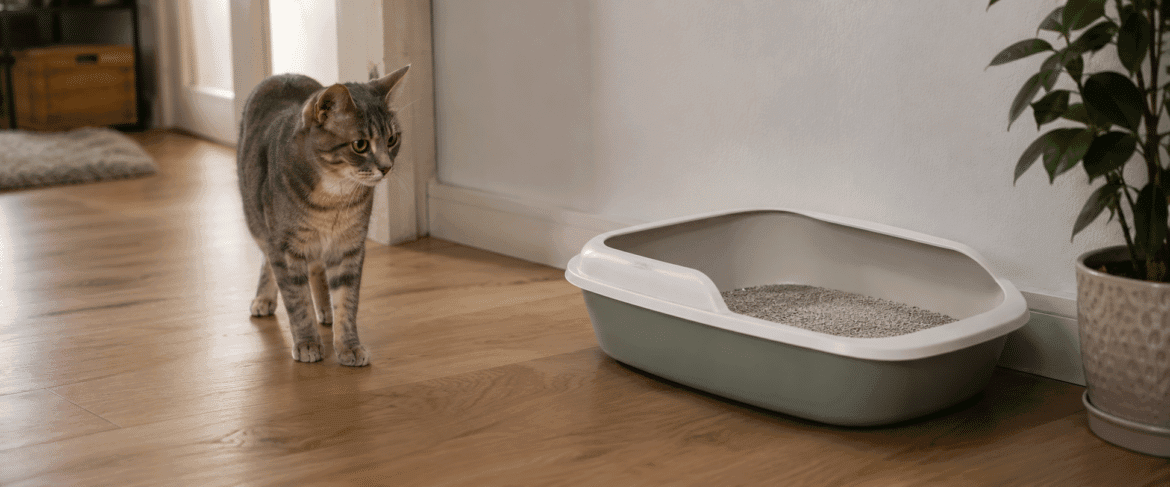
Hi everyone, and thanks for joining me on this episode of Val Talk’s Pets. This question goes out to all the cat parents. Does your cat pee outside of the litter box? Or do they pee where they shouldn’t? Well, let’s go exploring.
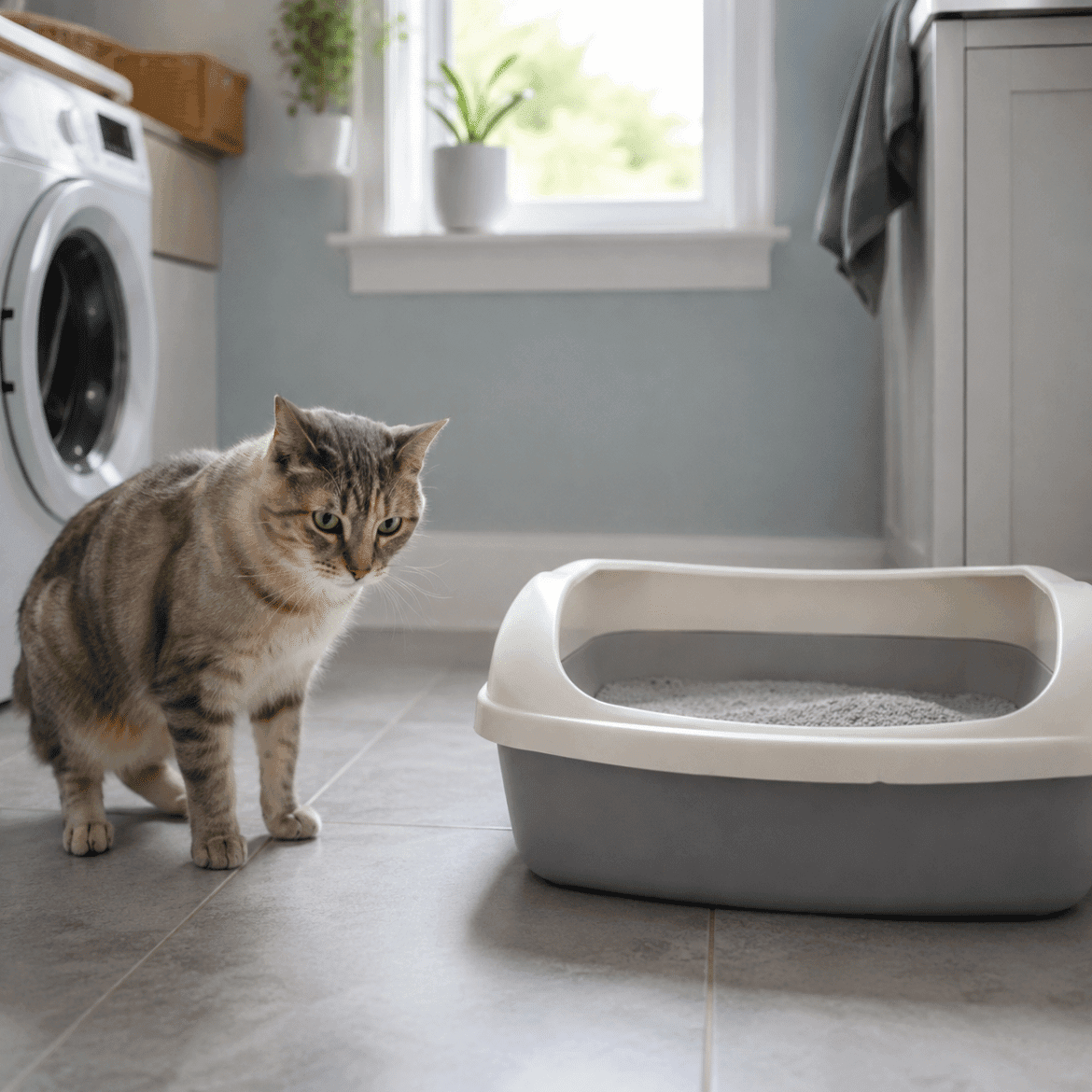
A very frequent question I get is, what to do with a cat that continuously pee’s outside of the litter box. I’ve heard pet parents say their cat will climb into the litter box, hang their back end over the edge and pee. Others say, the cat will go in the vicinity of the box but won’t go in it. Others say the cat will pee in a specific place, like on the carpet in a particular area. And there is the ever so popular, peeing on clean laundry. This is called litter box avoidance.
Why do cats do this? A lot of times I hear the frustration in the pet parent, and they believe the cat is doing this out of spite. Well, I can confirm that the cat is not doing this out of spite, cats do not have that level of thought. And finding an answer is difficult. I have however, noticed that there have been some changes in the reasons given as of late. This means that more professional thought has gone into this and more ideas are coming forward. The idea is to eliminate, pardon the pun, the obvious reasons.
Obvious causes begin with, a medical condition. A trip to the vet is necessary here to rule out a urinary tract infection (UTI), bladder stone, cystitis or kidney disease. This is one of the first questions I ask. But almost every time I hear, yes, all the tests came back negative. Okay, at least we have ruled that out.
The next question is how many cats are in the household? If they say, two or three, the follow up is to ask if there are litter boxes for each cat? And again, I often hear, yes, I have two boxes or three boxes. Good.
Next question. Are the litter boxes in a location that is convenient to the cat? Is the box, in a place away from a lot of activity or traffic? Sometimes, I hear, yes, its downstairs, which brings me to another set of questions.
How old is your cat? Is your cat getting a bit senior? What I’m trying to get at is, are the stairs a bit difficult for the cat? Is the basement in darkness? An older cat can easily have difficulty seeing in the dark. Sometimes, the simple addition of a nightlight will change everything. But, not always, it’s rarely that simple.
The obvious next step here, is to put multiple litter boxes throughout the house and particularly on the spot where they like to go. But this doesn’t address the cat that goes to the litter box and pees around it.
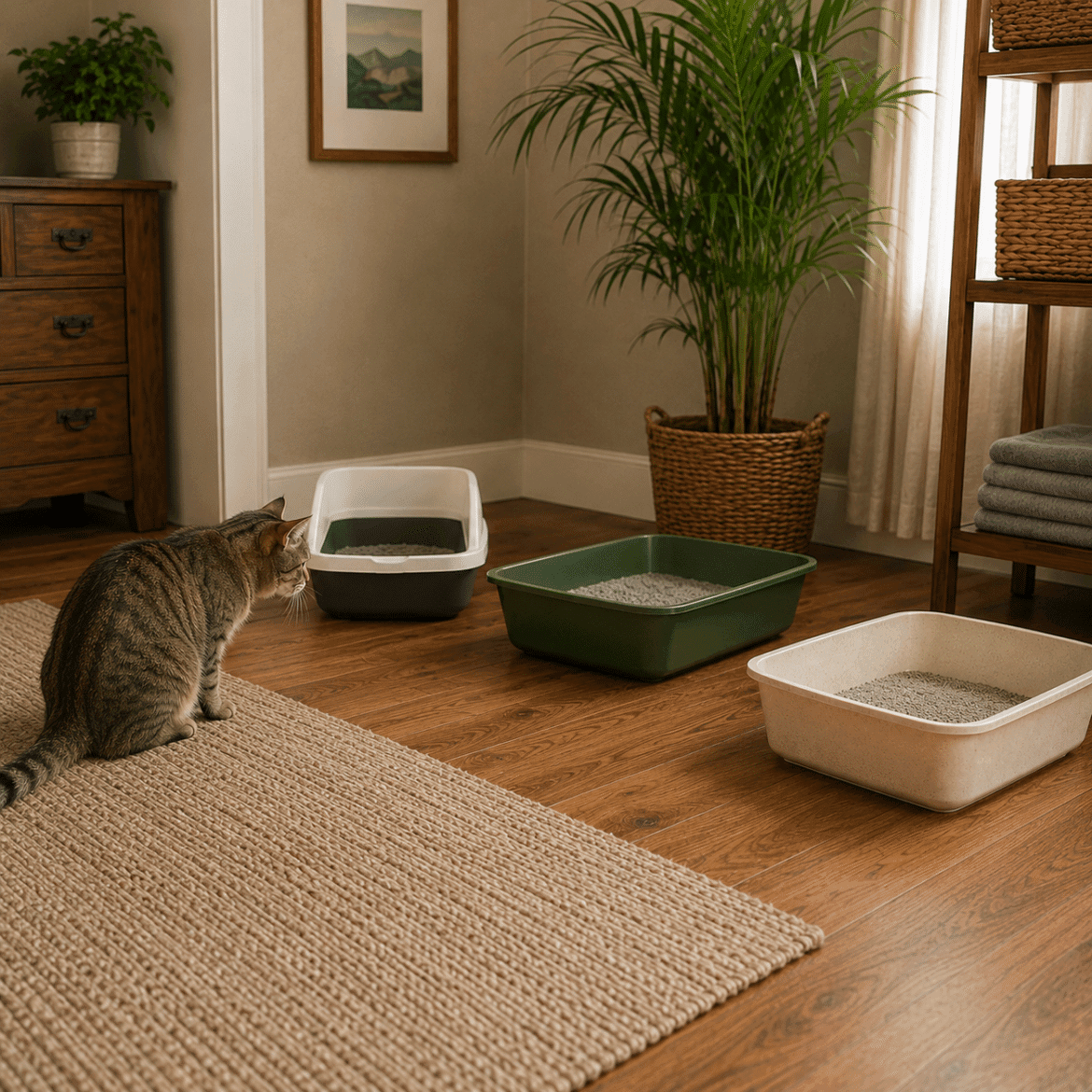
On to the next question which is the cleanliness of the box. Some cats are so fastidious that once they have gone in the box, they won’t go in it again, until it has been cleaned. And if I dare to ask if the box is clean, I usually get the answer that yes, “I clean it three times a day.” Even if they didn’t, who is going to say, “oh that must be it. I rarely clean that thing.”
The next question I ask is if the box has a lid on it? Some people will use a covered cat box because the cat tosses litter out if they don’t. Some cats are reluctant to use a covered box so as an experiment I suggest taking the lid off and see if the cat is more receptive to going in.
So, let’s recap here. When trying to figure out why a cat pee’s outside the box or where they shouldn’t, we have to rule out any medical issues, box location and cleanliness, litter and one other factor.
Now let’s get into more specifics. I outlined some of the medical issues that could contribute to the cat avoiding the box. More specifically is that the condition, say a UTI, felt painful when the cat went to pee in the box. The cat can then associate the box with pain. The cat may not have that condition anymore, but they still associate the box with pain. First thing to do in this instance is to get a brand-new litter box without a lid. Clean the area with proper pet cleaner and put the box in a quiet, accessible area.
This is also a good protocol if the cat is peeing outside the litter because it was startled when using it or scared out of the box by another cat or maybe a child. The cat is then associating the box with this fear therefore changing up the box and the placement, could do the trick.
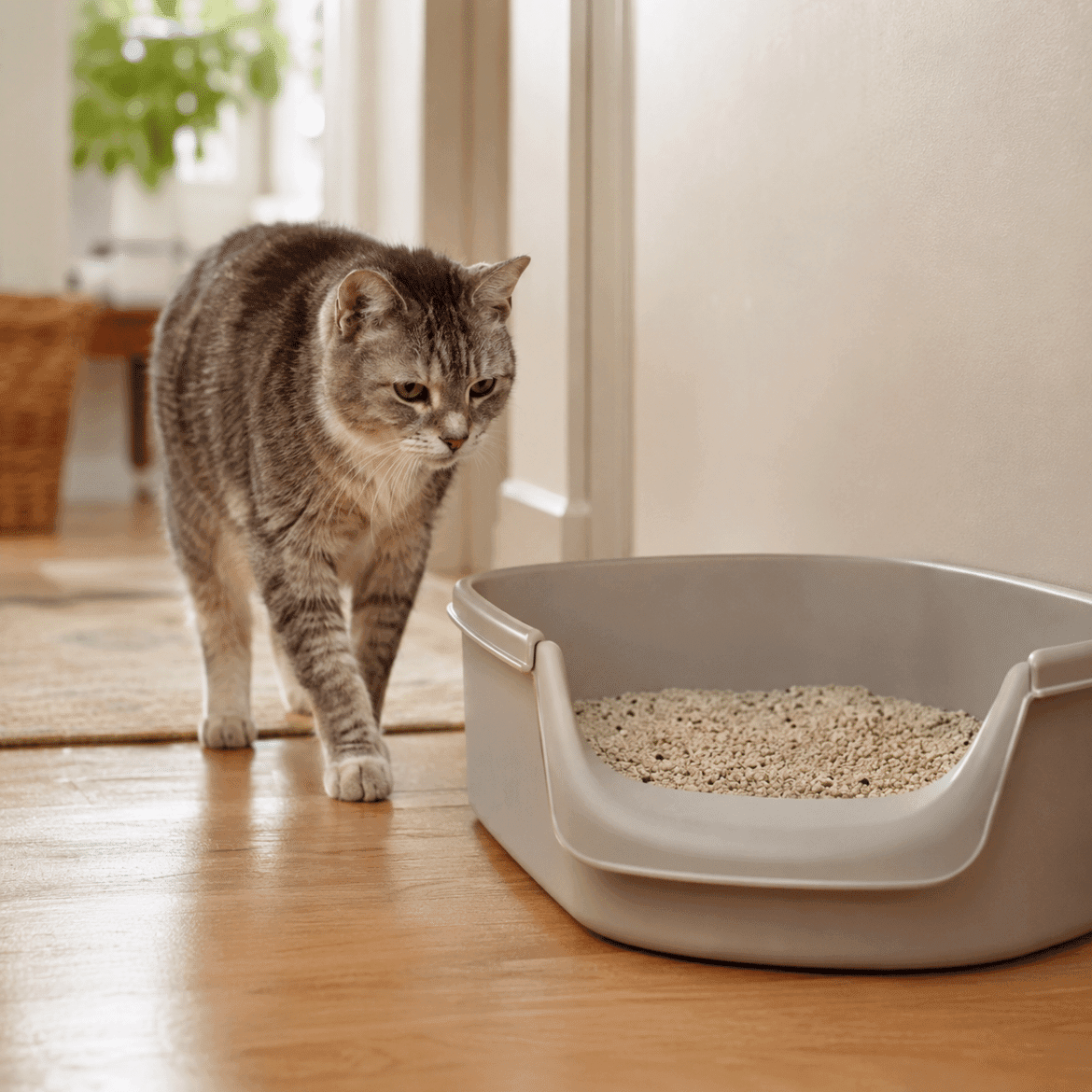
Now let’s talk litter. Believe it or not, some cats will refuse to use the litter box because they don’t like the litter. It could be the scent or the texture. Choose a non scented litter and then maybe try one of the alternative litters that is softer on their paws and is dust free.
As for cleanliness of the box, again, get a new one. Even if the box is scooped everyday, an old box can hold odours which deter the cat. If being on top of cleaning the box is an issue, an automatic cleaning litter box could be the answer. Every time the cat goes, the box will self-clean. This could be a super answer.
The placement of the litter box and the size is very important especially when dealing with a more senior cat. That high sided box may be helpful to minimize litter spraying, but it could be difficult for a senior cat to get into due to arthritis or lack of agility. And making sure that the cat can easily see its way to the litter in the dark is important.
One solution some people have found is the litter box within a box method. If your cat will go to the box but hang over the edge and pee this could work. The idea is to get a large box or plastic bin, cut an entrance hole and put the existing box inside. The cat will go into the larger box and then into their own box, feeling more secure. This method has actually worked successfully with a few people I know.
Okay, so say you’ve done everything. The box is in a quiet but easy to get to place. There is more than one box. It is clean. It is the proper size for the cat to get in and out of. You’ve put in a different litter that has no fragrance and is more comfortable on their paws. And you have been to the vet, and nothing is amiss with the cat’s health. Then the cat goes and pees on the floor again. Yup! This is frustration.
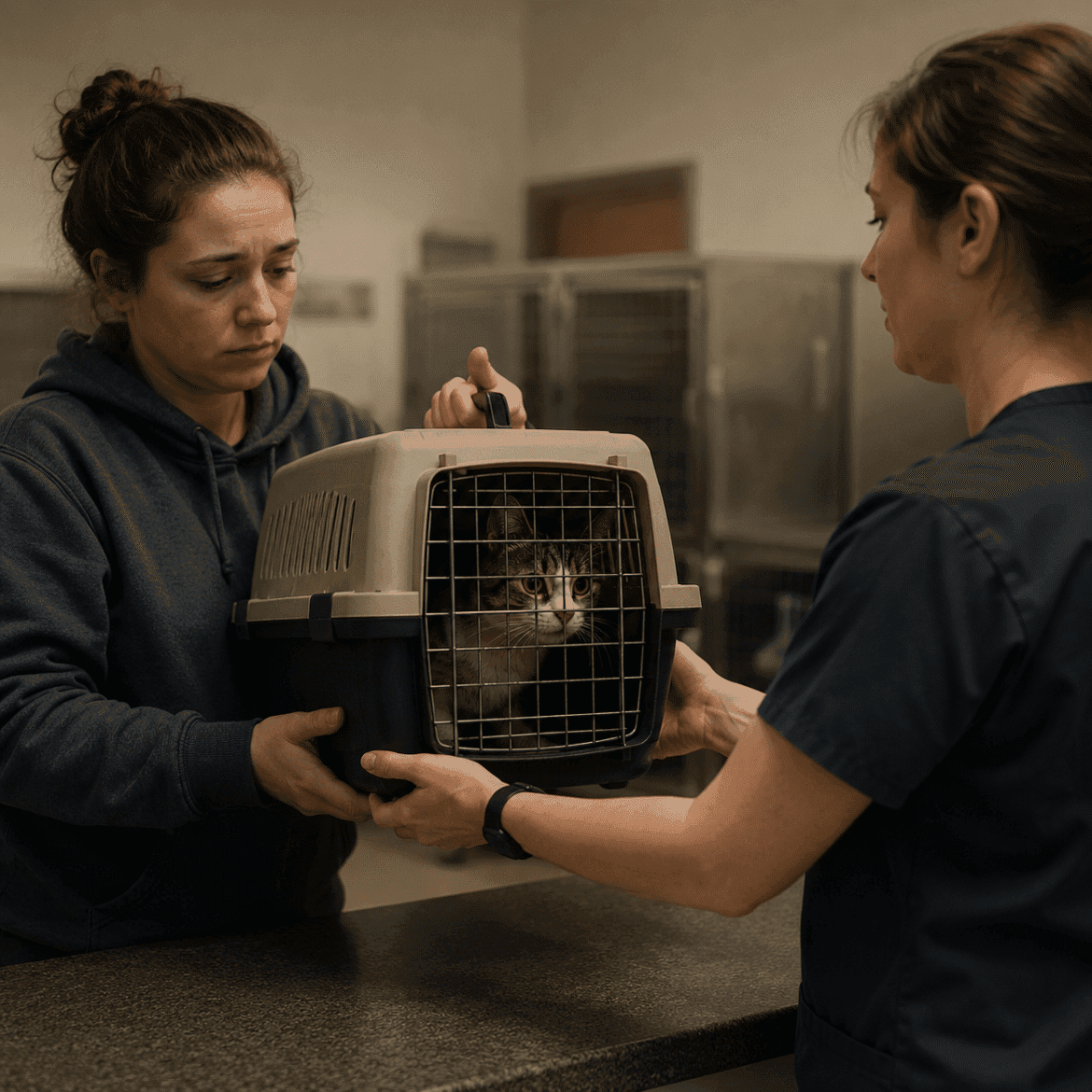
And this is one of the top reasons why cats get surrendered to shelters. The problem is however, the cause is not addressed, and the cat will get returned many times over, for the same reason. Unfortunately, what has happened during these multiple rehoming’s is probably what is making things worse. In this case the only answer is, this cat is stressed and for some reason does not feel safe in the environment.
This is going to be the ah ah moment. Cats mark or pee in their territory to feel safe and secure. This instinctual behaviour has the cat spraying pheromones to say, this is my place and in doing so, makes them feel safer and less anxious. And I know many are thinking, but the house is the same. Why now? That’s a great question. The truth is, we may never know why all a sudden the cat feels anxious. The thing is, it is happening and we must deal with it.
The final issue we must consider is territorial anxiety. Cats are by nature quite territorial. Another pet coming into the home can trigger this anxiety, so can change in routine or loose or feral cats being in the neighbourhood.
What has come into play here is the cat’s endocannabinoid system or ECS. This is a very complex biological regulatory system. The primary job of the ECS is to maintain homeostasis. Homeostasis is the keeping of the internal functions like mood, appetite, digestion and immune response balanced even when environmental stressors occur.
There is material that suggests that regulating the ECS can be done with CBD oil for example. Personally, I would not recommend attempting the use of CBD oil. I know this can be available in many places. But in Canada, “Health Canada and the Canadian Veterinary Medical Association has not approved CBD products for pets primarily due to a lack of concrete clinical trials and strict safety regulations. Without definitive proof of both efficacy and the long-term safety of CBD in animals, veterinarians cannot legally prescribe it.” I support this wholeheartedly, because the stringent protocols that Health Canada expects are there for safety and any compromise would lower the trust of products that have gone through the processes.
What you can do however, is be cognisant of the cat’s environment, diet, exercise and anything that could be contributing to territorial anxiety. First thing is to recognize that your cat is defending his home. Here are a few suggestions to help.
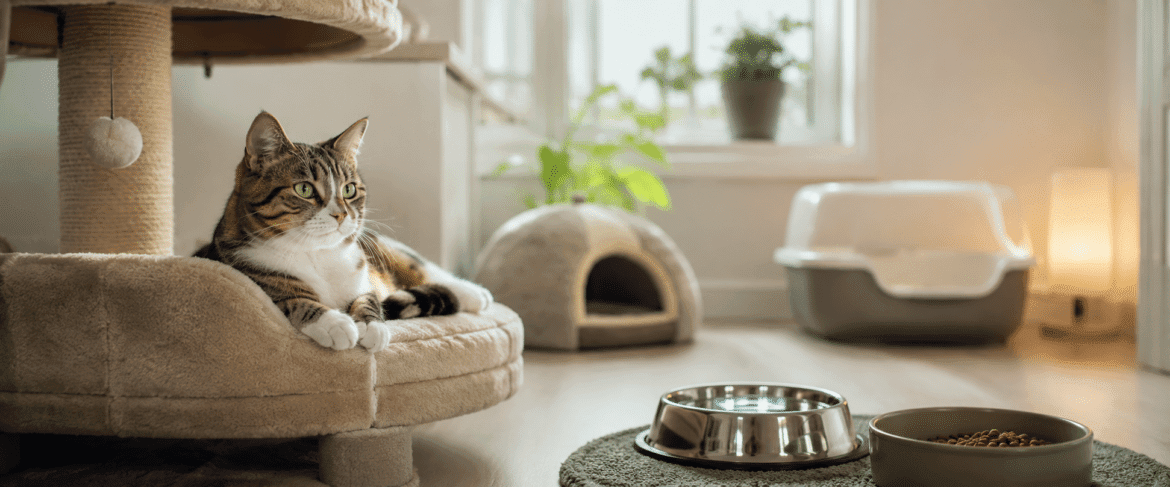
Food is important, so placing food in multiple areas or in multiple bowls along with water dishes in quiet areas can increase confidence. The litter box strategy as well is part of this. Boxes in different quiet places again can make the cat feel safer.
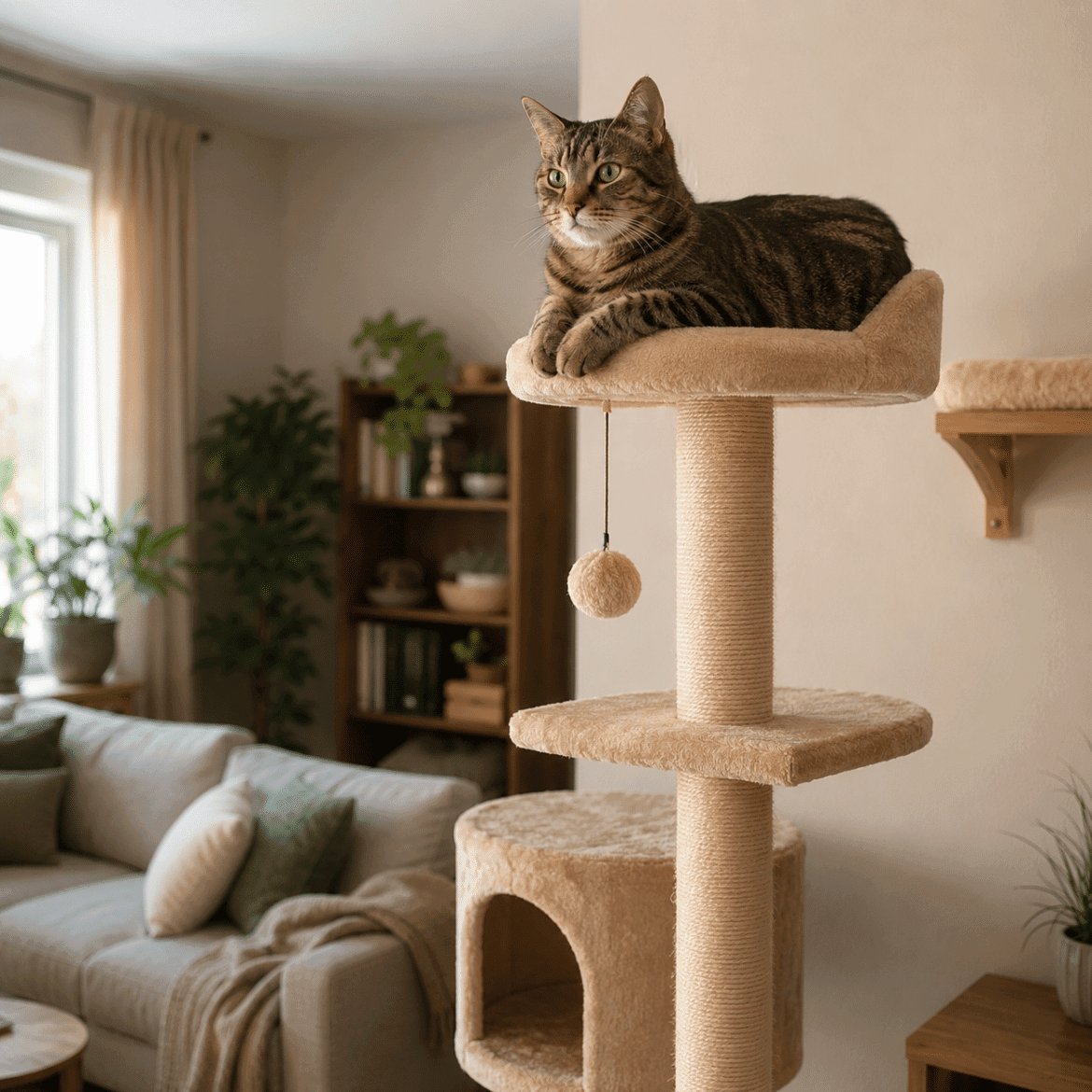
Now, here is one you may not have thought of. Cats like to observe from above. A tall cat tree where the cat can get up higher to observe could be super helpful. Of course, safety is important here to make sure the tree is stable and will not topple over.
If the cat is observing outside cats, blocking that view is quite essential.
The last help suggestion is calming. This is another one of those suggestions that is met with different responses. Some people say they have done the plug-in pheromone thing and nothing changed. Some people say it really helped. So, try it. If it works using say, Feliway, you’ve found the answer. If it doesn’t, on to the next.
The next is to give the cat, catnip extract. Catnip extract “helps relieve feline anxiety primarily through nepetalactone (neh-pet-a-lac-tone) – a natural compound that interacts with the cat’s brain receptors. When ingested, it acts as a mild sedative, mimicking feel-good pheromones that relax muscles, elevate mood and soothes the central nervous system.” Some people put a bit of catnip extract in the cat’s wet food, and some have found the cats simply licks the drops from a dropper as they really like it. There are different companies that provide catnip extract, PetCalm Co, for one, but it is always a good idea to research the product and read reviews.
Well, that’s about all the advice I can impart when it comes to this very frustrating behaviour that some cats do. The newest research however is to look at the idea of territorial anxiety and the idea of calming the brain’s response. Do infusers work? Sometimes. But the addition of catnip extract could really be the answer. I say, it is worth a try if you have done everything I’ve already outlined. It looks like many people are having success with the direction of calming the cat’s anxiety regardless of whether you think they are exhibiting anxiety or not.
This is one of the most frustrating things a cat can do. Some pet parents are at their wits end because they love their cat so much, but the peeing is out of hand. I say, try not to give up. Your cat is not doing this to be a jerk, or to be mean or show resentment. They are suffering. They need help. They need you. So, go through the list point by point, ruling out each thing or finding an answer and then if you get to the end and try the calming through either pheromones or catnip extract, I really hope the answer has been found. Behaviourists are always trying to find an answer to this behaviour so keep researching because as I say, knowing is caring.

Hi everyone, and welcome to Val Talk’s Pets, the forum for pet parents and enthusiasts alike. So, I have been working in the pet industry now for almost 10 years and, on a daily basis, I handle a lot of issues and questions arising from pet parents. I am not a veterinarian but I do have certifications in Canine, Feline, Small Animal, Fish and Herptile and Avian Health and Nutrition from the University of California, Davis Extension, the Vet College.

Introduction Hi everyone and thanks for joining me on this episode of Val Talk’s Pets. In the last episode I opened 2026 with a discussion about diabetes in pets beginning […]


